Successful long-term investing requires a long memory. Today, many investors treat inflation as folklore. Not long ago, mentioning inflation would draw looks as if you had claimed to have seen Bigfoot or been abducted by aliens.
The verdict is still out on Bigfoot, but the military recently released footage of UFOs (which they call UAPs, unidentified aerial phenomena), and the number of inflation believers is growing.
Famed investor Sir John Templeton said “this time is different” were “the most expensive four words in the English language.” But before we answer whether time is different, as it pertains to inflation, let’s define inflation.
Inflation is an increase in price paid for an asset, good or service without an equivalent increase in value received. Because the government favors framing inflation as an increase in the Consumer Price Index, policymakers claim there has been a dearth of inflation since the 2008-09 Great Recession. CPI accounts for price changes in a limited scope of goods and services, and the government makes arbitrary adjustments to their prices. Consequently, the increase in CPI has been muted for decades.
Alternatively, we assert that there has been tremendous inflation since the recession, just not necessarily in the price of consumer goods. The policy response to the recession was not to send stimulus checks to individuals. Instead, banks and corporations were bailed out. Furthermore, low interest loans were made available to the most creditworthy borrowers. If you needed money and you didn’t have plenty of collateral, it was hard to get a loan. Those with excess cash didn’t need or want to significantly increase their spending on consumer goods. Instead, they purchased things such as securities, vacation homes, vintage automobiles, art and other collectibles leading to asset price inflation. Prices for these items soared without an equivalent increase in value received for the price paid — our definition of inflation.
Amazingly, almost 33% of all the M2 money stock (cash, checking deposits and easily convertible near money such as money markets) in existence was created since the beginning of 2020. This excessive printing of dollars is the necessary inflationary fuel in search of a spark. But if you invest in stocks, why should you care about excessive money printing? So far, during the last two decades, money printing has resulted in higher stock valuations. What makes this time different? Would we even dare to utter it?
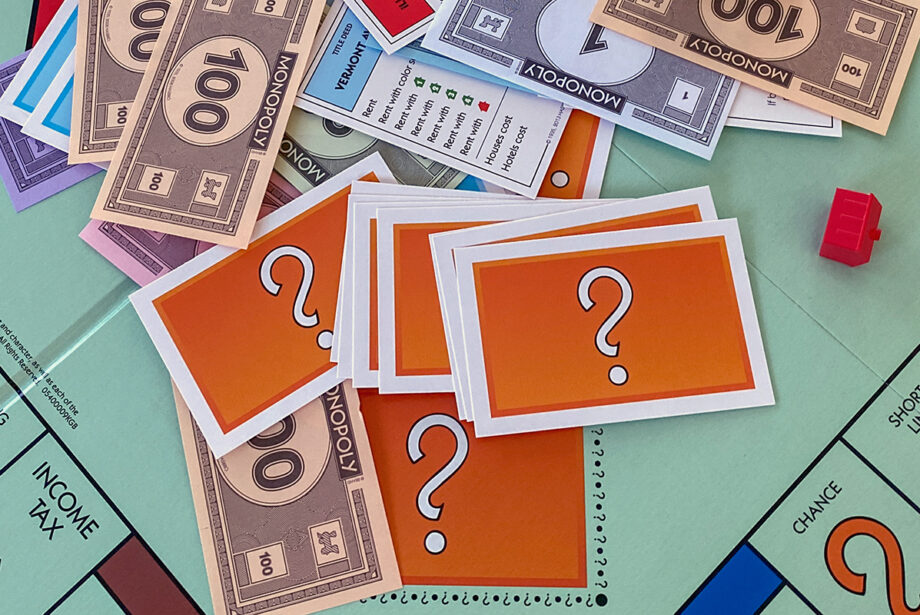
Bloomberg reported that, as of July 23, roughly 87% of S&P 500 companies reporting earnings in July mentioned inflation in their conference calls. Inflation is already present in the price of many inputs for goods and services. The risk is that the trend continues and prices are passed on to consumers. Cumulatively, the stimulus bills from the last year poured $4.8 trillion of current stimulus and $1 trillion long-term infrastructure spending into a $700 billion pandemic-driven hole in GDP. That’s about $70,300 of spending per family of four. When a deluge of money is released in a short time frame, dollars begin frantically competing to buy assets, goods and services whose supply cannot expand easily. This would be like doubling the money all players receive in Monopoly. It’s easy to see how property prices might soar even though the rent the properties provide does not increase.
The demand-side spark lighting this monetary kindling appears to be “the reopening” from the pandemic. In addition to excessive money printing, there are supply-side constraints that are boosting costs, including labor shortages, international travel restrictions, tight capacity in all forms of transportation, semiconductor shortages and reduced exploration and production by many energy producers and miners. Even companies such as Kraft-Heinz and Procter & Gamble, which struggle to pass on higher costs, have announced price hikes.
The answer to whether this time is different is no — and yes. No, it is not different from post-recession in that we are experiencing inflation and will likely see more. And yes, this time is different in that inflation will likely occur in the prices of goods and services while the historically high valuations of the broad securities market are likely to be challenged by higher interest rates. This will likely make active portfolio management a critical ingredient to achieving your investment goals.

 Sign up for Daily E-news