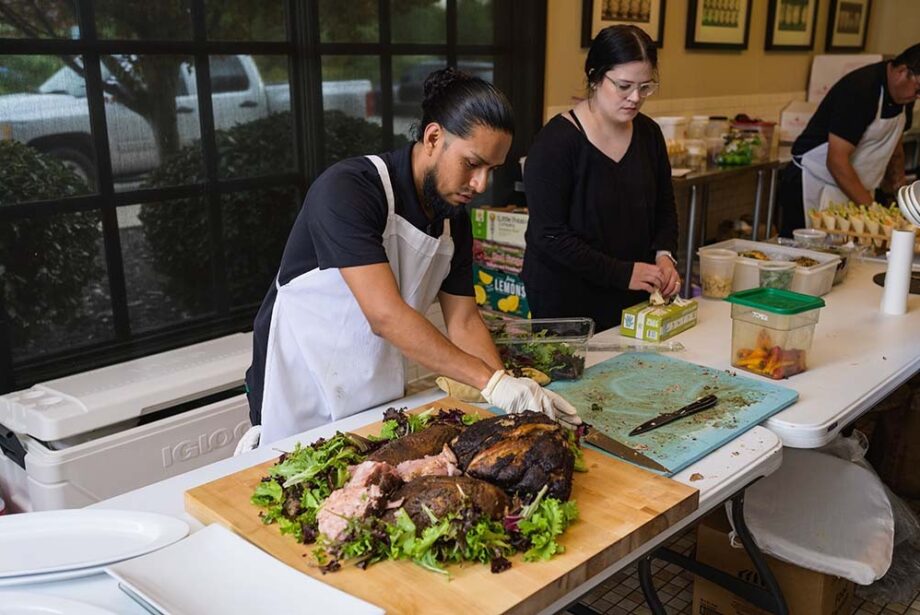
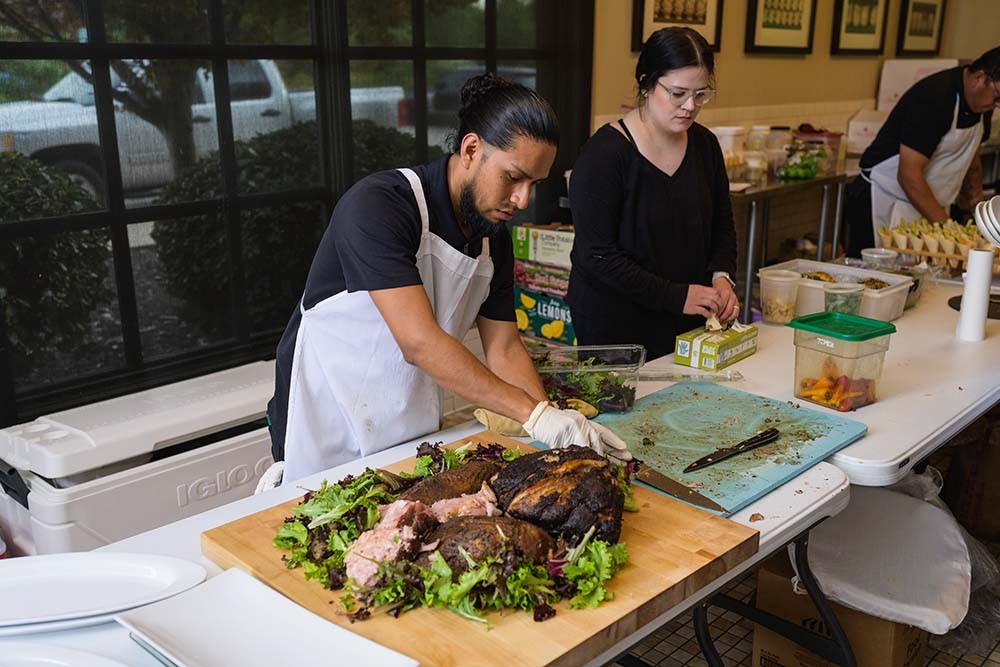
Food is a major part of any event, but providing quality meals that meet the needs of 50 to 500 people can be tricky.
Flavor, quantity and nutritional value are constant considerations for event planners and caterers, who also have to meet the special needs and preferences of guests. Considerations include allergy-friendly and gluten-free options, vegan or vegetarian options as well as the creativity that makes meals memorable and events that much more enjoyable.
Additionally, the inflation spikes of the past year are making food one of the most expensive aspects of planning an event, forcing caterers and planners to be creative with their budgets or to cut costs elsewhere.
While creating meals for large groups of people has its ups and downs, homework, groundwork and a little creativity can go a long way toward making the meal portion of an event a resounding success.
Narrow it Down
Experts recommend a streamlined menu that isn’t overloaded with too many choices that can slow down the ordering and preparation process and bog down the event. Keeping it to a couple of different options that are well-prepared, instead of a half-dozen options that can complicate the process, will mitigate confusion and keep the kitchen and servers moving.
“Maybe a veggie wrap and a salad,” said Alex Howland, owner of Alex Victtoria Events in Fayetteville. “Or some type of, if you’re going to do a plated meal, breaded chicken. That goes really far.”
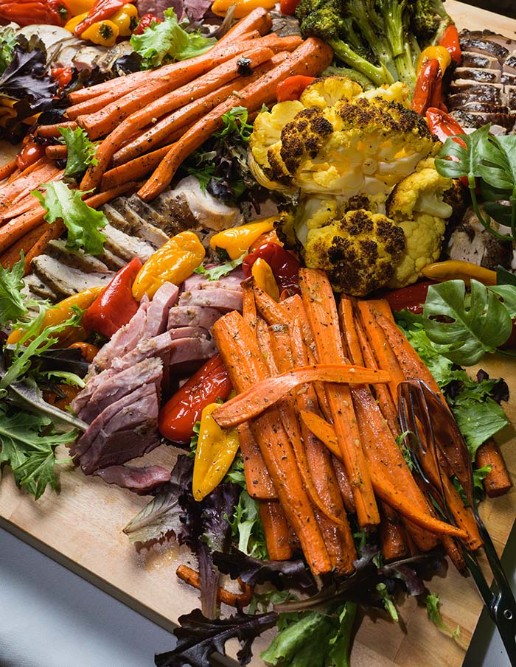
It’s a challenge to put out a simple menu when also having to consider the individual needs or preferences of many, but it’s worth the effort, Howland said.
“Trying to do one size fits all is difficult,” she said. “But a really good caterer can get to that point.”
Tim Horton, head of RH Catering based out of Cache Restaurant in Little Rock, said organization and efficiency are made easier with a streamlined menu.
“Whoever is coordinating, a lot of times if you have a large party like that, a function like that, you generally have an event planner and they’ll give you a list and we communicate that with the servers,” he said. “Again going back to the organization: OK vegan dishes are coming from over here, steak and chicken from over here.”
Count Heads
A pre-event headcount is important for a lot of reasons, from determining the number of seats and hotel rooms required to simply booking the necessary amount of event space.
When it comes to preparing food, this is where planners can learn not just how much they need but also how many vegan options are necessary, if someone has allergies or other health concerns or if there are certain dietary restrictions.
“That’s so important right now,” Howland said. “And getting that information to your caterer in advance is going to help them avoid costs and preparing too much and too little.”
Even with a head count, Horton recommends over-counting, preparing 55 portions when 50 are expected for example, to avoid the worst-case scenario of running out of food. Howland referred to it as the 10% to 15% more rule.
“If [the University of ] Arkansas is playing, ain’t that many people going to show up,” Horton said.
“You do have a little bit of wiggle room, but we always ask that at least a week and a half prior that we get a confirmed head count.”
Local Food
More and more catering companies are going green, using locally sourced ingredients to reduce their carbon footprint and working with ethical suppliers who care about the environment.
Additionally, people arriving from more distant locations often want to sample the local flavor. Farmers markets and producers can provide the ingredients that put the “local” in local dishes.
“It’s huge,” Howland said. “I have a ton of clients who want to shop local first, who shop their food local first. I get it; they want to support their neighbors. They want to [eat] in their community and maybe pay a little more for that quality of food.”
While food is more expensive these days, Howland said keeping farmers in business is less costly than seeing farms close and go away, which helps no one.
“I think spending just a little bit more on quality food is going to help us in the long run,” Howland said.

From Cache’s River Market location, it’s just a short walk to the downtown farmer’s market, and Cache has also been able to obtain fresh produce from owner Rush Harding’s farm, Horton said.
Creativity and Quality
Now more than ever, working within a budget is a necessary evil and a creative challenge, as no one wants to sacrifice quality to the economy.
“You want tenderloin but you have chicken breast money,” Horton said.
If you want to customize the dining experience and make it more personal, Horton said, presentation can help.
“We did the Opus Ball [benefitting the Arkansas Symphony], this is years back, and we did a baby grand piano made out of chocolate,” Horton said. “That was the dessert. We’ve done Caribbean for one client, they had a house in the Caribbean so we did a whole Caribbean fare, wearing Caribbean style shirts and stuff like that.”
Howland recommends trying smaller or newer caterers or unique catering options like food trucks, which she used exclusively for food service at a recent event.
This cut down cost and kitchen staff and gave guests a unique experience at the same time.
“Honestly it was the only option we could afford for the person getting those attendees meals,” Howland said.
 Sign up for Daily E-news