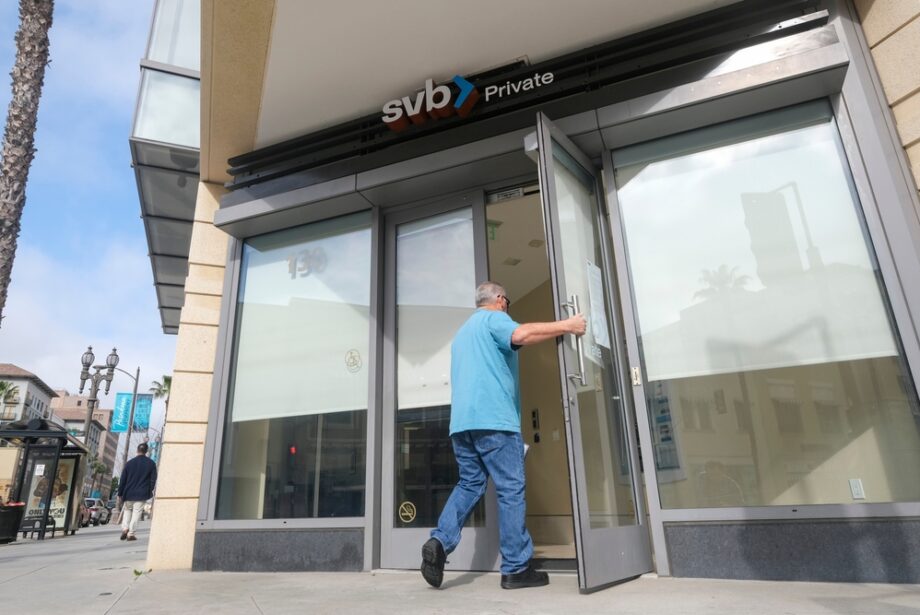
A man walks into a Silicon Valley Bank branch in Pasadena, California
The recent failures of Silicon Valley Bank and Signature Bank of New York made headlines and created anxiety for individuals and businesses as they wondered, “Could this happen to me?” As elected officials and bank regulators debate who is at fault and why this happened, I encourage you, as a bank customer, to focus on what you can control now and be proactive in managing your bank accounts.
The FDIC’s insurance limit is $250,000 per depositor, per insured bank, for each account ownership category. Most credit unions have similar federal deposit insurance coverage. As you assess the coverage and financial strength of your bank, I would not rely on the premise that your bank is too big to fail or the false sense of security from a longtime relationship with your current banker. The new reality of dynamic social media and undetected internal issues can create a Twitter-induced bank run that few banks can weather.
If you are a diligent saver or high-net-worth individual, talk to your banker about the insurance status of your deposits and your options for insuring all of your savings. Bankers are well-versed maximizing FDIC coverage by using different accounts with individual, joint, beneficiary and business ownership categories.
You will be well served to have relationships with at least two or three financial institutions spread across a diverse spectrum — your local community bank or credit union, a strong regional bank and the megabanks. Your banker (and your bookkeeper) will prefer that you put all your eggs in one basket and sell you on the ease of managing everything in one place. When you consider the work put into building your net worth, I suggest the extra effort necessary to protect it is not an unreasonable burden.
These additional bank relationships should be in place before you need them. Customers of Silicon Valley Bank described the challenge of opening accounts at new banks in the middle of a crisis. It is easy to open accounts online, but it does take time for a new bank to verify identity, funding source and signatures. Have your safety net in place before you need it.
Almost every bank participates in networks that can help spread your money around to expand your FDIC coverage. IntraFi Network Deposits helps banks place your excess deposits in separately chartered FDIC banks. Checking accounts, money-market deposit accounts and certificates of deposit are all available through these networks and can be set up to sweep daily excess funds into fully insured products. Ask your bankers which network they use and if it would benefit you to participate.
Corporations, foundations, governments and nonprofits all need to practice effective cash management, which includes a review of FDIC insurance coverage for bank accounts. Most banks, small and large, offer treasury management products for their business customers that optimize cash flows and sweep excess funds into a variety of collateralized products.
These sweep programs offer three key features:
► Liquidity — funds move in and out of sweep investments seamlessly;
► Principal preservation — funds are collateralized with U.S. Treasury or similar high-grade U.S. government bonds; and
► Yield — your investment should provide some level of return.
Securities collateralizing sweep accounts should be held by an independent custodian with customers receiving daily reports on security value and sweep balances. Review any sweep or repurchase agreements to be sure the best protections possible are in place for your business.
The recent bank failures are a good reminder that deposits are, in fact, unsecured loans from the customer to the bank. Take the time to review your personal and business accounts and structure them to manage the risk to a minimal level. The peace of mind you will receive is priceless!

 Sign up for Daily E-news