The debate about redesignating the Buffalo National River reignited 50 years of resentment and suspicion.
Redesignation proponents say it will result in additional federal funding for infrastructure improvements and more visitors who will generate more economic activity in the region.
But opponents say the move would cause commercialization of their beloved river wilderness and transform it into a trendy destination for the rich.
The Buffalo National River flows through four northwestern Arkansas counties and is considered a paradise by canoe and kayak enthusiasts. The river starts in Newton County and runs 135 miles eastward to the White River. Its watershed covers more than 1,300 square miles.
The National Park Service, a division of the U.S. Department of the Interior, manages the Buffalo, which saw 1.3 million visitors in 2022. Those visitors helped the river, officially considered a National Park by the NPS, generate a $78.5 million economic impact.
Buffalo National River Economic Impact
Year |
Jobs Supported |
Visitor Spending* |
Economic Impact* |
|---|---|---|---|
2022 |
864 |
$65.0 |
$78.5 |
2021 |
994 |
$74.3 |
$89.8 |
2020 |
960 |
$66.3 |
$76.1 |
2019 |
857 |
$59.2 |
$67.8 |
2018 |
797 |
$54.6 |
$62.8 |
2017 |
911 |
$62.6 |
$71.1 |
2016 |
1,200 |
$77.6 |
$90.2 |
2015 |
969 |
$62.2 |
$72.0 |
2014 |
890 |
$56.6 |
$65.2 |
2013 |
637 |
$46.2 |
$49.6 |
2012 |
610 |
$43.8 |
$46.9 |
*Dollars in millions (Source: National Park Service)
In October, the Madison County Record in Huntsville reported that a group called the Coalition for the Buffalo River National Park Preserve had commissioned a survey to measure public sentiment about changing the river’s designation from National River to National Park & Preserve. A furor followed.
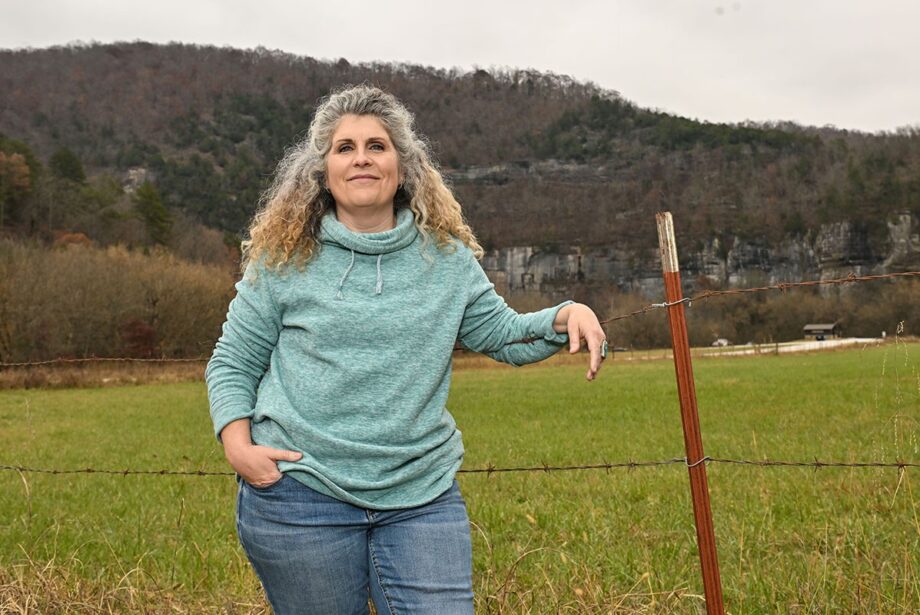
“I really feel like there will be restaurants, hotels, all of that on the river,” said Misty Langdon, who owns Steel Creek Cabins outside Ponca and organized the Alliance for the Buffalo National River, a group opposed to redesignation. “It will become a pay-to-play location, and the things we enjoy and love will just be paved over. Once the new wears off, they’ll leave and we’ll be stuck with this monstrosity of pavement.
“If someone wants to live and work in Branson, go live and work in Branson. We don’t need to recreate another Branson here.”
The Runway Group, co-founded by Tom and Steuart Walton, grandsons of Walmart Inc. founder Sam Walton, commissioned the survey. That fueled a suspicion that local opinions were being discounted and stirred up memories of when the Buffalo was designated the country’s first National River in 1972 and the government used eminent domain to take private lands to complete the National River.
The Runway Group, on its website, says it opposes any use of eminent domain in the Buffalo River Watershed.
Honest Conversation
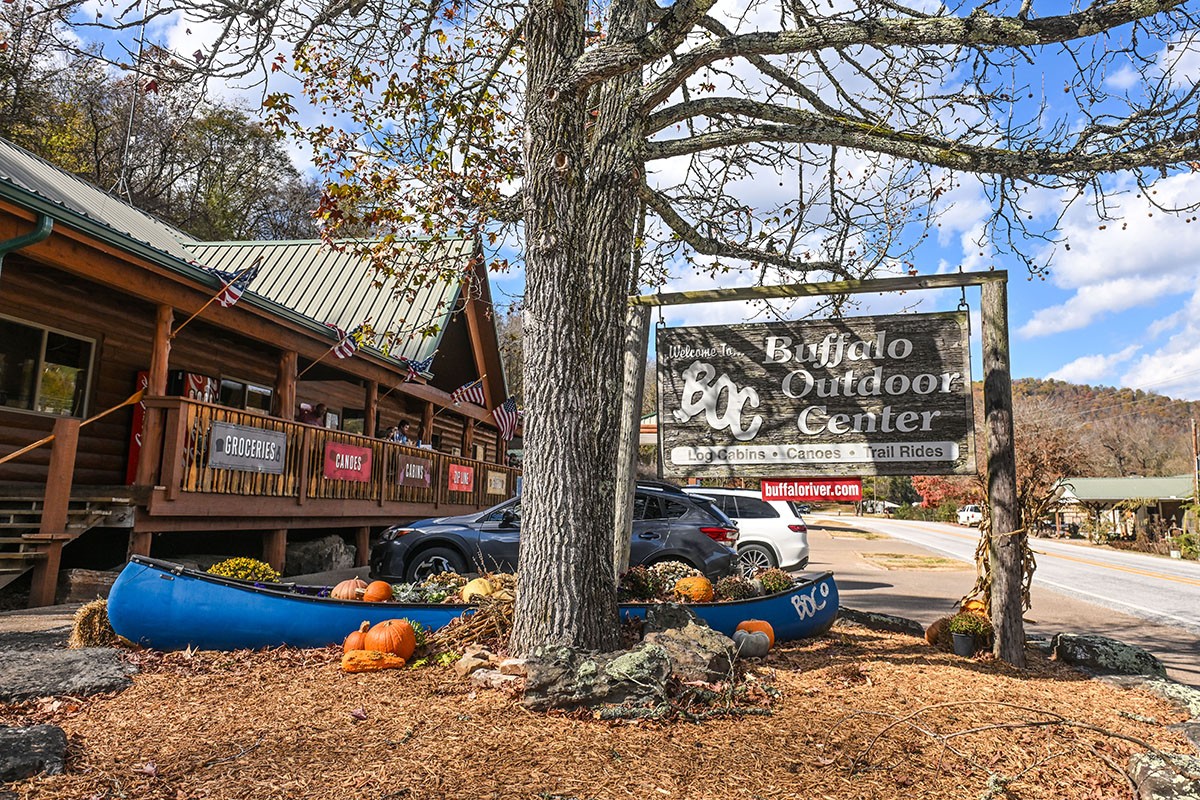
One of the proponents of at least having a conversation about redesignation is Austin Albers, owner of Buffalo Outdoor Center in Ponca.
Albers was an early voice in the debate but has since withdrawn somewhat as battle lines were drawn. He told Arkansas Business that the Buffalo needs improvements to river access, roads, bathrooms and parking lots.
Until those improvements are made, the river will risk being overwhelmed by its visitors, regardless of its designation. The Buffalo is operating with 1978 infrastructure, Albers said, and a redesignation could mean more funding.
“I am a supporter of collecting the facts and having an educated conversation about what it would do for the economy, for the local businesses and the schools and health care system,” Albers said. “Having a greater conversation and learning about the pros and cons is what I’m interested in.”
Albers said the New River Gorge in West Virginia is a good model to study for the Buffalo, a point also made by the Runway Group. New River, known for its whitewater rafting, was designated a National River in 1978 but redesignated as a Park & Preserve in 2020.
Albers said that in addition to more federal funding — $3.7 billion, according to U.S. Sen. Joe Manchin, D-W.V. — New River is also seeing more visitors during the offseason. For the Buffalo, which has an extensive trail system and many non-boating-related activities, that could mean more visitors during normally low-attendance months.
“It’s because people who travel to National Parks don’t really travel to National Rivers, generally,” Albers said. “It’s a different clientele from bird watchers and different groups that are going to the National Park to hike and explore. Being known as a National River, that’s what people think: It’s just a river.
“They don’t understand all the natural beauties that are there, all the trails. It would be leveling out the shoulder seasons to help out the restaurants and grocery stores and lodging and activities.”
Political Whims
Langdon said the redesignation would put the Buffalo at risk of state control rather than staying under NPS management and that even if the river is redesignated, there is no guarantee of more NPS funding.
“Whoever is behind this, I feel this is a way for the rich to get richer instead of being an actual conservation movement,” Langdon said. “I feel it is gentrification. Locals here do not want to see everything paved over. It is a big concern.
Annual Visitors to the Buffalo National River
Year |
Visitors |
|---|---|
2022 |
1,306,932 |
2021 |
1,515,874 |
2020 |
1,478,846 |
2019 |
1,326,282 |
2018 |
1,240,119 |
2017 |
1,471,330 |
2016 |
1,785,359 |
2015 |
1,463,304 |
2014 |
1,357,057 |
2013 |
1,125,227 |
2012 |
1,093,083 |
2011 |
1,169,802 |
2010 |
1,545,599 |
2009 |
1,522,586 |
2008 |
1,405,802 |
2007 |
1,194,043 |
2006 |
1,068,090 |
2005 |
984,059 |
2004 |
1,191,021 |
2003 |
635,344 |
2002 |
765,628 |
2001 |
794,676 |
2000 |
731,783 |
1999 |
796,279 |
1998 |
651,223 |
1997 |
580,305 |
1996 |
716,530 |
1995 |
700,564 |
1994 |
957,256 |
1993 |
1,002,084 |
1992 |
1,190,674 |
1991 |
981,833 |
1990 |
920,768 |
1989 |
1,059,334 |
1988 |
1,058,464 |
1987 |
1,052,496 |
1986 |
972,516 |
1985 |
761,086 |
1984 |
510,009 |
1983 |
655,774 |
1982 |
606,935 |
1981 |
580,075 |
1980 |
576,352 |
1979 |
675,832 |
1978 |
645,343 |
1977 |
331,500 |
1976 |
315,800 |
1975 |
224,000 |
1974 |
205,900 |
1973 |
13,200 |
Total |
46,913,978 |
Source: National Park Service
“It seemed like we didn’t have a seat at our own table. Everybody is always making the choices for us because apparently we’re not smart enough or rich enough to make our own decisions about our own land.”
Langdon said state control, a possibility under the park and preserve designation, according to the NPS, would leave the Buffalo at the whims of whoever had the political clout at any given time, meaning rules and regulations could change with every election. She said the NPS’ nonpolitical status was a “good separation” for the National Park.
The Buffalo National River needs infrastructure improvements but those can be addressed with better funding, Langdon said.
“We’re not saying don’t do anything,” Langdon said. “We’re not going to be the people saying, ‘Absolutely no progress. We don’t want a blade of grass touched.’”
Langdon organized a public meeting Oct. 26 at Jasper High School to discuss the redesignation effort. More than 1,000 people attended and, in the aftermath, the redesignation push seems to have subsided.
The Runway Group didn’t attend, saying it didn’t want to be a distraction. Albers defended the Waltons and their survey, which showed 64% of the people it polled were in favor of the redesignation.
Langdon said a poll held at the Jasper meeting found that 96% were against the redesignation.
“I try not to be in the middle of the drama, but I do want to be part of an organized, productive conversation,” Albers said. “The Jasper meeting needed to happen. It’s not a negative thing for people to get together and talk about it.
“It’s not a one-and-done thing. Conversations need to happen slowly, and it needs to happen productively to get to whatever the end result is. None of us know what that will be. I’m pushing for that adult conversation.”
‘It Scared Everybody’
Cate Handley is president of the Arkansas Canoe Club and owns Yonder Adventure Co., which offers river excursions. She said she understands the friction of the debate.
“It’s America’s first National River, and that is near and dear to people’s hearts,” Handley said. “I think for local people, getting it turned into a National Park in the ’70s and how that had to be done is still fairly fresh. There was a big kind of uproar. Eminent domain is never fun for anyone.”
Langdon, who said her family has lived on a farm near the Buffalo for seven generations, acknowledged the hangover of the government using eminent domain in 1972.
People got defensive, she said, when it was perceived the locals were not being considered in any decision about their river.
“It scared everybody,” Langdon said. “Everybody was terrified. People here, we know about eminent domain, and we know how that works and we know the success of fighting it; it’s not very good. It triggered a generational trauma here in people.”
Albers said he believes that, unfortunately, the media turned the debate into a maelstrom, another reason he began to stop talking about the redesignation publicly.
“A lot of the people who are speaking out against it are locals, and they believe that first of all the river was taken from them,” Albers said. “They have that view, but that river belongs to everybody. It is a federal park. It’s not a Jasper city park; it’s not a state park.
“It is an asset of everybody’s. Protecting it for the good of everybody and doing it in a way that protects it for the future generations is important.”
 Sign up for Daily E-news