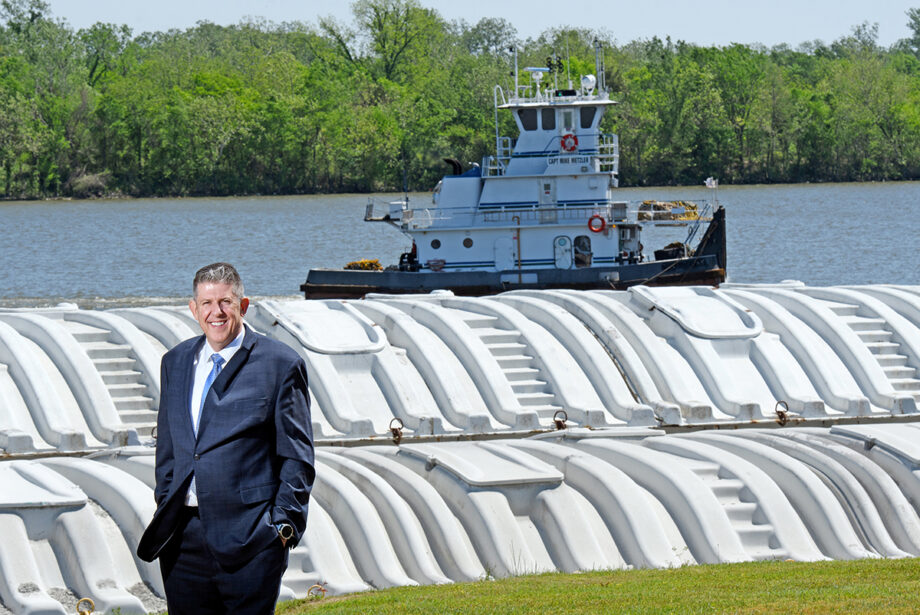
A series of upgrades totaling more than $27 million are lined up at the Port of Little Rock.
Two projects to improve the transportation capabilities at the 2,600-acre industrial park are expected to go to bid in the coming weeks, and a third is set for next year.
“More places to store and handle both barges and railcars are needed,” said Bryan Day, executive director of the Port of Little Rock. “If we can get ahead of the game, that makes us more competitive.”
First up is updating and expanding the port’s barge mooring infrastructure, an estimated $3.7 million endeavor. The job, which is expected to go to bid this month, will provide a safer and more secure mooring area along a 2-mile stretch of the Arkansas River bank.
Funding for the work is an 80/20 split between a Port Infrastructure Development Grant award from the U.S. Department of Transportation/Maritime Administration and local sources.
The mooring upgrade project encompasses a restoration and expansion of the current barge fleeting operations by replacing 15 deteriorated deadman anchors in two locations along the river with 36 steel monopile mooring dolphins and installing 11 monopile dolphins in a third location in the slackwater harbor.
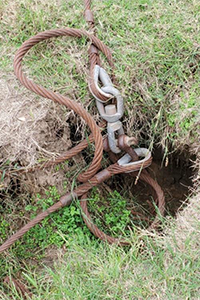
According to the project outline, the new dolphin infrastructure will allow more efficient handling of line boats, arranging barges for tow and organizing fleet barges.
Providing additional moorings along the port’s riverbank will significantly increase efficiency of operations, reducing the time for tows from three hours to 30 minutes in many instances. The reduced amount of time per tow reduces costs for the fleeting operator, stevedores and local industries.
The delays caused by the additional transit time have a cascading effect of service reliability for multiple port customers as loadings and unloadings get pushed back or rescheduled. With the new moorings, efficiency will be achieved because standby time will be eliminated or greatly reduced and tows can be built to schedule.
Work on the project is expected to start this summer and reach completion during the first quarter.
Rail Expansion
Day anticipates that bids will be let this summer for the port’s $9.5 million freight rail capacity improvement project, which will add 11,215 feet of track in two areas of the industrial park.
The north marshaling yard will expand with 6,215 feet of new rail while 5,000 feet will join the slackwater harbor network.
In addition to rail car storage, the marshaling yard expansion will provide for more efficient switching operations and prevent overflow to the east that blocks Fourche Dam Pike.
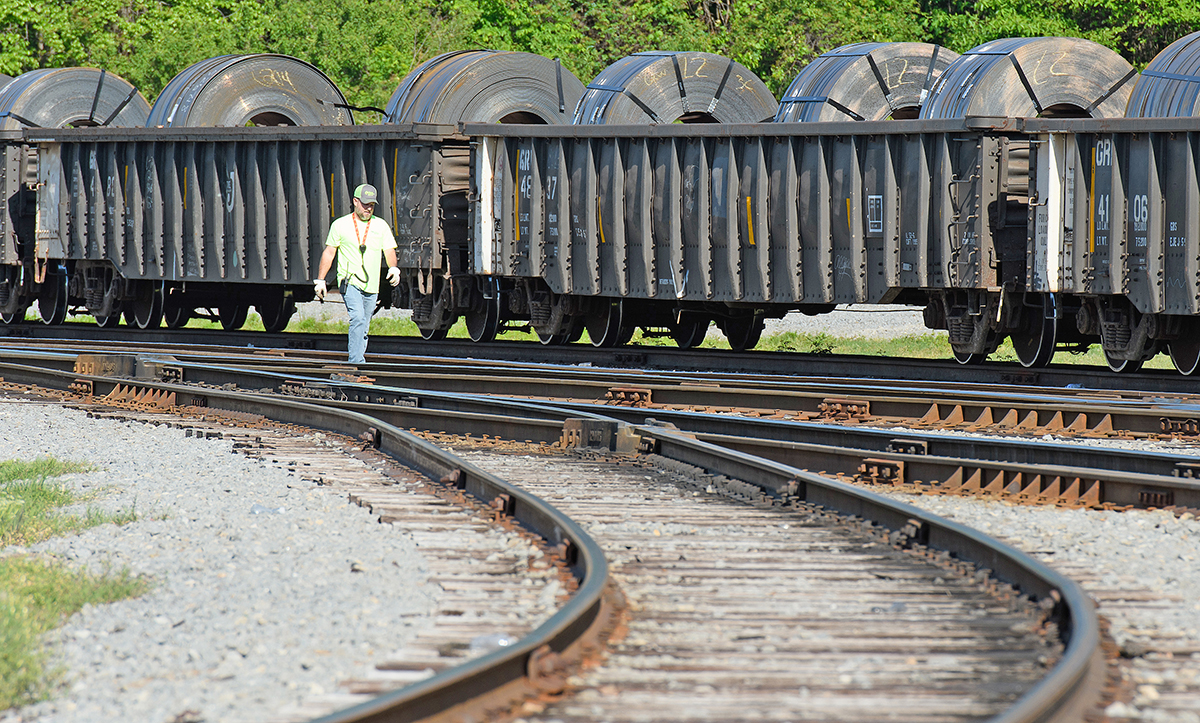
According to the Little Rock Port Authority, the new slackwater harbor tracks will facilitate movement of goods at its dock and warehouse. The extra railcar storage is necessary because even after the addition of 6,000 feet of track in the slackwater harbor area, the Port of Little Rock is at capacity.
Local industries benefit from the just-in-time production afforded by storing railcars on-site. Without sufficient space at the Little Rock Port, railcars are stored off-site, requiring more transit time and more expenses.
Railcars Interchanged
2018 |
2019 |
2020 |
2021 |
2022 |
2023 |
| 17,702 | 19,824 | 10,628 | 9,634 | 8,872 | 10,250 |
Source: Little Rock Port
Besides building more rail, the project will entail constructing an engine maintenance facility as a base of operations for the Port of Little Rock Railroad’s two locomotives and staff. The 9,424-SF building, which will also house the Port Authority’s backup computer server, is designed with room for two more train engines.
The project is funded with a $9,577,000 Consolidated Rail Infrastructure & Safety Improvement Grant from the U.S. Department of Transportation/Federal Railroad Administration.
New residents of the industrial park are helping drive the need for more rail capabilities.
Oklahoma City’s Musket Corp. is generating 500 railcars of traffic at its diesel exhaust fluid terminal. Trex Co. is expected to move up to 2,000 railcars per year once its new $400 million composite decking production complex is complete and fully operational in 2025.
Elopak of Norway is forecast to have its $70 million packaging plant complete by February 2026. That new operation is expected to generate 800-1,000 railcars of traffic at the Little Rock Port Industrial Park.
“When we add these new industries, I believe we’ll have record levels,” Day said. “Our loaded railcars could exceed 15,000 by 2026 when the new companies come on line with production. We need more track.”
During 2023, rail service for industrial customers generated nearly $4.2 million for the Little Rock Port. Revenue sources included a $325-per-loaded-railcar fee as well as car storage and switching fees.
Transload Project
Construction of a rail-to-truck transload facility is forecast to begin late next year near the southeast corner of Fouche Dam Pike and Interstate 440.
The $14.2 million project, backed by an 80/20 split of federal and local funds, should follow an 18-month timetable from groundbreaking to completion in spring 2027.
A mix of rail spurs and loading docks, the transload facility will require building 5,300 feet of track and eight turnouts with room to accommodate future rail expansion and the construction of two 30,000-SF warehouses.
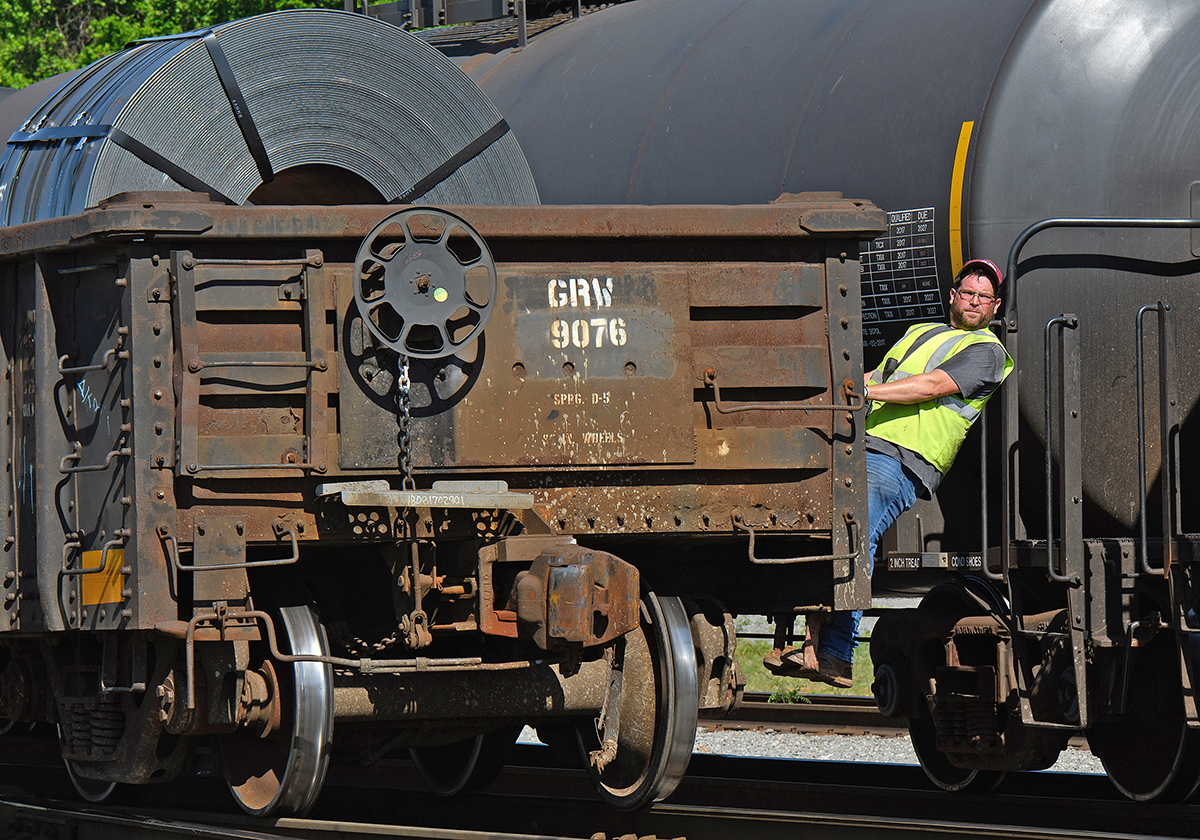
New rail work will start taking shape between the 290-acre Trex site and Welspun’s 919-acre pipe production complex. The extension will bring rail service to the dormant Synthesia site as well as Trex, Welspun and the industrial park’s designated super site.
Construction of the nearly $3.5 million rail addition, a joint venture between Little Rock’s McGeorge Contracting and Track-Work Inc., is expected to be completed in January 2025.
This January, Little Rock’s Red-Stone Construction Group completed work on a nearly $4 million contract to reroute Thibault Road from the center of the Trex property to its western perimeter.
The new path reconnects eastward with the original course of Thibault Road. The new 6,360-foot stretch of pavement provides a straight-shot route from Zeuber Road south to another industrial development in the works: the Fiocchi primer complex.
 Sign up for Daily E-news