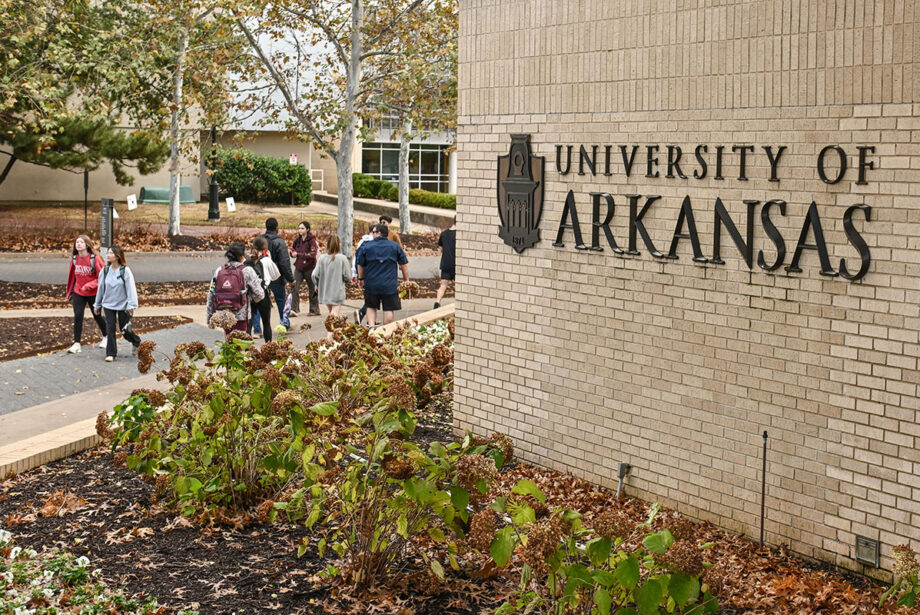
The National Institutes of Health has awarded Jian Zhang, an assistant professor of biomedical engineering at the University of Arkansas, $1.82 million to study how diseases like cancer spread.
The grant is for the study of “Mechanobiology,” or how physical cues, such as force, stiffness or pressure, affect cell behavior through interactions with the environment. The study also focuses on morphogenesis, which is the process of biology by which cells and tissues assume their shape and structures in the body.
“The overall goal of the study is to develop and apply novel, quantitative tools to study how physical forces impact the dynamic behavior of cells or tissues,” Zhang said in a press release from the university. “Of particular interest is how these physical forces relate to tissue development and the spread of diseases like cancer.”
The movement of cells is a key factor in the spread of cancer through the body. The study aims to understand how physical forces influence the way cells move around, grow and divide, and differentiate into different types of cells.
In diseases like cancer, these processes go awry.
“Physical factors play an important role in how cells move,” Zhang said in the release. “If cells encounter physical resistance, they cannot move, so they must overcome that resistance to reach a new location.”
There are “stiff” and “soft” environments in the body that may impose different levels of resistance to moving cells. Stiffness refers to the mechanical properties of tissues (how much they resist deformation). Tissues can vary widely in stiffness: bone and cartilage are very stiff; brain, lung, and fat are among the softest; and heart tissue falls in the intermediate range.
These mechanical properties play essential roles in normal physiology, including development, stem cell differentiation and tissue regeneration. Each tissue type has an appropriate stiffness range required for proper function.
In diseases, this stiffness often changes. Tissue stiffening is commonly associated with disease progression, such as fibrosis in the heart or liver, or tumor development in breast tissue. These pathological changes in stiffness can influence cell behavior in important ways — affecting growth, migration and treatment response.
Better understanding the mechanisms by which cancer cells negotiate different levels of physical resistance could be useful to interrupting its movement.
The release stated that Zhang’s goal is not to directly develop therapies, but his work aims to build a foundation for understanding how cells interface with their physical environment — knowledge that could eventually lead to better therapeutic strategies.
Arkansas Integrative Metabolic Research Center
Zhang was a research project leader in the Arkansas Integrative Metabolic Research Center (or AIMRC), and with the receipt of this award, he will ‘graduate’ from the AIMRC Research Project Leader program. The work funded by Zhang’s latest award will be a continuation of the research he began with the funding support from the AIMRC beginning in 2024.
“Dr. Zhang and his team are leading the development and application of innovative techniques that allow us to look at tissue development and disease progression from a very unique angle,” Narasimhan Rajaram, director of the AIMRC, said in the press release. “Dr. Zhang is a key researcher at the AIMRC, and we are excited to watch his research grow over the next 5 years with this award.”
The AIMRC was founded in 2021 by Kyle Quinn with support from the university and an NIH Centers of Biomedical Research Excellence award.
Zhang said in the press release that monthly meetings with the AIMRC director and mentors helped establish collaborations, utilize core facilities effectively and gain guidance on funding strategies, lab management, mentoring and career development.
“The grant preparation support provided by AIMRC allowed me to focus fully on the science during the NIH grant application and other grant submissions without having to worry about administrative hurdles,” Zhang said in the release.
The AIMRC has established research cores specializing in bioenergetics, imaging and spectroscopy, and data science to aid campus researchers like Zhang.
A previous headline for this story incorrectly described the grant recipient as a UAMS researcher.
 Sign up for Daily E-news