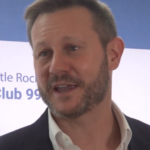
Dan McKay was named CEO of Sparks Health System in Fort Smith in August after serving as CEO for Northwest Health System of Springdale for five years.
Originally from Maysville, Kentucky, McKay is Sparks’ fourth full-time or interim CEO in this calendar year. McKay, 49, will oversee approximately 2,000 employees and 300 physicians at Sparks, which includes the Regional Medical Center, Summit Medical Center and Sparks Clinic.
McKay graduated from the University of Kentucky with a bachelor’s degree in business administration. He has an MBA and a master’s degree in health care administration from Xavier University. He has more than 20 years of experience working in hospital administration.
There has been some turnover and turmoil at the top spot at Sparks before you were hired this summer. Did you take any special action to reassure everyone and settle in smoothly?
The turnover in the top spot has been a distraction, but Sparks has a very experienced and talented management team that has provided stability. My transition has been smooth because I have a great team, and I know the area. I’ve lived in northwest Arkansas for the last five years.
What are your immediate goals for Sparks? What are your long-term goals?
My short-term goal is to fully implement the electronic medical record on the inpatient and outpatient side of Sparks and meet the meaningful use requirements set by CMS. Long term, I want to position Sparks to be a regional referral center to provide a full range of services to include trauma, emergency room, cardiology, neurology, orthopedics and hospitalist services. Also, long-term goals include the building of an outpatient network to serve the community with easy access points for primary care.
What has the Affordable Care Act meant — both positively and negatively — for Sparks?
Reducing the percentage of uninsured and giving more Arkansans access to medical insurance coverage through the Medicaid expansion is a positive for all the hospitals in the state, including Sparks. The negative is that the amount of reimbursement does not offset the cost of care. We are seeing patients seeking health care for the first time, and at times, they are very chronic because they delayed care due to lack of insurance coverage.
What are the biggest challenges hospitals facing?
Balancing the increasing expenses of a hospital with lower reimbursements is a challenge. A close second is the nationwide shortage of physicians, nurses and other clinical support. This will become more challenging with an aging population putting more demands on the system.
What do you see as a hospital’s role in educating patients who are now insured?
Hospitals do have a role in educating patients on when and how to access care. We need to be more aggressive in educating patients on prevention and setting up appointments for preventive screens such as mammograms.
How has the relationship between hospitals and physicians changed?
We are seeing more physicians seeking employment and aligning with hospitals. We are seeing more collaboration in coordinating the care of patients to improve quality of care.
How did you become interested in hospital administration as a career?
In high school, my best friend’s dad was the hospital CEO, and he encouraged me to get involved with his hospital by volunteering. I fell in love with it. I found the hospital environment exciting, challenging and an opportunity to make a difference for a community and family.
 Sign up for Daily E-news