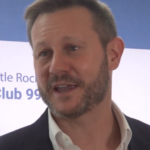
Kristian Andersen
Acceleration, capital and talent form the foundation from which the emerging Arkansas tech startup ecosystem will continue to grow, according to a prominent national investor and startup expert.
Kristian Andersen is an Arkansas-raised tech entrepreneur who splits his time between Arkansas and Indianapolis but is raising a family in Conway, where he grew up. In Indy, Andersen launched KA+A, a strategic design firm, and Gravity Ventures, the member-managed seed capital firm that just launched its third Arkansas fund.
Gravity Ventures’ first two Arkansas funds made 15 investments in 12 Arkansas startups, all but one of them client firms of Innovate Arkansas. (The second GVA fund remains active, as is GV’s third Indiana fund.)
IA is the joint venture of the Arkansas Economic Development Commission and Winrock International created in 2007 to nurture tech-based startups in that show the potential to create high-paying jobs.
GVA also invested in the ARK Challenge startup accelerator and the Fayetteville-based VIC Growth Fund, and Andersen personally was involved in the launch of Conway’s Pathagility, another IA client firm.
Andersen has served as a mentor for all four installments of the ARK, federally funded its first two years and continued through 2014 as a joint state/private venture. He also has consulted with Innovate Arkansas on numerous projects.
In addition, he’s been heavily involved in the formation of the Arkansas Fellowship program, which aims to keep the state’s entrepreneurial talent at home by providing internships for Arkansas college graduates at many of the state’s homegrown companies and startups.
Andersen believes acceleration, capital and talent are the keys to growing that ecosystem. Through its support of programs such as the ARK and the Fellowship, IA has provided acceleration and access to capital, he said. By attracting the successful Iron Yard coding school to Little Rock, it can focus on developing local tech talent.
We caught up with KA to discuss the future of techpreneurship in Arkansas, including the role of Innovate Arkansas moving forward:
MC: First, tell us about the success of Gravity in Arkansas. Obviously, you’ve found much to like in the state, enough to necessitate a third Arkansas fund.
KA: Gravity was the first true seed-stage fund in the state, and we’re now on our third fund in Arkansas. In the world of venture capital, you can fool folks a couple of times, but it’s hard to fool people a third time. That’s a testament to the success of the fund and the level of activity we’re seeing in Arkansas.
MC: Before we address the future, let’s take a look at the history of tech startups in the state and the need for something like Innovate Arkansas. Ten years ago, the startup ecosystem here was barely breathing. Today, it’s alive and kicking. How did Innovate Arkansas help breathe life into it?
KA: There are many different stages in economic development, and with each, different things are needed. Innovate Arkansas built the foundation that was necessary in year one of our tech startup development. You need an organization to do that. Early on, IA created an infrastructure where young and inexperienced entrepreneurs could get help. IA provided a sounding board, mentorship and critical advice needed for businesses to get off the ground.
MC: Were there any real resources for aspiring tech entrepreneurs prior to the creation of IA?
KA: Well, there certainly wasn’t a list of 1,000 mentors that entrepreneurs could call. What IA did was provide the critical framework by which all these questions could be resolved. IA put them through a boot camp, put the tough questions to them and helped them answer those questions, good or bad. The only thing IA demanded in payment was commitment. If you’d do those three things, IA would meet you with open arms and march you into the promised land. It would step into other vacuums that weren’t necessarily part of its mandate and focus on the three pillars of building a startup ecosystem: talent, capital and infrastructure. It was the one organization that recognized good ideas and simply asked, “What do you need? Just let us know how we can help.” Without IA, there’s no Gravity Ventures. That’s a fact.
MC: IA was the driving force in landing the ARK. Just how big has it been for the state?
KA: The ARK has been an unqualified success in terms of the talent it has attracted to the state and the businesses created and, most importantly, for the exposure the startup ecosystem in Arkansas has received because of it. Again, it doesn’t happen without IA, which saw a need to do more than just dispense advice. It saw a need to attract more smart people to come to Arkansas, plus a need to give our smart people a reason to stay in Arkansas.
MC: The Arkansas Fellowship is preparing to launch its second class. What kind of an impact can it have?
KA: The Arkansas Fellowship is an answer to the question of how can we provide reasons for our young graduates to stay in Arkansas. The Fellowship affords them the opportunity to spend two years with Arkansas’ best entrepreneurs. What these folks want is a chance to study at the foot of a master, and we have plenty of them now in Arkansas. Where you spend your first two years out of college is where you’re building your networks.
MC: What’s next for IA?
KA: IA has been quite fearless and done a remarkable job of taking risks and making bold moves. The folks at IA are not concerned with checking boxes. They’re now poised for Innovate Arkansas 3.0 — growing talent. And part of that is bringing the Iron Yard to Little Rock. It’s the largest coding academy in the U.S. and arguably the most successful. That was a seminal moment for Arkansas. The Iron Yard will fill huge gaps in the Arkansas ecosystem. We don’t have enough technical talent, and it will fill that need and create lots of opportunities for upward mobility.
 Sign up for Daily E-news