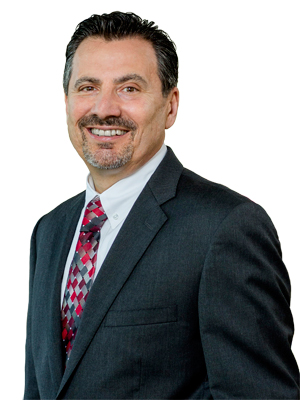
Greg Ramon
Greg Ramon, who has 26 years of experience in the water and wastewater sector, replaced Reggie Corbitt, who was fired as LRW CEO in January 2014 over what police described as “questionable expenditures.”
Ramon held several management-level positions in the wastewater and water industry before beginning his tenure at Little Rock Wastewater in October 2014. His previous jobs include serving as the assistant general manager of the Central Arizona Project in Phoenix and in several positions in the Phoenix Water Services Department, ending his time there as the assistant water services director.
Ramon earned a Bachelor of Arts from National Louis University in Evanston, Illinois, and a Master of Business Administration from the University of Phoenix.
The Little Rock Wastewater is under a consent decree to fix pipelines to correct sewer overflow issues. And that has meant a multimillion-dollar capital improvement plan. Can you tell us a little about it?
LRW has over 1,400 miles of sewer pipes throughout the city that collect both domestic and industrial waste. LRW treats to very high standards about 35 million gallons of wastewater per day at its three state-of-the-art treatment plants. Sanitary sewer overflows are a nationwide issue that most utilities are struggling to address. This often occurs when rainwater enters the pipe system and overwhelms its capacity, thereby overflowing.
Since the consent administrative order has been in place we have significantly decreased the number of overflow locations in Little Rock during extreme rain events. As part of improving the citywide system, we have embarked on Project Renew, a multiyear, $81 million effort to renew old pipelines throughout the city. This effort will reduce the rainwater entering the system and mitigate overflows.
You joined the LRW after controversy involving its previous CEO. What have you done to restore public confidence and improve employee morale at LRW?
We are working closely with all stakeholders, including residents, appointed and elected officials, regulatory agencies and LRW employees. We need to work in partnership and improve relationships. LRW provides a vital service to the community, and it is incumbent on us to build trust and cooperation. We must be transparent in our actions and focus on providing a solid service. I believe by working hard and doing the right thing, we will earn public confidence.
As for employee morale, I routinely have meetings to inform and encourage employees to ask questions. I believe in upfront and open communication. Also, I am having monthly breakfast meetings with employees in small groups. This gives me an opportunity to hear firsthand what employees are thinking and provides them a forum to voice their concerns. LRW has knowledgeable, hardworking, dedicated employees who take pride in their work.
Little is more important to a healthy society than clean water and a good sewer system, but this work might not appeal to all. Why did you enter this field?
I began my career as a crew leader for a utility in 1983. I quickly realized that this work was important and vital to a community. I also recognized the many professions who make up a utility and that it took formal education, sound decisions and transparent interactions to move up the ladder. It has been a great career for me.
If you could give the public just one message about the LRW, what would it be?
Modern cities cannot exist without reliable water and wastewater services. LRW is committed to ensuring safe, reliable service that treats and returns water back to the environment. Our mission is to treat wastewater to meet or exceed all regulatory requirements and to make it cleaner than the stream into which it is discharged.
 Sign up for Daily E-news