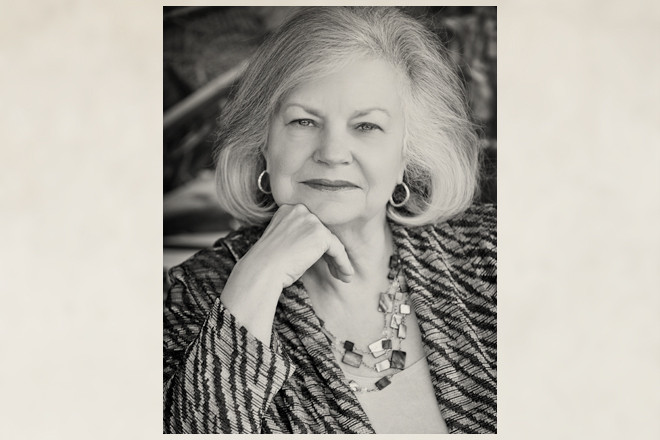
Ruth Hawkins is a storyteller at heart, and her own tale — like Mark Twain’s — has a river running through it.
Raised on a St. Louis County farm with four sisters and seven brothers, Hawkins was always captivated by the Mississippi, the backdrop for many of Twain’s classics, including Huckleberry Finn.
“The farm where I grew up was near the confluence of the Mississippi and the Missouri,” she said.
Later, as a TV and newspaper reporter in Virginia, Hawkins lived near the mouth of the James River, ironically not far from where her father once crashed a plane into the water while showing off during WWII Marine Corps training maneuvers.
But it was not until she and her husband moved to the Arkansas Delta, close to his family’s farming operations, that Hawkins totally fell in love with the great muddy Mississippi and the people who toil along the river.
“So much of life in the Delta is shaped by the river,” she said. “The alluvial soil is brought downstream and deposited to create some of the richest farmland in the world. But it also creates a resilience in the people that comes from knowing that what is given can easily be taken away. A farmer can have a great crop, but it can be gone in an instant through flooding or a hailstorm.
“Delta folks don’t need to go to Las Vegas. They gamble every day with the weather.”
1978: The Hawkinses relocate from Newport News, Virginia, to Paragould, where Ruth commutes to work at Arkansas State University
1986: The Hawkinses move to Jonesboro
1999: Hemingway-Pfeiffer Educational Center opens
2001: Hawkins assumes directorship of the ASU museum
2012: Hawkins publishes Unbelievable Happiness and Final Sorrow: The Hemingway-Pfeiffer Marriage, after 12 years of effort
2014: Historic Dyess Colony: Johnny Cash Boyhood Home, opens on Aug. 15
The region and its cultural treasures eventually became Hawkins’ stock-in-trade as director of Arkansas State University Heritage Sites, a half-dozen physical slices of history including the Johnny Cash Boyhood Home in Dyess (Mississippi County) and the barn studio in Piggott (Clay County) where Ernest Hemingway wrote parts of A Farewell to Arms.
At 70, she reflected on the journey that brought her to membership in the Arkansas Women’s Hall of Fame. Her selection is a great honor, said Hawkins, already a member of the Arkansas Tourism Hall of Fame.
“It’s not everybody who can go to a job they love every day, and then be recognized for it,” she said.
Hawkins’ greatest female mentor was her mother, the late Hazel Wehmer, who earned a college degree in business administration in the early 1940s and worked as a statistician at TWA airlines before marrying her husband, Jim, a Marine Corps fighter pilot during World War II. “Then for the most part she raised 12 children while working a full-time job, and it never really occurred to me that she was far different from other women of her time,” Hawkins said. “I thought all women went to college, got a degree, worked and raised children.”
Her father, who led his family with military precision and lined up Ruth and her siblings in order of age at breakfast to give them their daily marching orders, “never made a distinction between what his sons and daughters were capable of achieving,” she said.
“He ran the farm and dabbled in various businesses, one of which was a shoe repair shop that he bought partly because it was hard to keep 12 kids in shoes. My first real job, when I was 13, was working afternoons and summers in that shop.”
There was never much doubt that Hawkins herself would go to college. But she had a bit of interest in everything, and wasn’t sure what direction she wanted to go until a high school journalism teacher came along.
“She was a great mentor, and she knew that I enjoyed writing,” Hawkins said. “In journalism you learn discipline, how to work on deadline, how to organize and get to the heart of a story or situation — skills that are important in any discipline.”
She got her journalism degree from the University of Missouri, where she met her husband, Van Hawkins, a literature major. But the Vietnam-era draft muddied life’s plans, and as newlyweds the Hawkinses landed in Norfolk, Virginia, where Ruth became a news reporter while Van served in the Navy.
When Van left the Navy, he became city editor for the Newport News Times Herald in Virginia, while Ruth hired on as public information coordinator for the Newport News School District.
“After nine years in Virginia, we came back west in 1978 so Van could farm with his father, and we settled in Paragould, which was logical,” Hawkins said. “He could farm along the Missouri-Arkansas state line, and I could commute to Arkansas State University, the closest place I could find doing a job I enjoyed.”
Within a few years, Ruth was the university’s Vice President for Institutional Advancement, raising funds and public awareness for the school, and Van was reorganizing his father’s farm finances.
The 1980s farm crisis was one of the worst downturns for agriculture since the Great Depression, but it led to a second career for Van, who became an accountant specializing in farm turnarounds. Later, sharing Ruth’s love of the Delta, he would retire to write books about the region, including Plowing New Ground, about the Southern Tenant Farmers’ movement, A New Deal in Dyess, which details the Depression-era agricultural settlement where Johnny Cash grew up, and Smoke Up the River, about steamboats along the Arkansas stretch of the Mississippi.
Through the years Ruth earned her master’s at Arkansas State and a Ph.D. at the University of Mississippi. She also wrote her own book about Hemingway’s 1927-1940 marriage to Pauline Pfeiffer, daughter of major landowners in the Piggott-Clay County area.
It was there, in a barn loft refitted as a studio, that Hemingway wrote portions of his first bestseller, along with various short stories.
Unbelievable Happiness and Final Sorrow: The Hemingway-Pfeiffer Marriage, published by the University of Arkansas Press, was a labor of love that took 12 years to research and write, Hawkins said.
“But it meant a great deal to me to set the record straight about the Pfeiffers and their influence on Ernest Hemingway. The title comes from Hemingway himself, who said that if he ever wrote a book about his ex-wife, it would be filled with ‘love, remorse, contrition, and unbelievable happiness and final sorrow.’ ”
The Hawkinses moved in 1986 to Jonesboro, where they raised their son, Curt, an attorney at Waddell, Cole & Jones PLLC in town. He is married to Amy Schmidt, who teaches in the English department at Arkansas State.
Hawkins said women with families have made great strides since her mother’s day.
“I believe that one of our most valuable resources in the workplace today is women with families who are entering or returning to the workforce,” Hawkins said. “Sometimes their strengths may not show up in formal resumes, but you can’t raise a family without developing crucial skills — organizational abilities, event planning, time management, interpersonal and negotiation skills, just for starters. I’ve been fortunate in working with strong women who have possessed those skills.”
Discover more about the Arkansas Women’s Hall of Fame Class of 2017.
 Sign up for Daily E-news