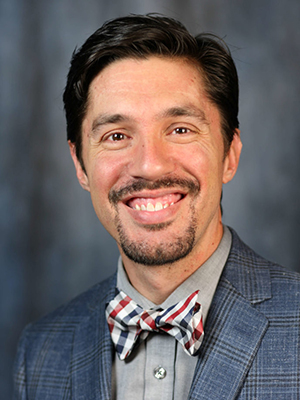
Steve Rice
The Arkansas School of Mathematics, Sciences & the Arts in Hot Springs has some bragging to do: A team made up of computer science instructor Nicholas Seward and alumni Zach Lovin and Jordan May recently won the JOLT Hackathon held Oct. 7-8 in Little Rock.
And the team that placed second among 28 teams, most of them made up of tech professionals, was composed of ASMSA seniors: Ben Allen, Denver Ellis, John Ostermueller and Noah Sherry.
Two other teams from the public boarding school for gifted juniors and seniors competed in the 20-hour cybersecurity-focused competition the Venture Center hosted at the Little Rock Technology Park, and they held their own against the professionals, finishing in 14th and 15th place.
In addition, four more teams had at least one ASMSA alumnus as a member.
These wins are a product of the school’s 25-year history of teaching computer science, and ASMSA is sharing that expertise with the state through its Coding Arkansas’ Future initiative, according to Steve Rice, who was hired in June as an entrepreneurship instructor.
ASMSA launched the initiative in 2015 in response to Gov. Asa Hutchinson’s signing of Act 187, which required all public and charter high schools in Arkansas to offer computer science education courses beginning with the 2015-16 academic year.
There was a shortage of teachers qualified to teach coding when the law went into effect, and ASMSA wanted to help.
The law fulfilled the new governor’s campaign promise and established computer science education as a priority of his administration.
ASMSA’s Coding Arkansas’ Future initiative goes hand-in-hand with state officials’ efforts.
It has been providing teachers with opportunities to learn how to teach computer science courses, and it has been providing students across Arkansas the opportunity to take an online computer science course.
More than 125 current and up-and-coming computer science teachers are currently enrolled in year-long mentorship and professional development courses offered through the initiative, according to Coding Arkansas’ Future Director Daniel Moix, who works part time from the space ASMSA leases at the Tech Park.
The initiative is funded by grants from the Arkansas Department of Education and industry partners, he said, so those courses can be offered at little or no cost to teachers.
Rice was the Venture Center’s director of communications from January 2015 to December 2016, founded the Start Here Initiative in May 2016 to address a gap in access to capital for women and minority startup founders, and works for SR Communications Group.
Rice’s position falls under the Coding Arkansas’ Future initiative, and his office is at the Tech Park, where he is already teaching a new advanced research and entrepreneurship course to seven ASMSA students.
Rice and Moix are also developing a new course to train teachers to teach entrepreneurship, a course that will be offered by the Coding Arkansas’ Future initiative.
Rice believes that entrepreneurship and computer science overlap, and he said he and Moix are attempting to exploit that to better educate ASMSA students and to better educate students across Arkansas by producing qualified entrepreneurship teachers.
Moix put it this way: “Computer science informs consumers; it helps teach kids to think and, beyond that, from the business perspective, if you transition from just being a consumer to being a creator of content, of solutions, of value, … it changes the way you look at the world.”
Rice said it’s important to teach students entrepreneurship so they can recognize how value is created in the market and how that value is communicated and captured. Though students going on to start new businesses is an important and desirable result, the students who learn these skills will be more successful in their careers even if they work for someone else, Rice said.
While Rice was hired to teach ASMSA students, the school’s future plans include hosting entrepreneurial education events that would involve students from other schools.
He also said the majority of the school’s graduates stay in Arkansas to earn their higher education degrees and to begin their careers, so events like the recent hackathon give local businesses a preview of talent they may need down the road.
The events also show students the real-life applications of what they’re learning in the classroom, Rice said.
 Sign up for Daily E-news