Pam Jones loves to see black people in advertisements.
“If I see somebody that looks like me, I’m going to take more interest in that product,” she said.
But when she sees an African-American child model in a “Coolest Monkey in the Jungle” hoodie by H&M, or a Dove ad that shows a black woman taking off her shirt to reveal a white woman underneath, she has to shake her head.
“Anybody who has been paying attention has seen the missteps by these brands,” Jones said recently at the Tech Park in downtown Little Rock. “It’s not just a lack of color in advertisements, but brands being tone-deaf to things that might be offensive. … You’ve got Dove, H&M marketing, Pepsi.” (The soft drink company’s Kendall Jenner commercial was quickly pulled, criticized for trivializing the Black Lives Matter movement.)
“I’m thinking it shouldn’t be that hard to represent diversity in advertising. You just have to be deliberate about it, and to have some people from different backgrounds at the table.”
Jones has been that person at the table, rising to vice president at CJRW, the large Little Rock marketing firm, before founding Culturally Connected Communications in 2014.
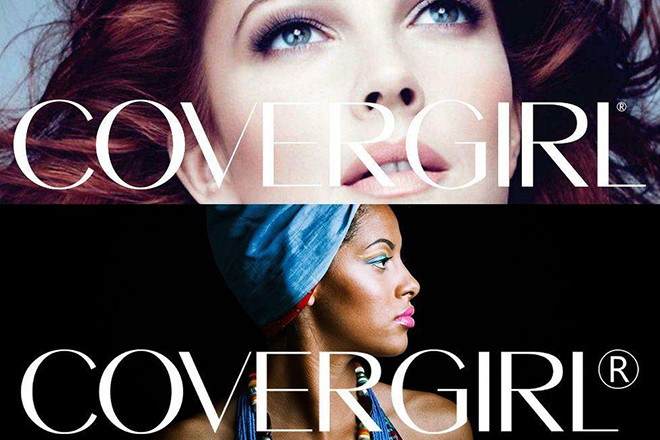
To address a lack of advertising diversity and “stereotypical representation,” her firm seized on Black History Month as the platform for a social media campaign, taking a different ad every day and reimagining it with brown and black subjects. “We place the old ad and the revised ad side by side, so that the difference is obvious.”
She avoided blatantly racist ads from the past, those showing obsequious servants and black children in the bath being washed to whiteness with potent soap. She wanted more contemporary examples, ads that missed their chance to be inclusive.
A CoverGirl ad’s red-haired, blue-eyed model yields to a mocha-tinged subject seen in profile. An Airwalk shoe ad’s helmeted skateboarder contrasts with a woman in sunglasses sporting an afro.
Images in the campaign, called (Ad)ding Real Color: Campaigning for the Full-Color Spectrum, are up on Facebook, Instagram, Twitter and LinkedIn, and they’re aimed at businesses, advertisers and the marketing industry. Skilled advertisers can make or break stereotypes, but beyond that, she said, inclusive ads make good business sense.
“There’s a misperception that it’s not worth the money to try to reach people of color. But studies have found that people want to get services and products from people making an appeal with people who look like us.”
The campaign isn’t about drumming up business for Culturally Connected Communications. It took time, she said, but she’s doing fine financially these days, as well or better than she did on salary at CJRW.
“I’m not anticipating that my phone’s going to start ringing off the hook,” Jones said in her “country Arkansas accent,” a product of her native Pine Bluff and her upbringing in Smackover. Instead, she hopes “to open the eyes of the other agencies, to have them ask what they can do to make sure they’re representing everybody.” Clients want to sell to an audience beyond Caucasians, she said, especially in Little Rock, where African-Americans make up some 45 percent of the population.
This month’s campaign goes hand in hand with Jones’ work with the Arkansas chapter of the Public Relations Society of America, where she and Riva Brown, an assistant professor of PR at the University of Central Arkansas, have established a diversity and inclusion committee. On Friday, the chapter was scheduled to hear a talk by Jenifer Daniels, founder of Colorstock, a diverse stock photo service that has prospered in Charlotte, North Carolina.
Jones said she couldn’t have pulled off the campaign without her son, Jordan Jones, a digital designer and magna cum laude graduate of Henderson State University who developed the side-by-side ads. “I’m lucky because he’s my son, but he’s also very, very talented.”
 Sign up for Daily E-news