


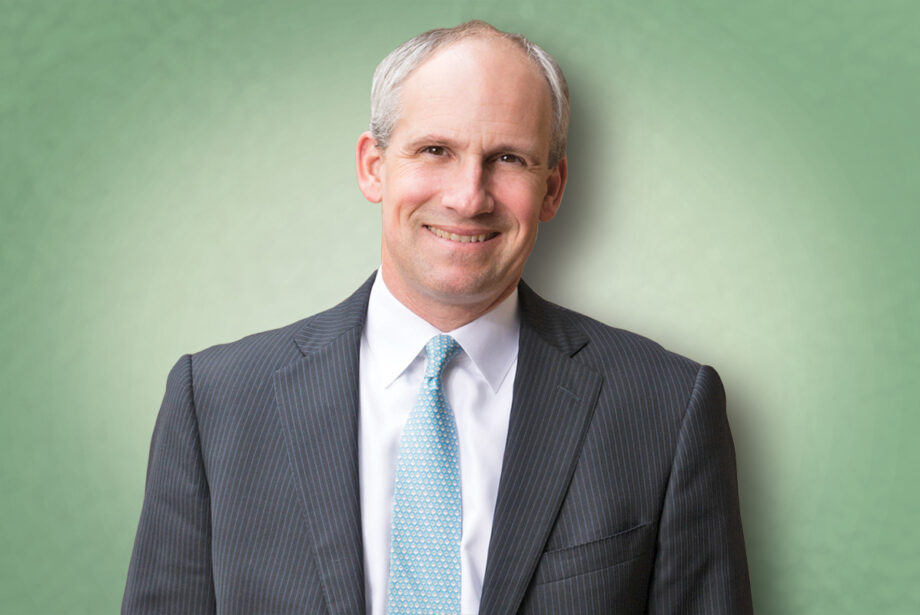
President and Chief Lending Officer of Citizens Bank of Batesville
After a year as an account services representative for Acxiom Corp., Adam Mitchell became a banker, first with Simmons Bank, then Pulaski Bank and then back to Simmons and its holding company, Simmons First National Corp., for some 14 years in increasingly responsible positions. He was executive vice president and chief retail officer when he left in March to join Citizens Bank of Batesville.
Mitchell is a 1993 graduate of Catholic High School in Little Rock and a 1997 graduate of Hendrix College at Conway. He also attended various banking schools, including the Stonier Graduate School of Banking and the Risk Management Association’s Lending Academy and Real Estate Lending School. Adam Mitchell was recognized by Arkansas Business as a 40 Under 40 honoree in 2003, when he was 28.
You left a large, publicly traded bank for a much smaller privately owned bank. What are the advantages and disadvantages of each?
The advantages of a smaller, privately owned bank include the ability to control our own destiny, the ability to modify or change our business model in a timely fashion, to go to market with new products and services faster and the ability to keep one-on-one relationships with our customers and associates.
The advantages of a larger, publicly traded bank include scale, capital, currency and liquidity for shareholders and associates. Both models have disadvantages, but I prefer to discuss the advantages.
To have the president of Citizens Bank based in Little Rock seems like a very deliberate change. What does that tell us about the future?
Citizens Bank is going to require both legacy and new markets. The bank was founded in Batesville on the principle of serving local needs. This will still be our primary focus no matter what market we serve. We are committed to Batesville. Our CEO, Phil Baldwin, lives in Batesville, and we are constructing a new headquarters. I spend time each week in Batesville and will continue to do so. The bank’s strategy is to grow throughout the state, especially in central Arkansas. Since I am a central Arkansas native and have been banking in the market for over 15 years, it was a logical fit.
At Simmons, you were chief retail officer. How is retail banking changing and what does that mean for consumers?
The retail customer is changing rapidly. With very few barriers to entry, our customers are now using nonbank partners to handle their payment systems and to help with their financial management. There’s still a people side to every channel, but banks are going to have to be nimble and smarter on how they deliver products and services.
The real challenge with the retail customer is our changing demographics. The majority of retail deposit customers are Gen X and baby boomers. They are going to be replaced by a much younger customer base with not nearly the amount of deposits. While the retail customers are using branches less often, there will still be a need for branches in the future.
When you communicate with Arkansas’ congressional delegation, what do you tell them the banking industry needs?
I ask that they continue to spend time talking with bankers and our customers. We still need to approach legislation logically based on size and scale. Community banking is the backbone of our state and we must keep it alive and well.
Who have been mentors in your career? What are their most important lessons?
My father, Dr. George Mitchell, taught me to trust my instincts, treat others as you want to be treated and to value collaboration. He said teamwork and leadership go together; you have to have both to succeed. He taught me to lead by example and to earn respect versus demand it.
 Sign up for Daily E-news










