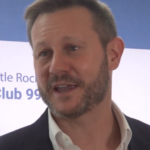
Robert Mintak
Standard Lithium Ltd., the Canadian company that has been churning out news with its plan to mine battery-grade lithium from the vast streams of salty water beneath south Arkansas, has discovered “robust” amounts of the element in samples from the Smackover Formation.
On Wednesday, the company made public its “maiden resource statement” for its 150,000-acre project near El Dorado and Magnolia, where brine streams have been used in commercial bromine production for more than a half-century.
Standard Lithium, based in Vancouver, plans to build a pilot plant to take waters already stripped of bromine and use innovative technologies to extract lithium from it. Last week, it announced negotiations toward a joint venture with Lanxess, a German multinational specialty chemical company with a large bromine operation and infrastructure in south Arkansas.
If the plans pan out, Lanxess will provide its brine stream and technical expertise — as well as possibly significant financing — in exchange for a stake in a pilot lithium extraction plant Standard Lithium plans to build on-site. Standard Lithium will also share its proprietary process for the extraction of high-purity lithium carbonate, as well as related intellectual property.
Bromine is used primarily in flame retardants; lithium is used in batteries for everything from cellphones and laptop computers to power systems for electric cars.
Standard Lithium’s “maiden resource report,” released Wednesday, detailed lithium levels in samples taken from three separate bromine extraction plants to have a maximum concentration of 191-200 milligrams per liter of brine.
For comparison, the U.S. Geological Survey Produced Waters Geochemical Database collected data on 114,943 brine samples from across the United States and found only 344 with lithium concentrations of 70 milligrams per liter and above.
“Our development strategy has been data-driven from the outset; our disciplined approach has been validated by this robust mineral resource estimate that is fully in line with the due diligence we conducted,” Standard Lithium President and COO Andy Robinson said in a statement.
Robert Mintak, the company’s CEO, told Arkansas Business that it’s important to remember that a mineral resource is not the same as a mineral reserve. There is no guarantee of commercial success. But nevertheless, he was pleased.
“The release of this first resource report is a significant milestone for the company and shows that the south Arkansas project is one of the most interesting emerging lithium brine projects globally. The combination of robust data sampled from existing brine production wells, with a large land package of 150,000 acres and associated infrastructure, makes this project a compelling opportunity,” he said.
He said a separate resource report on 30,000 acres of separate brine leases in southwest Arkansas will come by the end of the year.
 Sign up for Daily E-news