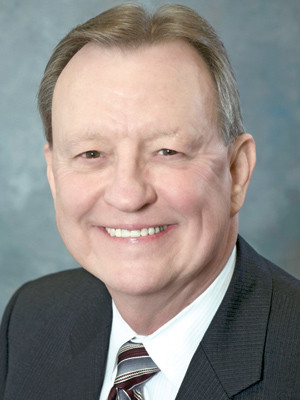
University of Arkansas at Little Rock Chancellor Joel E. Anderson announced Wednesday that he will retire as chancellor effective June 30.
The retirement will cap a 13-year run as chancellor and a 45-year career at the university, according to UALR.
“It has been a tremendous pleasure to see UALR grow and mature into the excellent, comprehensive university that it has become,” Anderson said in a news release. “The faculty and staff of UALR deserve more credit than they will ever receive for their tireless efforts to help students achieve the dream of a college education that will enable students to adjust to a changing future and support themselves and their families.”
Anderson became chancellor in 2003. He had previously served as provost, vice chancellor for academic affairs and founding dean of UALR’s graduate school.
The university said UA System President Donald R. Bobbitt will form a search committee in the coming weeks with the goal to complete the search by July 1.
“It has been one of the great honors and privileges of my professional career to work with Chancellor Anderson,” Bobbitt said. “He has been a calm and productive leader for UALR, and it is clear from the length of his service to the institution that he has passion and concern for the students and the faculty who serve them.”
The university noted that during Anderson’s time as chancellor, the campus completed several building projects:
- the Donaghey College of Engineering and Information Technology
- the Donaldson Student Services Center
- the Nanotechnology Center
- the Coleman Sports Complex
- the Jack Stephens Center
- three residence halls
The university also completed the Coleman Creek Greenway Project and the purchase of the University Plaza shopping center.
UALR also cited a recently announced a partnership with eStem to build a new high school on the university’s campus; 11 fully online degree programs; the expansion of doctoral programs; completion of a $103 million comprehensive fundraising campaign; and the creation of the George W. Donaghey Emerging Analytics Center. And in 2011, the university founded the Institute on Race and Ethnicity.
“The university has good momentum,” Anderson said. “I need time to catch up on a backlog of books and also to see my grandchildren more often. All the while I will watch with pride as UALR grows and changes.”
 Sign up for Daily E-news