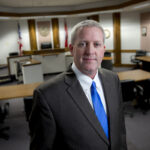
Matthew Hass is the executive officer of the Arkansas Trial Lawyers Association.
A battle heated up last week when the state Chamber of Commerce began fighting back against an Arkansas Bar Association proposal that would block the chamber’s preferred version of tort reform.
On Friday, at the Bar Association’s annual meeting in Hot Springs, its 122-member House of Delegates is scheduled to vote on whether it wants to proceed with a proposed amendment to the Arkansas Constitution. If the proposal wins support, the 5,700-member association will begin lining up canvassers to collect signatures to put the initiative on the November 2018 ballot.
The ballot will already include a tort reform measure favored by the chamber, Senate Joint Resolution 8, placed by the General Assembly.
SJR 8, approved for the ballot earlier this year by legislators, caps monetary awards for pain and suffering at $500,000 and punitive damages, which punish wrongful conduct, at $500,000 or three times the amount of the damages awarded to the plaintiff for an actual loss. It would also limit contingency fees to 33.3 percent for lawyers, a bargain compared with the 40 percent that attorneys can get for taking on complex cases.
While the state chamber supported SJR 8, the Bar Association lobbied against it, and when it was approved, the association drafted its own proposed constitutional amendment.
Randy Zook, president and CEO of the Arkansas State Chamber of Commerce/Associated Industries of Arkansas, has asked the chamber’s board of directors and executive committee for help in preventing the Bar Association from going forward with the initiative.
“Urgent action is required in advance of that meeting,” Zook said in a letter obtained by Arkansas Business. Zook urged the officers to contact their attorneys to tell them to oppose the Bar Association’s proposal.
“Meaningful tort reform has been denied in this state for far too long,” Zook said in the undated letter. “We look forward to the passage of SJR 8 as it will make Arkansas an attractive place to conduct business and create jobs.”
Others say the legislation isn’t needed. The Arkansas Bar Association said SJR 8 continues a trend of tort reform initiatives by the Legislature.
In March, the General Assembly passed a bill that changes the Arkansas Deceptive Trade Practices Act. Trial attorneys say those changes hurt consumers. Now consumers can’t bring class-action complaints for deceptive trade practice violations. Only the Arkansas attorney general can bring those class actions.
“Generally speaking, there are very few attorneys that handle class-action cases,” said Matthew Hass, chief executive officer of the Arkansas Trial Lawyers Association. “But they’re all concerned about the consumers and the long-term effect of this.”
However, an attorney who represents businesses in class actions praised the changes.
“I have seen a lot of very expensive litigation that is onerous on companies and unnecessary to protect consumers because they have other viable mechanisms to bring their claims,” said Megan Hargraves, a member at the Little Rock law firm of Mitchell Williams Selig Gates & Woodyard PLLC. She said consumers who think they’ve been harmed by a company can contact the Better Business Bureau or bring a lawsuit as an individual plaintiff. (See sidebar.)
Tort Reform History
In 2003, the Arkansas Legislature passed the Civil Justice Reform Act, which capped damages meant to punish the defendant at $1 million. The legislation also eliminated the theory of joint and several liability, meaning the plaintiff could no longer recover all the damages from any of the defendants, regardless of the individual liability.
It also made it procedurally harder to file medical liability claims.
Over the years, however, the Arkansas Supreme Court has declared portions of the legislation unconstitutional.
Last year, Arkansas nursing homes collected enough signatures to put an amendment on the ballot that would limit noneconomic damages and attorney contingency fees in medical suits. But less than a month before the November election, the state Supreme Court sided with challengers and tossed the amendment from the ballot.
Earlier this year, Arkansas legislators decided to tackle the issue.
State Sen. Missy Irvin, R-Mountain View, a sponsor of SJR 8, said legislators worked with attorneys and business groups to craft the proposed legislation.
“We did an outstanding job,” Irvin said. “This is not some alien piece of legislation. This is … tort reform that is patterned off of what is working in other states, including the most conservative states and the most liberal.”
The Legislature made SJR 8 one of the three constitutional amendments it can refer to the ballot in any one year.
“I think what we’ve proposed is very fair, and it’s a balance,” Irvin said.
Business Growth
Irvin said that if voters approve SJR 8, businesses will be attracted to Arkansas.
“We are not on equal footing right now with those states” that have adopted similar legislation, Irvin said. But with caps on damages for pain and suffering and noneconomic damages in place, the state will be, she said.
“It’s comparable to what other states have put in place, and have had in place for years and years,” Irvin said.
Businesses factor in the legal environment of a state before choosing where to locate, she said, and she believes companies have avoided Arkansas because of tort law here.
Zook, of the state chamber, agreed with Irvin that lacking limits on jury awards for pain and suffering and other damages has hurt the state’s efforts to attract businesses.
“Business owners and operators of all sorts need a reasonable level of certainty as to their liability exposure, and the SJR 8 definitions and limits on punitive damages, as well as noneconomic damages, are badly needed to establish that level of understanding,” Zook said.
Zook pointed to a 2015 study by the United States Chamber of Commerce’s Institute for Legal Reform that ranked Arkansas 41st out of 50 states for its lawsuit climate.
Of the states surrounding Arkansas, Texas came in at No. 40; Missouri, No. 42; Mississippi, No. 43; and Louisiana, No. 49.
“I can tell you being on a 10-worst list of any kind does not help our cause, ever,” Zook said.
In addition to the caps, SRJ 8 lets the Legislature, with a three-fifths vote, amend rules of pleading, practice and procedure “for all courts.”
Jurors and ‘Common Sense’
Denise Reid Hoggard, president of the Arkansas Bar Association, spoke against SJR 8 as it was being debated in the General Assembly.
“It attempts to take rights away from the public,” she told Arkansas Business last week.
Hoggard also said the caps on damages placed by SRJ 8 are unnecessary. “We don’t have runaway juries in Arkansas,” Hoggard said. “Arkansans use their common sense.”
In addition, safeguards are in place to prevent large awards if they are unwarranted. A judge can reduce the jury’s amount or the judgment can be lowered or thrown out on appeal.
“What [SJR 8] is doing is keeping juries from making decisions that affect their local areas,” Hoggard said.
Little Rock attorney Scott Trotter said that if SJR 8 passes, he believes it will be one of the strictest tort reform laws in the nation.
“It applies to all civil lawsuits, not just … medical injury,” he said. “And secondly, it takes the rule-making authority away from the courts and gives it to the Legislature. That’s quite unusual for the Legislature to acquire that type of authority.”
Trotter wrote the amendment proposed by the Arkansas Bar Association that is competing with SJR 8.
“It is our view in order to contest SJR 8 through this alternative amendment, then we need to have provisions in our amendment that conflict with the SJR provisions,” Trotter said.
Under the Bar Association’s proposal:
- A two-thirds majority vote of the Legislature would be required to override the governor’s veto. “This would bring Arkansas into the mainstream,” Trotter said. Arkansas is one of only six states that require a simple majority to override a veto, he said. Thirty-eight states require a two-thirds majority, and the remaining states require a three-fifths majority, he said.
- The General Assembly would be prevented from capping damages in a lawsuit.
- The General Assembly wouldn’t be allowed to limit attorney’s fees.
- The Arkansas Ethics Commission, after public hearings and comments, would be required to devise ways to regulate Arkansas political campaigns’ “dark money” and require the donors to be identified. Dark money describes campaign advertising spending by nonprofit groups not required to identify their donors.
Trotter said that if both SJR 8 and the Bar Association’s legislation are approved by the voters, the initiative with the most votes will be the one that overrides the other where there are conflicts, meaning that parts of SJR 8 could be included in the state constitution and part of the Bar Association’s proposal could become constitutional language.
Hoggard said the Bar Association’s legislation committee has unanimously recommended that its members vote for the proposal.
 Sign up for Daily E-news