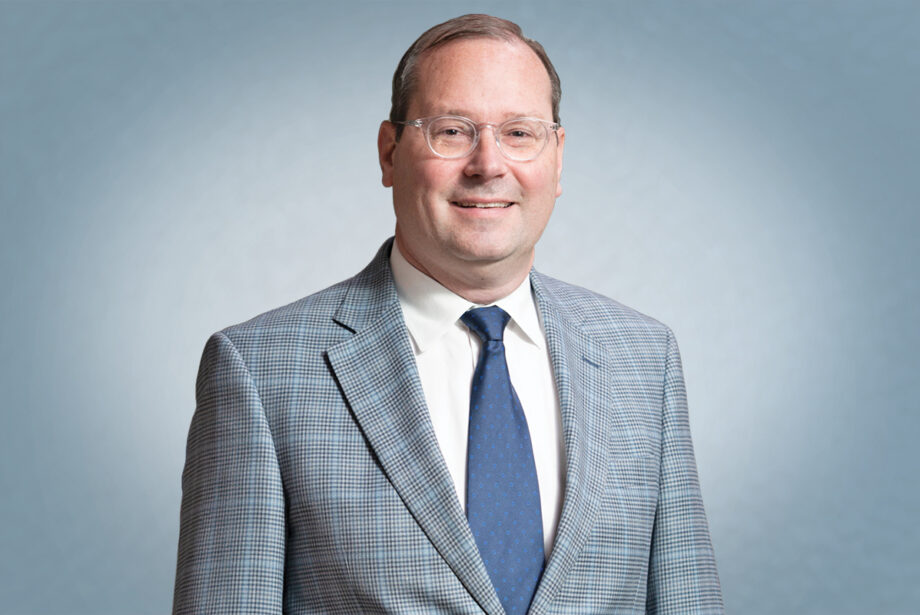
Todd Herman
Executive Director of the Arkansas Arts Center
Todd Herman joined the Arts Center in 2011, after a six-year tenure as chief curator at the Columbia Museum of Art in Columbia, South Carolina. Herman earned his master’s in art history from the University of South Carolina and his doctorate from Case Western Reserve University in Cleveland.
Since coming to the Arts Center, he has overseen expanded programming and a growing collection. He is also overseeing a major renovation of the facility. Herman organized the exhibition “Mark Rothko: The Decisive Decade 1940-1950” at the Columbia Museum of Art and has written for a number of national and international exhibitions.
Todd Herman was named Nonprofit Executive of the Year at the Arkansas Business of the Year Awards in February.
Why did you enter this field?
Art changed the direction of my life. A microbiology major in college, I didn’t visit an art museum until I was in college — and when I did, it was a revelation. I was fascinated by how much I could learn about history, civilization, humanity, culture and creativity by studying art. Art revealed multiple layers for understanding the world and its cultures that I have treasured. I wanted to share that experience with others.
Today, museums are much more than places to view art. They are places that help fill gaps in education, encourage creative thinking and art making, expose visitors to other cultures and viewpoints, offer safe spaces for the thoughtful consideration of difficult social issues and often incorporate music, dance, poetry and other programs that improve quality of life for the community. At their most inclusive, museums and arts centers are cultural centers and community centers.
What is the mission of the Arkansas Arts Center?
The mission of the Arkansas Arts Center is to be “an active partner in the educational, economic, and cultural life of a diverse community; inviting discovery, creativity, and learning through engagement with the visual and performing arts.” We engage members of the community through a variety of programs, from art exhibitions, theater and art making, to children’s reading programs, music and dance, theater classes, art therapy and fashion. Our mission is to be a community resource and the catalyst for ongoing cultural enrichment. The collection and exhibitions are free. We try to break down as many barriers as we can.
What are you hoping to accomplish with the Arts Center’s renovation?
There are many goals for this project. Some are less visible, such as updated mechanical, lighting and fire protection systems, while others will revolutionize the visitor experience and be instantly seen and felt. There are expanded public and educational spaces that allow us to grow our programs and upgrades throughout the building.
As I mentioned above, museums are transforming themselves across the country to meet the broadening needs of their communities. They are often sources of civic pride and significant drivers for economic development and retention. The renovation and expansion of the Arts Center is intended to create a destination that combines nature, art and creativity in a welcoming and significant architectural space. The AAC has a world-renowned collection of art, an award-winning Children’s Theater and a thriving art school. Our goal is for the architecture and landscape to be an equal partner in the high-quality experiences we offer.
What was your biggest career mistake and what did you learn from it?
I don’t really consider any career moves to be mistakes. Career decisions are made for a reason or reason(s) that make sense at the time. If it doesn’t work out as you hoped, you take your lessons learned and apply them to future decisions. Success is a cumulative process.
 Sign up for Daily E-news