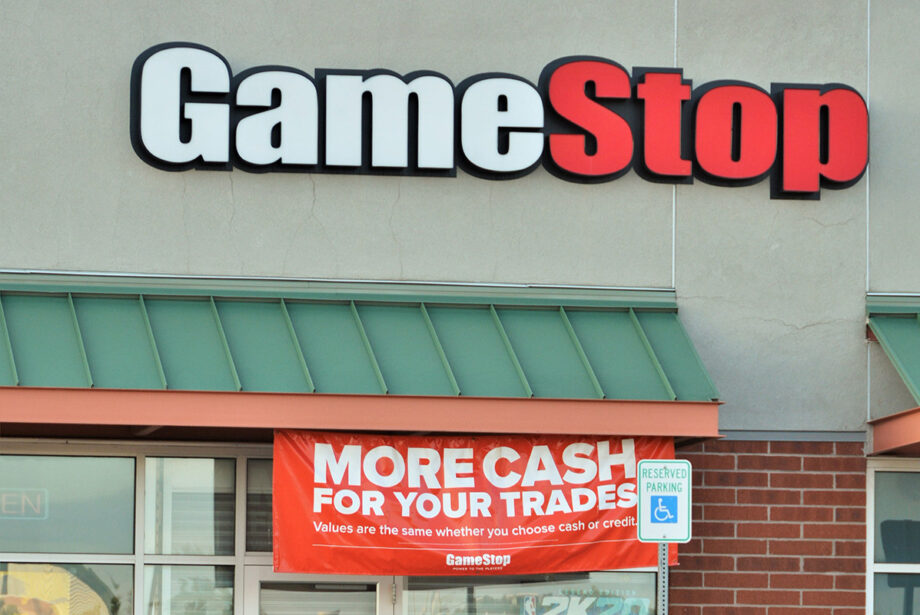
A GameStop retail location in Sheridan, Colorado.
THIS IS AN OPINION
We'd also like to hear yours.
Tweet us @ArkBusiness or email us
Two years after her death, I seem to hear my mother’s voice all the time. If she were here to comment on the GameStop gambit, she would call it “too cute by half.”
By now GameStop is old news: Nostalgic fans of the money-hemorrhaging video game retailer discovered that some wicked hedge funds were shorting the stock. How dare anyone bet against GameStop?
On Reddit, which bills itself as “the front page of the internet,” these GameStop fans cooked up a clever scheme. They would foil the short-sellers’ bet by buying GME shares, pushing the price up and up — from under $5 in August to almost $350 at its peak on Jan. 27. A similar thing was happening with AMC Entertainment stock. Even Dillard’s Inc. seems to have caught some of the fever.
Every reader of this column probably knows more about short-selling than I do. My understanding of the mechanics is entirely theoretical: Short-sellers borrow shares and sell them for x dollars in anticipation that they can replace the borrowed shares by a certain deadline with shares purchased at a lower price. The difference between the price they receive and the price they pay for the replacement shares is their return, so they are betting that the price will go down before the deadline for replacing the borrowed shares.
Betting that a stock’s price will go down does seem uncharitable — but Wall Street is not a charity. Variations on the short sell have been around for centuries, and the Securities & Exchange Commission permits the practice within regulatory parameters that forbid market manipulation, just like other stock trades. In the normal course, investors buying stock expecting that it will appreciate and short-sellers who expect depreciation both have the same goal: profiting from the fair market price of a stock based on the company’s financial performance and future prospects.
But the Redditors who banded together to drive GameStop’s share price to the moon had an entirely different goal: hedge fund manager tears. The fundamentals of a company that has lost $1.4 billion in the last 11 reported quarters, after earning less than $35 million in 2017, do not figure into this buying spree. And buying existing GameStop shares from previous investors does nothing to improve the company’s revenue or profitability.
Instead, the goal was to force the short-sellers to buy replacement shares at exponentially higher prices, a pain compounded by having to raise the money by selling off other investments at a time distinctly not of their choosing. Stock buyers can limit their losses by buying only what they can afford to lose, but a risk of short-selling is that the losses are mathematically unlimited. After crippling the short-sellers, the Redditors then began profit-taking — and crowing gleefully.
The joy I saw expressed on social media by people delighted at the thought of bankrupt hedge funds reminded me of the folks who reveled in “liberal tears” at the sight of asylum-seeking toddlers housed in chain-link enclosures. I’ve got a beef with the hedge funds’ unfair carried-interest tax loophole, but short-selling is neither unethical nor illegal, and the fund managers did not deserve to have thousands of people gang up to destroy them.
Even if they did, who can say whether it was a fat-cat hedge fund manager caught in the squeeze who paid $347 a share. More likely it was some excitable late-comer who didn’t understand that the party was just about to end. Some Redditors told the Washington Post last week that they were hesitant to sell because, well, they would lose a lot of money. (Amateur investor tip: By the time you learn about an exciting stock trend, it’s too late.)
What the Redditors did is a form of market manipulation known as “pump and dump,” and it would be illegal if corporate insiders had done it. That’s because it obscures the fair market value of a stock, which is vital for a functional market, which is as vital for middle-class retirement fund investors (me, for instance) as it is for hotshot hedge fund managers.
Such a cute scheme for grinding those unworthy other people into the dirt for making a perfectly legal, perfectly rational investment based on a company’s financial performance. But the investment professionals have nothing else to do but figure out how to make back their money. It’s the small, unsophisticated investors who will be suckered in by artificial prices — or scared into overly conservative cash positions by the fear of being suckered. As an investment strategy, the GameStop gambit is too cute by half.

 Sign up for Daily E-news