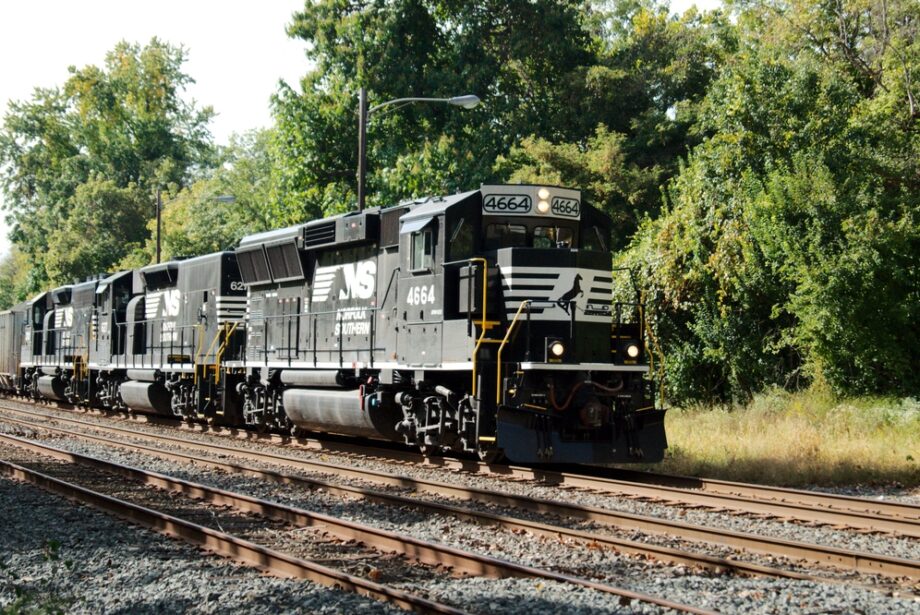
The year hasn’t gone well for Norfolk Southern Corp. of Atlanta.
The railway company has been in the news after one of its freight trains derailed Feb. 3 in East Palestine, Ohio. The train was transporting hazardous materials, among other things, which ignited and caused a fire.
An evacuation order was issued for residents within a 1-mile radius of the crash. Three days later, safety crews conducted a controlled burn to incinerate five cars full of vinyl chloride — a flammable carcinogenic gas — to prevent the possibility of an explosion.
Another Norfolk Southern train derailed, also in Ohio, on March 4. Then, just before Norfolk Southern CEO Alan Shaw was to appear before Congress, a third train derailed in Alabama on March 9.
Neither of those accidents involved hazardous materials
Despite the highly publicized East Palestine accident, industry sources say railway transportation has a pretty solid safety record. Of the more than 1,000 train derailments annually, a majority occur in train yards.
“About 60% of all rail accidents occur in yards where there are more complex operations and lower speeds that tend to cause minimal damage,” a spokesman for the Association of American Railroads told USA Today. “More than half of those are caused by human factors or human error.”
In Arkansas, which has 2,500 miles of track, there were 33 derailments in 2022, according to the U.S. Department of Transportation’s Federal Railroad Administration. Between 2019 and 2021, derailment accidents in Arkansas ranged between 25 and 27.
“If we’re not running around like crazy, it’s [good news],” said Greg Nation, who is in charge of railroad coordination for the Arkansas Department of Transportation. “Things are calm.”
Nation said there was a Union Pacific train derailment in February in a North Little Rock rail yard; there were no injuries or hazardous materials involved.
According to a National Transportation Safety Board preliminary report, the East Palestine derailment was most likely caused by an overheated wheel bearing. The train’s crew got a warning about the heating, stopped the train and then realized it had derailed while stopping.
The crash and public fallout have caused the federal government to get involved. A bill in the U.S. Senate, sponsored by Ohio Sen. Sherrod Brown and called the Railway Safety Act of 2023, would require enhanced safety for railway cars carrying hazardous materials, more fees or hazmat training and stiffer penalties for safety violations.
“This legislation provides us with tools to hold companies accountable to prevent terrible tragedies like the Norfolk Southern derailment in East Palestine and to make those communities whole,” President Joe Biden said in a statement.
Transportation Secretary Pete Buttigieg sent a letter to Shaw after the accident, saying everyone involved in the rail system must make safety improvements a priority.
“While we have seen a downward trend in the number of derailments, they remain far too commonplace in this country, especially when it comes to those involving hazardous materials,” Buttigieg wrote. “… Given the statements of support you have made toward those impacted in this situation, I am writing to stress that the future must not resemble the past when it comes to your company’s and your industry’s follow-through on support for stringent safety policies.
“Major derailments in the past have been followed by calls for reform — and by vigorous resistance by your industry to increased safety measures. This must change.”
The railway industry says rail transportation remains the safest way to move hazardous materials.
The Association of American Railroads said that more than 99.9% of hazardous materials reach their destinations safely.
It said rail accidents involving hazardous materials dropped 55% from 2012 to 2021 and have declined 78% since 2000.
 Sign up for Daily E-news