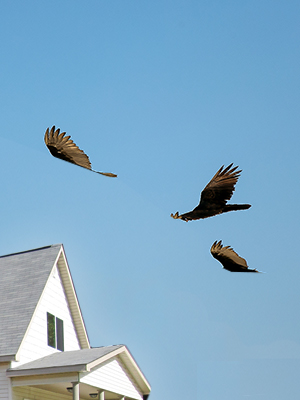
This is a tale of two vultures, one figurative and the other quite real.
In 1993, South African photographer Kevin Carter was covering a famine in Sudan when he captured a picture of a vulture poised behind a tiny starving child.
The image earned Carter a Pulitzer Prize, but also bitter criticism for his callousness in taking it instead of helping.
In truth, Carter protected the child from the bird after he got the image. The child reportedly survived the famine, but died of a fever as a teenager.
The figurative vulture in our story is the thief (or thieves) who burglarized the home of Little Rock PR icon Ron Robinson within hours of his funeral on Aug. 17.
Robinson, the former CEO and chairman of the CJRW marketing agency in Little Rock and a widely known collector and philanthropist, was a subject of an obituary Aug. 15 in the Arkansas Democrat-Gazette.
The obit, skillfully handled by veteran reporter Jake Sandlin, mentioned the thousands of items related to films and Arkansas history that are part of the Ronald A. Robinson Collection at the Central Arkansas Library System’s Butler Center for Arkansas Studies.
It also quoted Butler Center Director David Stricklin, who described Robinson’s house as “a museum” filled with artifacts.
KUAR’s Michael Hibblen mentioned that newspaper reference in his radio report on the Robinson burglary last week. Hibblen didn’t come out and say it, but one implication might have been that the burglars saw an opening to strike while the Robinson family grieved.
There’s no known evidence that the thief saw the obit, and the paper didn’t publish the home’s address or even its neighborhood.
Robbing the bereaved takes a particular sort of evil, so let’s not blame an already beleaguered press; Google is filled with stories of “obit bandits” who strike the homes of people during their funerals.
That shouldn’t stop newspapers from printing obituaries, or stop funeral homes from publicizing funeral plans. (Though it might bear keeping in mind when planning a funeral.)
Journalists constantly consider possible unintended effects of what they print. They also, as our first vulture story illustrates, walk a line between taking action and strictly observing events. Objectivity requires detached chroniclers, but reporters and photographers are humans first.
On the same day Robinson was laid to rest, former Arkansas Gazette reporter and editorial writer Jerry Dhonau died in Albuquerque, New Mexico.
Dhonau’s reporting during the Little Rock Central High School integration crisis helped win Pulitzer gold, but his greater legacy might be the humanity and kindness he and other reporters showed to one of the students who broke the color barrier. The student, Elizabeth Eckford, was menaced by an angry white mob outside the school in 1957.
Dhonau, who worked at the Gazette until its closing in 1991 and wrote its farewell editorial, was on hand when the teenager was set upon by a cursing, hateful crowd of white protesters who kept her from reaching the school. Reporters, including Dhonau, shielded her until she could board a city bus.
Former Arkansas journalist and Philadelphia Inquirer Managing Editor Gene Foreman wrote about the episode in his book, “The Ethical Journalist.” He described how Dhonau, Gazette colleague Ray Moseley and Life magazine’s Paul Welch “arranged themselves in an informal protective cordon around her as she sat at the bus stop. ‘It was all that they, as professionals, felt they could do,’ David Margolick wrote a half-century later on VanityFair.com.”
For a full appreciation, read Ernest Dumas’ obituary of Dhonau in the Arkansas Times.
Dhonau lived a full life and died at 83.
Kevin Carter, the photographer who faced down that vulture in Africa in 1993, was deeply tormented by the horrors he covered and died by suicide in July 1994; he was 33.
“I am haunted by the vivid memories of killings & corpses & anger & pain,” Carter wrote, “of starving or wounded children, of trigger-happy madmen, often police, of killer executioners …”
Journalists aren’t heroes, but they most certainly aren’t enemies of the people.
Dhonau’s daughter, Stephanie Dhonau of Little Rock, told the Democrat-Gazette that her father felt that getting between Eckford and the mob was the only time in his career “when he lost objectivity.” But she also said he never doubted he’d done the right thing in protecting a vulnerable, frightened teenager.
 Sign up for Daily E-news