It’s the very fortunate among us who both recognize and get to do what they truly love in life. For Marvin Hare Jr., that love has always been agriculture.
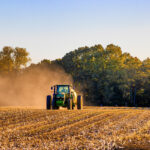
Hare was born to be a farmer, the third generation of his family to make a living coaxing crops out of the fertile Arkansas dirt. Growing up around Newport, he left the fields just long enough to earn a degree in agriculture from the University of Arkansas, then high-tailed it back to Jackson County where he started on 700 acres of soybeans in 1966. Two years later, he expanded to 1,000 acres and by 1972, he’d launched Hare Planting Company.
Recognizing early the need for conservation and wise use of farm resources, he became a first proponent of techniques that employed new ideas and technology to produce more grain with fewer inputs. For Hare, this started with smarter use of water. In the 1970s, he filled in well pools and above ground canals to move water across the farm. Underground pipe was another water conservation move, and he was among the earliest to employ precision levelling in his rice fields in the late 1970s.
Hare’s crowning achievement in this arena came in the 1990s when he undertook an ambitious project to finish the precision leveling of the entire farm, build a six-acre reservoir holding more than 20 million gallons and tailwater recovery system that services nearly 1,100 acres of rice and soybeans. He didn’t have to do it; his farm was located between the Cache and White River basins with a high-water table and reservoirs and tailwater recovery systems were generally installed where groundwater was at a premium. But he did it, he would tell people, to make sure the family land was protected for his children and grandchildren.
Hare brought the same mentality to waterfowl habitat development. Working with Ducks Unlimited in the late 1990s in the Arkansas Rice Project to expand the relationship between ducks and rice fields, he developed habitat and food plots for overwintering ducks and geese. Over the years he continually raised the bar on such conservation techniques, even though at times such efforts were in direct opposition to rice production. He now floods more than 1,800 acres annually to serve as rest areas and feeding areas for thousands of migratory birds on their trip to and from the Canadian prairie.
Today the family operation, which includes Hare’s daughter and son-in-law, encompasses 6,000 acres and has consumed his waking hours for more than half a century. The land and its creatures are truly better for his having been there, yielding a rich harvest of the things he loves best — farm, waterfowl and family.
 Sign up for Daily E-news