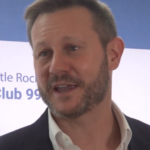
When Dan Cowling founded The Communications Group in 1987, he got a lot of calls from people wanting phone lines installed.
“I’m not kidding,” the marketing agency CEO said last month. “We were the first firm in Little Rock to have ‘communications’ in the name. They thought we installed technology.”
The firm differentiated itself from its start, on Friday the 13th in November 1987, flying in the face of tradition and superstition. Cowling even challenged the idea of advertising itself, intentionally avoiding the word in the firm’s name, and focusing on “marketing” in the letterhead. “I’m also fairly certain that we were the first Arkansas agency not to have somebody’s name on the door.”
This month, ComGroup celebrated the things that set it apart, marking its 30th anniversary with a rebranding, a new website and logo, and a renewed focus on three core business areas: agriculture, industrial business-to-business work and what the industry calls G2C, or government messaging to citizens.
Those specialties go back nearly to the beginning of ComGroup, which Cowling started with his brother, Dane, and partners Tom Frase and Neal Moore. “Our start, with 90 days’ worth of capital, four partners and two employees, that was one of the braver things I’ve ever done.”
‘Giant Leap of Faith’
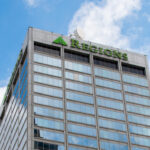
Beyond opening on Friday the 13th. ComGroup also sought out the 13th floor of the Region’s Center in Little Rock. As Cowling put it, the launch was “a giant leap of faith and a good dose of going against the grain.”
So why did he start his own agency?
“I was running out of places to work,” Cowling joked. “I’d worked for a lot of agencies and always had a lot of ideas about how they could be run better. So periodically my bosses would give me the opportunity to go somewhere else with my ideas.”
So nearly 15 years into a career with top Arkansas ad firms including S.M. Brooks, Cranford Johnson Hunt and Mangan Rains Ginnaven Holcomb, Cowling had what he recalls as an “aha” moment. “Clients would talk about delivery issues, about price-point resistance, all these things, and then I’d say, ‘Great, now I’ve got some ads to sell you.’”
It dawned on him, Cowling said, that the process was backward. “Businesses need strategic advice. The ads should come after the train has already passed through. Clients have strategic issues, some external and some internal, but they’re predominantly communications issues, a communications loop. An ad may or may not be a part of that loop.”
When he broke into advertising, at the end of the “Mad Men” era, “creative was everything,” Cowling said, “Now process is the thing, for the lack of a better word, and the words and the images become a fulfillment of that process. Marketing is identifying what the customer wants, figuring out how to give it to him and having the guts and the tools to do it.”
Not that ComGroup hasn’t had great success with ads. It was the first agency in Arkansas to handle a financial institution with more than a billion dollars in assets (Leader Federal Bank for Savings in Memphis), and was national agency of record for Church’s Chicken, Cowling said. The firm, which now has 15 employees — known as Groupers — does not publicly reveal revenue or capitalized billings.
Agriculture is the heart of Arkansas’ economy, and ComGroup’s client list has long included commodity checkoff groups like the Arkansas Soybean Promotion Board. And as a lifelong Arkansan with two degrees from the University of Arkansas, Cowling says the state doesn’t fully appreciate its industrial base. “If you’re from Arkansas, you either have soil in your blood or you’re ignoring reality,” he said. “And frankly I don’t see a lot of ad agencies focusing on agriculture and manufacturing.”
ComGroup’s first client was Innovation Industries Inc. of Russellville, a manufacturer of elevator fixtures that’s still a client. “To exist long-term in our business, you must specialize. We’ve built our marketing niche over three decades, and it’s time to bring that experience to the forefront of our brand.”
Other top industrial clients include ABB of Zurich, a global leader in industrial technology that acquired Baldor Electric of Fort Smith in 2011; Speakman Co., a Delaware maker of shower and plumbing products; Motion Industries, the Birmingham, Alabama, industrial equipment supplier; and Toyota Forklifts, based in Columbus, Indiana.
The other emphasis, government outreach, has been some of the firm’s most rewarding work, Cowling said, noting state campaigns like ARKids First, Better Beginnings and the Happy Birthday Baby Book for the state’s healthy baby campaign. “It’s one thing to convince a person to go to Taco Bell for a taco,” he said. “It’s something else to convince a pregnant woman to get prenatal care.”
Moore, the founding partner and creative director, said Cowling pioneered “cause-related marketing which pushed traditional public service clients to spend money on their message” instead of relying on free TV and radio announcements in the wee hours. “Now, it’s a standard practice, especially with health-related initiatives,” Moore said.
‘Brutal and Sudden’
Beyond the obvious technological revolution over three decades, including an explosion of new communication outlets, Cowling said the nature of drumming up business has changed.
“Back then everybody was going after everything; today’s agencies have started doing more than selling ads, which is a great thing.”
Today’s mission is to produce value, working with clients to find their goals, then confirming success by the numbers, Cowling said. “Data-driven information, sales-driven information, that’s what it’s about, because the numbers create value, and if you don’t produce verifiable results in the world today, you don’t stay in business very long.”
Looking back, he called ComGroup’s origins “brutal and sudden. Things become very immediate” when you have no clients and little capital, Cowling said. “Your senses are heightened; you’re alive, but you’re actually scared to death because there’s no stability. If you want to borrow from a bank, what are your assets? They all get on an elevator and go home at the end of the day.”
No names graced ComGroup’s door, but if they had been there they would have been Cowling, Cowling, Moore and Frase. Dane Cowling is still with the firm as a partner, along with Lisa Van Hook.
Moore retired from ComGroup and does freelance work out of Maumelle. Frase went to seminary and became a Methodist minister. “We always say we hope we didn’t drive him to it, but we gave him a lifetime of pulpit stories to use in his ministry,” Dan Cowling said.
Moore said that when ComGroup began, the firm didn’t even have decent furniture. “We had no accounts, a few folding chairs and some boxes. A friend of ours loaned us some office space and we began the tedious process of building the business, one client at a time.”
Cowling offered the benefit of his experience, and some of his lessons still resonate, Moore said. “To this day, I use several things Dan taught me such as: ‘If you don’t have a written plan, you don’t have a plan.’ He always emphasized planning, which became a niche of the agency. We were the first agency in town to call our account executives account planners. Account executives are more tied to sales, and we wanted it to be tied to marketing and strategy.”
Observers used to call the agency “schizophrenic,” Cowling said, meaning that it didn’t behave the way most advertising firms do. “We don’t do typical ad agency stuff, and we hardly ever hire anyone who’s been in the agency world. And in a business that can be hard for people to stay in, we don’t have a revolving door.” Many of the firm’s employees have stayed around more than 10 years. “This gives us a chance to develop deep insight, and that leads to deep planning.”
At 69, Cowling may not be planning the next 30 years, but retirement is not on the horizon, and his philosophy is set.
“In the end, I don’t care if we do an ad or not,” Cowling said. “I honestly don’t care. Get me in, tell me about your business, and we’ll see what needs to be done.”
 Sign up for Daily E-news