THIS IS AN OPINION
We'd also like to hear yours.
Tweet us @ArkBusiness or email us
Johnny Allison credited me with naming the bank that Home BancShares started in North Little Rock 15 years ago. I don’t think I did, and Twin City Bank has long since been folded into Centennial Bank, and there’s no point in trying to argue with Johnny Allison. I only bring it up because, true or not, it positions me as an expert on the topic I’m about to launch into: bank names.
When the banking industry blossomed in the late 19th and early 20th centuries, naming a bank was easy. It was Bank of England (established 1898) or First National Bank of Fort Smith (1872). Banks didn’t branch, much less cross county and state lines.
Even relaxed branching laws only created name problems for banks that wanted to get big. The first banking story I ever wrote, more than 20 years ago for the Nashville Business Journal, concerned the arrival in Tennessee of First Alabama Bank, which shortly thereafter renamed itself Regions Bank. I thought (and still do) that was a terribly dry name.
The banks that wanted to stay smallish could still get away with a nondescript name. In 2000, there were eight institutions called First State Bank chartered in Arkansas and 26 localized variations on First National Bank (not including Simmons First National Bank). Now there are five First States and 10 First Nationals.
Consolidation marched onward, particularly among sister charters owned by the same holding company. All of those banks that First Commercial Corp. owned became Regions Bank branches. Simmons First National Corp., one of the last holdouts, finally collapsed all its charters into Simmons First National Bank last year, in part because its software vendor didn’t want to fool with multibank holding companies anymore.
But it was really the financial crisis of 2008 — or, more specifically, the expensive regulatory fallout of the crisis — that created a rush to rename banks. In the current environment, banks have to either acquire or be acquired. And banks that want to be acquirers need names that aren’t too geographically specific.
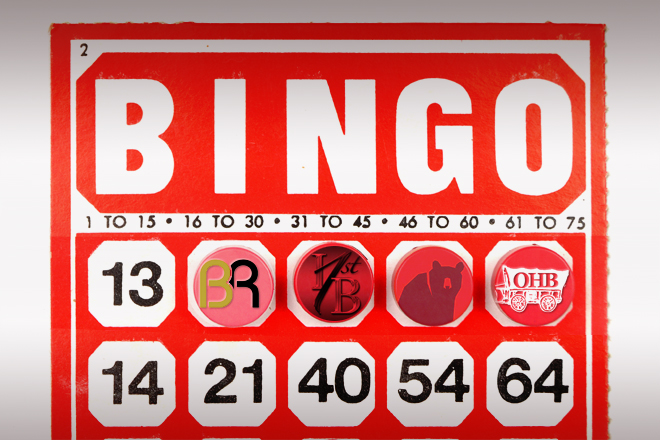
Thus we saw First National Bank of Green Forest transformed last year into Anstaff Bank, the one and only of that name, in tribute to its founding Anderson and Stafford families. Before Anstaff, the Bank of Eureka Springs became Cornerstone Bank, Pine Bluff National became Relyance Bank (which my spellcheck doesn’t like), First National Bank & Trust of Mountain Home became Integrity First, and First National Banking Co. of Ash Flat became FNBC Bank.
The Bank of Rison changed its name last month to Gateway Bank; even the second-smallest bank in Arkansas has aspirations. And Ozark Heritage Bank in Mountain View has applied for a state charter and a new name: Stone Bank.
I interviewed Ozark Heritage’s CEO, Marnie Oldner, about the changes a few weeks ago and realized that bankers now have the same problem as apartment complex and nursing home developers: All of the good names are taken.
Ozark Heritage hopes to break out of Stone County, and opening a loan production office in Little Rock is high on Oldner’s to-do list. But Little Rock is ground zero for Bank of the Ozarks — which has spread its geographic brand far beyond the Ozarks — so that could create brand confusion. And Jonesboro had a Heritage Bank until just a few months ago, when it, along with First Federal Bank of Harrison, was rolled into Bear State Bank — which was, until then, First National Bank of Hot Springs.
I understand the impulse to keep a name with local meaning, but Stone Bank just doesn’t sound good to me. Too short and nondescript, like John Doe — even though FDIC.gov tells me there are no other Stone Banks in the country. (There are a bunch of Cornerstones.)
I like Bear State Bank. It is unique and it has local meaning — “The Bear State” was one of Arkansas’ earliest nicknames. But customers of those branches Bear State is buying in Springfield, Missouri, won’t be slapped in the face by the fact that their bank is from south of the border.
Assuming Bear State completes its purchase of Metropolitan National Bank (now there’s a familiar name), it will compete in Springfield against Simmons, which has acquired two banks there.
CEO George Makris has been known to joke about Simmons’ own branding problems despite being the only bank of that name: “We don’t sell chickens, and we don’t sell mattresses.” Since he became CEO a year and a half ago, Simmons has unofficially dropped “First National” from its logo, going simply with Simmons Bank.
Simmons, now spread from Kansas to Tennessee, recently unveiled a new “Simmons Country” ad campaign featuring country music artist Justin Moore, the pride of Poyen.
Unfortunately, I had never heard of Justin Moore. I’m sure that says more about me than it does about him.
Email Gwen Moritz, editor of Arkansas Business, at GMoritz@ABPG.com.
 Sign up for Daily E-news