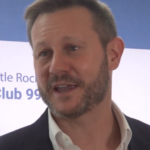
Dr. C. Lowry Barnes began serving as interim chancellor of UAMS, in Little Rock, on July 11. Barnes is a board-certified orthopedic surgeon.
Barnes graduated from the University of Arkansas at Fayetteville and the UAMS College of Medicine, graduating with honors. He completed his internship and residency at UAMS in orthopedic surgery and later completed a surgery fellowship at Brigham & Women’s Hospital/Harvard Medical School in Boston.
How does the role of an interim chancellor differ from a permanent one?
My role as interim chancellor is to do as much as possible to have UAMS ready for the permanent chancellor to hit the ground running when he or she begins. We believe this is a time for transformational change and are dedicated to completing many initiatives to make us better as an organization.
What kind of surgical schedule will you maintain while serving as interim chancellor?
I am modifying my practice. After completing those patients who are already scheduled, I will only be doing knee replacements and revision knee replacements, meaning that I will no longer be doing hips.
Are there any services that you would like UAMS to expand or cut?
UAMS needs to be the go-to center for true tertiary care — the expert doctors and their teams providing complex care at the state’s only academic health center. In addition, we need to grow those specialty areas where we already excel and develop others as well. We need to make sure Arkansans realize that the best place in the state to get a complex surgery like an organ transplant is also the best place to get something more routine like a hernia repair. I am a builder; I don’t even like to think about cutting programs that help Arkansans, but the reality is that we have to make smart financial decisions. If no margin, no mission.
How will cuts to Medicaid impact UAMS and what steps will you have to take to account for their impact?
Every change that decreases our revenue means that we have to increase revenues somewhere else because we have important missions of education and research that we help fund through our clinical enterprise. It is a challenge, but it is who we are, and we take the responsibility very seriously.
You have a long history with UAMS. How has the institution changed in the years you’ve known it?
Wow! When I started as a medical student in 1982, we were certainly not seen as the incredible medical center we are now where folks from all walks of life seek our care from every corner of our state. We were a much smaller entity that many saw as the indigent hospital; we have come a long way. We now have another thriving campus in northwest Arkansas and are exploring opportunities to do more. Our regional programs serve the state.
 Sign up for Daily E-news