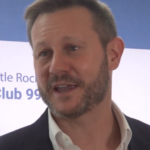
Historian, North Little Rock History Commission
Cary Bradburn, 68, joined the North Little Rock History Commission as its historian in 2002 after a long career as a newspaperman in central Arkansas, including years spent at the Arkansas Democrat (1981-85), Arkansas Gazette (1985-91) and the North Little Rock Times (1995-2002). He earned a bachelor’s degree in history and political science from Hendrix College in Conway and a master’s in history from the University of Arizona in Tucson.
Bradburn wrote “On the Opposite Shore: The Making of North Little Rock,” which was published in 2004.
How did it come about for you to write “On the Opposite Shore?”
While working as a reporter for the North Little Rock Times, I spent an inordinate amount of time in the newspaper’s archives — we called it the morgue — learning about the area’s history. I had already soaked up a lot while at the Arkansas Gazette and the Arkansas Democrat. North Little Rock has an affinity for its history like few other places. The Times celebrated its 100th anniversary in 1998 and the publishers, David and Kitty Chism, asked me to write a weekly column on North Little Rock history. In 2001 as the city’s centennial approached, I learned that the History Commission was interested in publishing another book. I offered to do it and they accepted. Sandra Taylor Smith, the director, and Gary Clements, chairman of the History Commission then, also hired me on staff.
North Little Rock is proud of its identity as separate from Little Rock, but regional economic cooperation is crucial. How can the city find the right balance?
The two cities as well as Pulaski County have a shared history. In the 1920s, an improvement district on both sides of the river built the Broadway and Main Street bridges. Large industries have long understood the importance of regional cooperation. Going back to the 19th century, railroads brought a regional and national outlook. They owned property on both sides of the river and built bridges to connect the cities. So the identity issue has mostly been political.
North Little Rock is still fiercely independent, seeing itself as the underdog. (Dogtown, once a slur, is now embraced.) The two cities will continue to compete for economic advantages, but both realize the mutual benefits of cooperation. The river isn’t a barrier.
What has changed, both positively and negatively, about North Little Rock since 2002 when you joined the commission?
One negative change has been the loss of the weekly community newspaper we had for more than 100 years. Are people as well informed? Do we have a consensus about the facts anymore? For better or worse, social media is king and queen. We’re not likely to see a general news weekly paper in North Little Rock anytime soon, if ever again.
Many positive things have happened in the past two decades. Downtown is no longer dangerous and deserted, having become an arts and entertainment district that owes much to historic preservation. There’s a perception now, probably justified, that Argenta gets more of the city’s treasury than other parts of the city. Argenta had a long way to come from what it was in the late 1980s. The city is better with a vibrant downtown.
What about history interests you?
The stories more than anything else and wanting to know what happened. The why is a tougher nut.
What have you learned about North Little Rock that fascinates you?
North Little Rock has a small-town feel. People are easy to talk to and so many of them love their history. Few move away. Many have been here all their lives or come back if they do leave. Many high school sweethearts are still married to each other. North Little Rock is a city that keeps memories alive.
 Sign up for Daily E-news