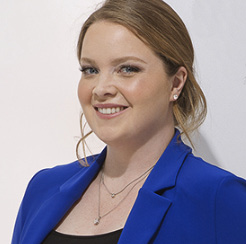
Little Rock businesswoman Chandler Wilson Carroll was sentenced to two years in federal prison on Thursday for wire fraud in connection with collecting $2.1 million in pandemic loans.
She had been facing between 33 months and 41 months in prison after she pleaded guilty in July.
Carroll, 33, also will have to pay $1.9 million in restitution and serve two years of probation, U.S. District Court Judge D.P. Marshall Jr. said Thursday. The federal government has recovered about $160,000.
Her attorney, Timothy O. Dudley of Little Rock, asked that she be sentenced to probation Thursday because she is receiving treatment for mental health issues. Carroll also doesn’t have good candidates to care for her two young boys if she was sentenced to prison, he said.
But Marshall said Carroll’s crime was a serious one. During the pandemic, the federal government was trying as quickly as possible to get money to businesses that were being financially hurt by COVID-19. The federal government relied on people’s word that the Paycheck Protection Program loan money would be used for a company’s expenses and pay employees who were furloughed.
Instead, Carroll used the money on a house, two vehicles and multiple items from jeweler Sissy’s Log Cabin. PPP money also was spent on food and entertainment, Assistant U.S. Attorney John White said during the hearing. Carroll has forfeited the items. Dudley requested that after the government sells the items, the proceeds are used to pay Carroll’s restitution. White said he wouldn’t object to that.
Authorities first reported the loan amount as $1.6 million, but said in a news release Thursday that Carroll received $2.1 million.
Carroll had said on her loan application for her company, Wilcarr Ventures LLC, that the money was in part to be used for lost revenue.
Dudley said that some of the loan money was used for legitimate business expenses, but there wasn’t an accounting of exactly how much.
White argued that Carroll deserved prison time. He said that Carroll falsified bank documents and tax statements to obtain the PPP loans. “She knew the difference between right and wrong,” White said.
And checks to her employees bounced, he said. “She was not using the money that was for her employees,” White said.
During the more than one hour sentencing hearing Thursday, Marshall read a section of Carroll’s apology letter that she sent to him. “By taking advantage of that system, I harmed more than ledger. I harmed trust. I damaged confidence in the idea that public aid can be administered and spent without falling prey to fraud. And I made further aid harder to justify by giving fraud concrete example,” Marshall quoted Carroll’s letter.
She also wrote, “for my part I am deeply sorry for the harm I caused and for the damage my actions did to public trust.”
Marshall said that he’s going to recommend that she be sentenced to a federal prison for women in Fort Worth, Texas. That prison has a federal medical center adjacent to the minimum security prison, so she can continue with her mental health treatment, he said.
He gave Carroll until the end of March to report to prison.
 Sign up for Daily E-news