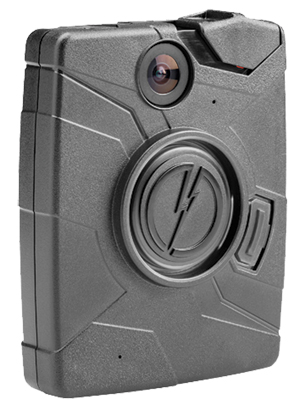
TASER’s AXON body On-Officer Video
Following the shooting death of Michael Brown in Ferguson, Missouri, in August, and questions about what actually happened during his encounter with Officer Darren Wilson, there has been a resurgence in calls for all police to wear body cameras.
Brown’s parents have asked police departments around the country to start wearing the devices. And President Barack Obama accelerated that discussion last week when he announced plans to propose a $263 million spending package that would include funding for 50,000 officers to be equipped with the devices. (There are more than 700,000 state and local law enforcement officers nationwide.)
The body cameras are usually clipped on an officer’s uniform or worn on glasses and allow departments to capture footage of nearly everything an officer sees during a shift. Like many other camera systems deployed by police and security companies around the country, the cameras allow footage to be captured remotely and archived for later use.
Some companies in the body camera industry have noted that interest in their products has increased after the Ferguson incident.
In its annual filing with the U.S. Securities & Exchange Commission, Taser International Inc. wrote that it was hiring more video sales staff and selling its body cameras at a low gross margin to “accelerate the Company’s traction in the market.”
“We believe that the video evidence capture and management market will grow significantly in the near future due to several factors, including increasing recognition of the benefits of video evidence,” the company wrote.
In its third-quarter filings, the company noted net unit sales of one camera model were up 111 percent and sales for another were up 316 percent over the same time the year before.
Digital Ally Inc., one of Taser’s competitors, wrote that it also saw more interest in body cameras after the shooting.
“[W]e are experiencing strong demand for our FirstVU HD body-worn camera which resulted from the civil unrest in Ferguson, Missouri that occurred in August and September 2014,” the company wrote in its quarterly filing.
Several other private companies have also emerged to compete for business among police departments and security agencies. One of those companies, Vievu of Seattle, was founded in 2007 and is one of two companies chosen for testing by the New York City Police Department.
But the technology is rarely used in Arkansas. The Little Rock and North Little Rock police departments are exploring using the cameras, and only a handful of departments are currently on patrol with the devices.
A spokesman for the Arkansas State Police told Arkansas Business that there has “not been any discussion” at the agency about putting cameras on its troopers.
Dardanelle Police Chief Montie Sims, the president of the Arkansas Association of Chiefs of Police, said his department has been using the devices since the beginning of the year after the city council approved the $7,500 purchase of six cameras. Sims said the cameras were a hot topic at the police chiefs conference last year, where several equipment vendors showed them, and that demand has continued to grow.
“Some of your small departments, it’s definitely a cost issue, and then the larger departments, it’s the same thing. If you have a 100-man personnel department and you try to furnish a hundred of these, … that’s going to be an expense,” Sims said.
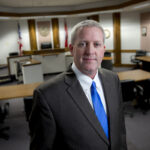
Hope Police Chief J.R. Wilson, who chairs the association’s Accreditation & Model Policy Committee, said in an email that the committee is working on a model body camera policy for the state. He said his department is one of several that plan to invest in the devices.
“Many entities may have the ability to fund this within current operations. Many may not. I definitely think a funding source sufficient to cover all costs, the obvious and the hidden, would encourage use,” Wilson said.
Rita Sklar, the executive director of the ACLU of Arkansas, said the devices would benefit both criminal defendants and officers. A department could still ensure an officer’s right to privacy by writing guidelines for the devices that allowed certain parts of a shift to not be recorded, including an officer on break, she said.
 Sign up for Daily E-news