If you have assumed that your retirement adviser’s first priority is your long-term interest, it’s time to check the fine print.
Four days of congressional testimony in August clarified this point: Some types of retirement advice do not fall under any fiduciary requirement, meaning your broker, agent or adviser might be able legally to put his own financial interest ahead of yours.
What’s more, the financial industry is pushing back — hard, and with political support — against a second attempt by the Obama administration to impose a standardized fiduciary rule on all givers of retirement advice, particularly those now held to a lower standard of merely not recommending investments that are clearly unsuitable.
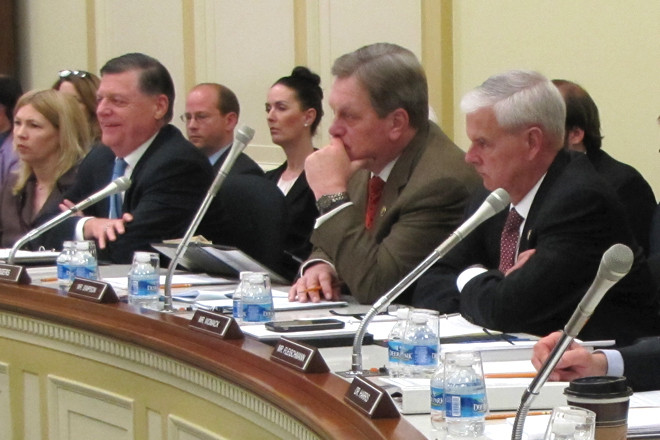
U.S. Sen. John Boozman, R-Ark., called the proposal “another in a long line of misguided regulations from the Obama administration” and said it would “significantly harm low and middle income Americans by reducing access to financial advice.” Sen. Tom Cotton, R-Ark., called it “another solution in search of a problem.” Rep. French Hill, R-Little Rock, a former bank and trust officer, has called it part of the president’s “war on savings.”
Rep. Steve Womack, R-Rogers, is vice chair of the House Labor, Health & Human Services Appropriations Subcommittee, and he hopes to pass a law preventing a regulatory change in the definition of who has a fiduciary duty.
“This is not a partisan issue,” Womack said in an email to Arkansas Business. “Members on both sides of the aisle share the concerns that both investment professionals and consumers in Arkansas have shared with me. This rule will undoubtedly limit low- and mid-market retirement savers’ access to advice, service, and retirement products …”
The fiduciary rule, also called the “best interest” rule, came out of the Department of Labor in February. It is little changed from a similar rule proposed in 2010 by then-Labor Secretary Hilda Solis that was ultimately withdrawn under withering criticism of both the rule and the rule-making process.
The Securities & Exchange Commission, instructed by the Dodd-Frank Act to study the question, has also signaled that it hopes to impose a “uniform” fiduciary standard that could be even more far-reaching. Trade journal reports indicate that the SEC is considering imposing a fiduciary responsibility on stockbrokers as well as financial advisers, but no official proposal has emerged.
Meanwhile, the public comment period for the new DOL proposal ended last week, and this time, Labor Secretary Thomas Perez appears to be pushing forward despite the resistance.
“We have suggestions on how to make it better,” Perez told Washington Post financial columnist Michelle Singletary earlier this month. “I was concerned if I was going to hurt the people I want to help. And the answer is ‘Hell no.’”
High-Powered Opposition
The DOL has written its proposal as an update to rules promulgated under the Employee Retirement Income Security Act of 1974. For 40 years, ERISA rules have imposed a fiduciary standard on advice given to employer-sponsored retirement plans, but what the DOL calls “large loopholes in the definition of retirement advice” have meant that individuals — “and especially IRA owners” — may be receiving advice that isn’t in their best interest.
Additionally, the DOL took aim at “backdoor payments and hidden fees often buried in the fine print” — incentives for advisers to recommend products or investments that benefit them personally, whether or not they are the best available fit for the client.
When the rule change was announced, the Labor Department justified the proposal in part by citing an analysis by the White House Council of Economic Advisers that found that conflicts of interest between adviser and client cost clients about 1 percent annually — or about $17 billion a year in aggregate.
Sen. Cotton specifically shot down the White House’s numbers in response to questions from Arkansas Business. Citing research by the American Action Forum, an affiliate of the conservative American Action Network, Cotton said the White House advisers’ conclusions were “overbroad and based on questionable assumptions.”
“There is plenty of reason to question the need for this rule in light of such quantitative and methodological concerns,” Cotton said in an email.
The American Action Forum has plenty of high-powered company in opposing the DOL rule, even by entities that say a fiduciary standard is reasonable. The Securities Industry & Financial Markets Association opposes the rule as currently written.
FINRA — the nongovernmental self-policing Financial Industry Regulatory Authority — says the SEC, not DOL, is the right agency to set fiduciary standards for the financial industry. FINRA also pointed out that the smallest investors — those with IRAs containing $25,000 or less — are most likely to pay more under the rule.
“Many [of these] investors are buy-and-hold customers who pay lower fees — commissions upon purchase – than would be paid as an annual percentage of their nest egg,” Marcia Asquith, senior vice president of FINRA, wrote in a 21-page comment letter in July.
The Bond Dealers of America also testified against the rule, and the Wall Street Journal editorialized that it is “a new regulation … that isn’t needed.”
In Support
The Department of Labor also has high-profile support for broader fiduciary responsibility to retirement account clients.
The Los Angeles Times has editorialized in favor of the rule, and liberal senators Elizabeth Warren, D-Mass., and Cory Booker, D-N.J., have rallied behind it.
In testimony before a Senate committee investigating the proposed rule, Primerica President Peter Schneider testified that “we all agree that we must act in a client’s best interests” before complaining that the DOL’s proposal was “complex” and “burdensome.” Video went viral online when Warren demanded to know whether Primerica had prioritized the interests of 238 Florida public employees who sued over retirement advice they received.
“Do you believe that people like these firefighters from Florida who are near retirement and have secure pensions with guaranteed monthly payments should move their money into riskier assets with no guarantees, just before they retire?” Warren asked.
The Public Investors Arbitration Bar Association supports the DOL rule, as does the union-backed Americans for Financial Reform. So does the CFA Institute, which certifies financial analysts.
Jim Lardner, communications director for Americans for Financial Reform, said last week that the problem is not merely the lack of fiduciary duty but the public’s blissful ignorance about that gap.
“Most people who have retirement investment accounts and get advice from any kind of financial professional do not realize that some professionals are legally bound to look out for their best interest, but there are also others … who are allowed to call themselves advisers but don’t have a responsibility to look out for their best interest,” Lardner said.
This misunderstanding is something that financial service companies have exploited, he said.
“What the industry wants is they want to have it both ways. They want to be able to advertise themselves as advisers rather than just salespeople. But the minute someone tries to hold them accountable, they want to be able to say, ‘Oh no, we don’t have a fiduciary duty.’”
(See Arbitration Attorneys: Retirement Adviser Commercials Can Mislead Clients and Are You My Fiduciary?)
Regardless of what becomes of the Labor Department’s proposed rule, Arkansans paying for retirement advice should consider asking their advisers to answer this question in writing: Do you have a fiduciary responsibility to me?
 Sign up for Daily E-news