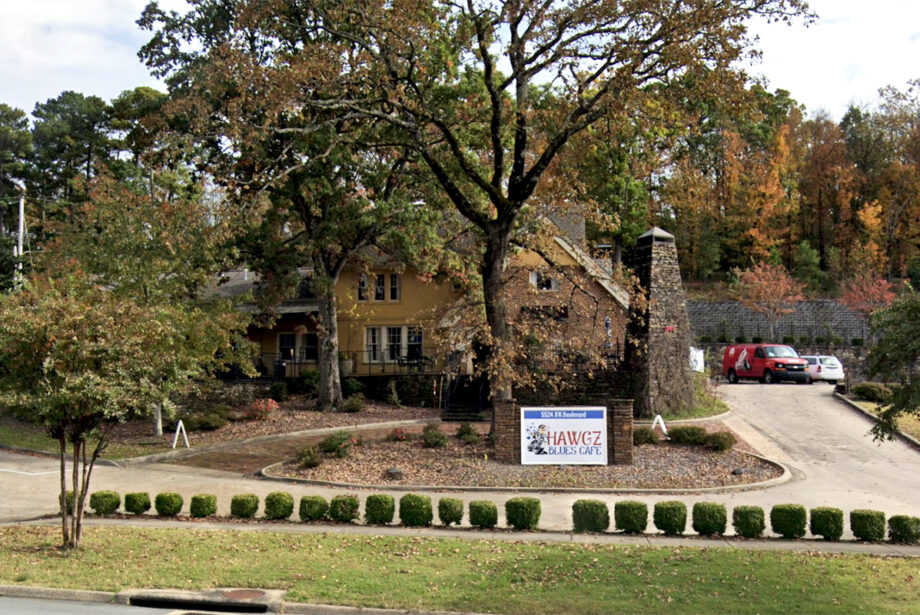
Hawgz Blues Cafe at 5524 John F. Kennedy Blvd. in North Little Rock.
THIS IS AN OPINION
We'd also like to hear yours.
Tweet us @ArkBusiness or email us
My siblings and I realized that our mother was in cognitive decline when a world-class home economist mysteriously blew through an extra $40,000 over the course of a few months. It turned out that some distant relatives and an unscrupulous amateur auto mechanic were the beneficiaries of her unsustainable generosity.
I’m sure my family’s experience is not unusual, and it doesn’t hold a candle to the disturbing allegations made by attorneys for Richard F. Toll of Little Rock. The civil complaint was the subject of an article by Senior Editor Mark Friedman in last week’s Arkansas Business, and the fact that it was one of the most-read stories on arkansasbusiness.com in quite a while suggests that readers found the subject as compelling as I did.
Toll’s name was not familiar to me, but it was to our veteran real estate reporter, George Waldon. Toll, who is now 89, used to crop up in the Real Deals column on a regular basis back in the ‘90s, but less often in the 21 years I’ve been here. He was clearly a successful real estate investor; he had enough ready cash to lend his housekeeper’s son, Kristian D. Nelson, $4.5 million in less than three years.
Nelson doesn’t deny borrowing the money. His defense: He isn’t in arrears on the loans and, in the words of his lawyer, Robin Vail of Hot Springs, “Plaintiff and Defendant are competent adults who entered into several business transactions.”
I wonder if a jury will agree that Toll was competent when he entered into transactions that depleted the liquid assets amassed over decades of business success. I wonder if a jury will agree that Nelson is not in arrears if that’s because these loans lacked the kind of documentation that establishes a specific repayment schedule.
A trial would also be a good place to settle the question of whether Toll was being professionally advised when making these loans, as Nelson claims, or whether Nelson “is not able to completely tell the truth,” as Toll’s lawyer, David D. Wilson of Friday Eldredge & Clark, counters.
This sad tale started in September 2017, according to the lawsuit Wilson filed on Toll’s behalf, with a $10,000 loan to help Nelson out of a tight spot. Some checks Nelson wrote on behalf of the restaurant he managed had bounced.
Nelson’s mother had worked for Toll for six years by then, even before Toll’s wife died in 2014. A multimillionaire could certainly afford to help out a trusted employee’s son (far better than my mother could afford to spend thousands on a car that was worth less than the repair bill and still didn’t run). Perhaps Toll even realized that Nelson was an ex-con, having been sentenced in 2009 to 71 months in federal prison for defrauding about 20 investors out of more than $1 million.
But they say no good deed goes unpunished. According to the lawsuit, Nelson kept coming back for more, with eventual repayment of the earlier debt always dependent on getting more money right away. By November 2018, Toll had handed over more than $600,000.
By the end of 2019, the total of his loans to Nelson had grown to $2.8 million. Much of the money was supposed to enable Nelson to start a used-car business that was (allegedly) the only hope for repaying the earlier loans.
If you are getting tense just reading this, that’s good. That’s exactly how I felt editing Friedman’s story. And then I hit this paragraph.
“In 2020, Toll continued to lend Nelson money. Between Jan. 15 and May 15, Toll wrote seven checks to Nelson or [the used-car lot] totaling $1.6 million, according to the lawsuit. In May, Toll asked other family members if he could get access to his wife’s trust assets, ‘because he was running out of money,’ the suit said.”
I hope it is not too late for Toll and his family to recoup the cash, but this is not a story just about Richard Toll and Kristian Nelson. It’s a cautionary tale for families with aging relatives. As much as we want to believe they will always be the self-sufficient financial wizards they used to be, the warning that comes with investment funds applies here as well: Past performance is no guarantee of future results.

 Sign up for Daily E-news