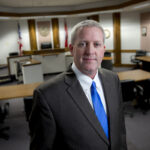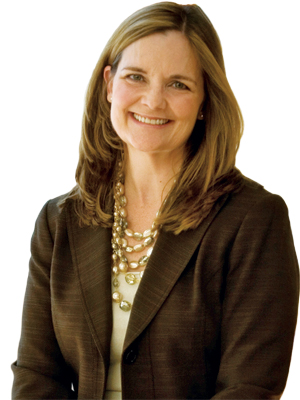
Jan Burford
Jan Burford, a native of Little Rock, completed her undergraduate work at Hendrix College in Conway before earning a master’s degree in health administration from Duke University. After graduation, Burford worked for the University of Arkansas for Medical Sciences in Little Rock as associate hospital director and director of ambulatory services. She joined CARTI in 1990 as chief operating officer and in 1995 was named president and CEO.
Burford is involved in several health care organizations, including the Association of Radiation Oncology Administrators, and is a fellow in the American College of Healthcare Executives and past president of the Association of Community Radiation Therapy Centers.
CARTI has acquired a couple of physician practices. Why is this good for CARTI, doctors and patients?
I’m sure we’ve all heard someone say that the best way to become the best at something — anything — is to pick one thing to focus on and then do it better than anybody else. And for almost 35 years, that is precisely what CARTI did. We dealt exclusively in providing radiation therapy, and we became known as the best in our field. For years, we worked closely with the medical oncologists in treating our patients. They referred to us and we referred to them.
With health care taking the turns it has over the past few years, we have seen more and more patients be treated with chemo and radiation at the same time, have to go have scans before they see their doctors, etc. Because of that, the need to coordinate care between the specialists has grown, and so a few years ago we just sat down with the oncologists and said maybe it is time we do this together.
Our patients have the benefit of going to one location, and our physicians can collaborate with each other on treatments in a real-time environment. We now offer medical and surgical oncology alongside radiation oncology, as well as diagnostic radiology.
When CARTI moves into its new corporate HQ off John Barrow in Little Rock, what will happen to CARTI/St. Vincent and CARTI/Baptist?
As we celebrate the excitement surrounding the upcoming opening of the new center, we also remain focused on maintaining our existing satellite facilities throughout the state, even those in Little Rock. Both St. Vincent and our Baptist radiation oncology locations will remain open, and we will continue offering radiation and chemo in our satellite locations throughout Arkansas.
How has the Affordable Care Act affected CARTI?
We have seen a number of patients covered by the Affordable Care Act who have come in with cancers diagnosed in stage 1 and 2. Had they not had access to care and screenings, they likely would have presented at a much later stage, which of course affects survival rates.
One of the downsides we have seen is more for those who were covered by their employers’ insurance and now are buying it on the exchange. Through their employers they may have had an out-of-pocket maximum set at $1,000 to $2,000. However, in order to lower their premiums they chose a much higher out-of-pocket, as high as $6,000-plus. Unfortunately, when you have cancer, the chemo drugs alone can hit that with just one treatment, so we have really had to increase our level of financial counseling on the front end to explain to our patients what their insurance covers.
Medicare’s reimbursement for cancer treatment is less than the cost to provide the service. How do you manage CARTI under these conditions?
Quite frankly, it’s been very difficult. We have seen cuts in Medicare the past three years that have really been difficult for those of us in oncology. We have installed a great amount of technology this past year, such as a new electronic medical record, and we have reduced the number of IT systems we maintain. We also are focusing on improving our processes with the new space.
 Sign up for Daily E-news