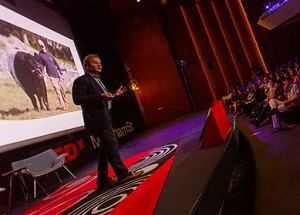
P. Allen Smith talks genetic diversity in our food sources at the inaugural TEDxMarkhamSt event.
TEDxMarkhamSt, Little Rock’s first independently organized TED event, kicked off Friday morning to a sold-out house at the Ron Robinson Theater in the River Market.
Global gardening and lifestyle guru P. Allen Smith of Little Rock headlined the morning session. Afternoon sessions, running through 7 p.m., are being streamed live here and through the video player below.
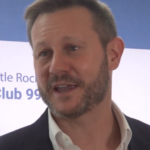
The event’s theme is “Little Rocks Create Avalanches.” Tim Freeman, CEO of Little Rock digital media startup Hark, is serving as the event emcee. Arkansas Business is an event sponsor.
Joining Smith for the morning session were speakers Cotton Rohrscheib, CEO of Rohrscheib Capital and COO of Grainster, and Karama Neal, Southern Bancorp Community Partners COO.
Late afternoon speakers include author, tech startup founder and former Acxiom CEO Charles Morgan; Skip Rutherford, former Clinton Administration official and dean of the University of Arkansas Clinton School of Public Service in Little Rock; Arkansas Baptist College President Fitz Hill; and civil rights activist Minnijean Brown Trickey, one of the Little Rock Nine who integrated Little Rock Central High School in 1957.
Smith’s talk, “The End of Choice: Why Diversity Matters if Food Is Important to You,” centered on genetic diversity as providing the building blocks of our food system.
Making food products easier to transport and providing them with longer shelf life has sapped diversity from our food sources, he said.
Using chickens as an example, Smith noted that broilers are grown bigger and faster than they used to be at the expense of quality and immunity to disease.
“We’ve created a monoculture of birds,” he said, noting that society’s collective disconnect from its food system is leading to food sources vulnerable to disease.
“We’re raising bigger chickens at the expense of genetic quality,” he said.
Smith said he’d love to see a delivery system developed for local farmer’s markets for those patrons who don’t always have time to visit them in person.
“You can have pizza delivered, why not fresh locally grown food?”
Rohrscheib, who grew up in the small Phillips County town of Lexa, sounded an agricultural theme as well. His talk, “Biting the Hand That Feeds Us: Exploring the Importance of Agriculture to Our Future,” provided a U.S. farming history lesson.
America remains the bread basket of the world, but U.S. farmers still face inherent obstacles such as the inability to set their own prices, he said.
Rohrscheib said Americans and their elected representatives must:
- Embrace technology to increase production
- Support innovation
- Reduce dependence on ethanol
- Decrease energy costs.
In her address, “The Most Important Question for Promoting Social Change,” Neal shared her experiences starting the public service-themed blog, “So What Can I Do?”
Neal said anyone wanting to promote social change must embrace an entrepreneurial spirit and take those first steps, regardless of how small they may seem. For those contemplating public service, she recommended four steps: know your options, dismiss excuses, start small, and do, and do more.
TED (Technology, Education, Design) is a global set of conferences run by the nonprofit Sapling Foundation. Its origins are traced to Silicon Valley, with the original TED conference taking place in 1984. It became an annual event in 1990.
The main TED conference is held each year in Vancouver, British Columbia, with other TED events held around the globe, including independently organized events (TEDx), such as Friday’s Little Rock event.
TEDx events have been held in Fayetteville, Bentonville and at Hendrix College in Conway.
 Sign up for Daily E-news