Some of the most advanced electronic technologies ever conceived will soon come to life in Arkansas, at the state’s Multi-user Silicon Carbide Research and Fabrication Facility — MUSiC for short — where extreme environment and high performance electronics invented and designed all over the country will be prototyped and tested.
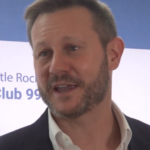
“The mission is to create a unique facility, a national facility, where we can unleash the creativity of a lot of researchers and businesses around the country that is now not available to them,” says Alan Mantooth, executive director of the MUSiC facility at the University of Arkansas’ Research and Technology Park. “We’ll be the nation’s silicon carbide sandbox — it’s where we come to play.
“It’ll be a facility where people can prototype their new ideas and accelerate to commercialization.”
Silicon carbide is the new semiconductor of choice, particularly for electronics that need a lot of power or that will be exposed to extreme environments, like space. It can withstand thousands of volts of energy as well as temperatures as high as 500 C. Currently, school officials say no manufacturing facilities in the country offer small-batch production like MUSiC will provide.
The facility will be open to public researchers, early stage startups and private inventors, and Mantooth says it will help take the guesswork out of developing and scaling new technologies.
“Think of it as a maker space,” Mantooth says. “And it’s also a place where the research findings of the nation can be incorporated, so the next prototypes are tested with new technology.”
MUSiC is scheduled to officially open in August, following expected certification of its clean rooms and equipment. Mantooth said in all, it cost $95 million to build the MUSiC fabrication lab — about equally split on the building and the equipment. The facility was funded by UA as well as a National Science Foundation grant and state funds.
In early 2026, MUSiC will start accepting submitted product designs. Facility users — the companies and individuals submitting designs — will pay a fee, and MUSiC staff will fabricate the prototype. The user can then test the device, and if needed, have MUSiC build out a second test product.
“One of the things we’re looking at early on are power devices, high-voltage devices that you would usually find in a power grid or in power converters,” Mantooth says. “That’s a strong interest because that would be into both domestic, land-based applications as well as military applications, like electric ships.”
Other early projects could include microelectronics for extreme environments, with industrial applications.
“If you want to put a sensor in a natural gas turbine — that runs at 500 Celsius. Silicon sensors won’t survive that, but silicon carbide will,” says Mantooth. “These kinds of electronics are wanted more and more by the industry.”
Mantooth expects Arkansas to attract new talent and industries as word spreads about MUSiC’s early stage role in innovation. Department of Defense vendors may want to locate in Arkansas to stay close to MUSiC, Mantooth says, and electric vehicle manufacturers may also take interest.
“Ultimately, we will attract a semiconductor manufacturing plant, somewhere in western Arkansas most likely, or Little Rock,” he says.
The Upshot
Federally Funded
$17.8 million Grant from National Science Foundation to establish MUSiC facility
Broad Reach
$246.4 billion Direct economic impact of U.S. semiconductor industry
Job Creation
277,000 Americans employed in semiconductor manufacturing
The Next Semiconductors
11.7% Silicon carbide’s projected market share growth from 2023-2030
Bring on the Prototypes
8,000 SF Dedicated cleanroom fab space at MUSiC
 Sign up for Daily E-news