Tom Hayes
Just three days after reporting record first-quarter profits, Tyson Foods Inc. of Springdale held its annual shareholders meeting Thursday at the Holiday Inn Convention Center in Springdale.
Shareholders overwhelmingly elected the 11-member board of directors, which each of the directors receiving at least 97 percent of the vote. Shareholders also approved PricewaterhouseCoopers LLP as the company’s independent accounting firm and, in a non-binding vote, the company’s executive compensation.
Shareholders also approved, in a non-binding vote, to change the frequency of executive compensation votes to every three years.
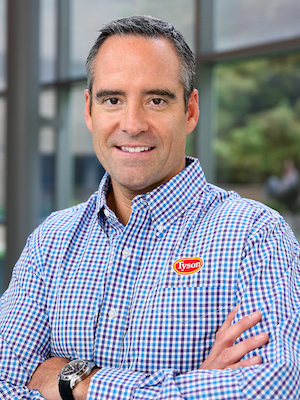
CEO Tom Hayes took control of the company on Jan. 1. He replaced long-time CEO Donnie Smith on the board of directors as well.
“It’s really an amazing time at Tyson Foods,” Hayes said. “There’s a lot going on.”
Four shareholders proposals, all of which the Tyson board of directors opposed, were all voted down. The proposals dealt with: a request for transparency in the company’s lobbying efforts on the state and federal level; a request for the company’s steps to increase its board’s diversity; a request to allow proxy access; and a request to have the company adopt a water stewardship at its facilities.
Tyson CFO Dennis Leatherby made brief remarks to tout the company’s first-quarter success, which he said put the company on a record pace for the year. Tyson reported revenue of $9.15 billion, income of $593 million and earnings per share of $1.59.
The company did not address a recent subpoena from the U.S. Securities & Exchange Commission or an Associated Press report about a federal lawsuit filed last month by farmers in five states against Tyson and other poultry companies.
Tyson disclosed the SEC subpoena on Tuesday. It said it had limited information about the investigation but believed it to be related to price-fixing allegations in lawsuit against Tyson and other firms.
Tyson said the company was cooperating with the investigation and has denied allegations in the price-fixing lawsuit.
On Thursday, the AP reported that former farmers in Alabama, Mississippi, North Carolina, Oklahoma and Texas allege that the contract grower system created by Tyson, Pilgrim’s Pride, Perdue Farms, Koch Foods, and Sanderson Farms pushed them into debt to build and maintain chicken barns to meet company demands. In the lawsuit, the farmers alleged that the companies treated the farmers like indentured servants and colluded to fix prices. Tyson has called those claims “false.”
 Sign up for Daily E-news