A national site location consultant said northwest Arkansas’ regional approach to economic development will help it in its quest to attract industry investments.
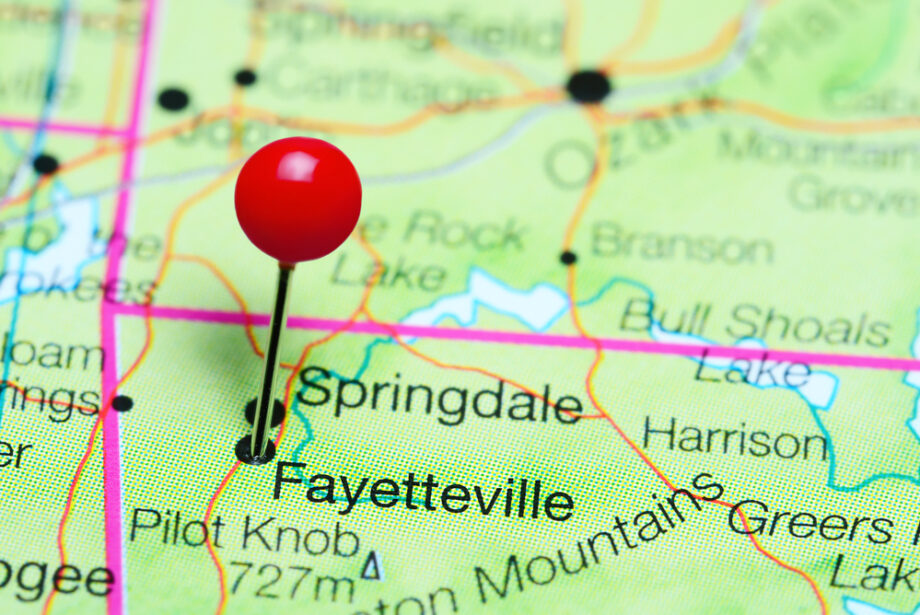
Minah Hall, a principal with VisionFirst Advisors of Tallahassee, Florida, was the guest speaker Thursday at the State of the Northwest Arkansas Region luncheon at the Fayetteville Town Center. The luncheon was hosted by the Northwest Arkansas Council in partnership with the Center for Business and Economic Research at UA’s Walton College of Business.
Hall said northwest Arkansas has some positive indicators that site locators look for. Most site location decisions are made behind the scenes as analysts pore over statistics such as workforce availability and access to rail and water facilities.
Hall said site locators such as herself think about “eliminating as many sites as quickly as possible,” because there are more than 3,100 counties and 19,000 cities vying for investments.
“This is where the regional efforts are so helpful,” Hall said. “Being regional helps you and makes you a bigger target for us to choose from. People are more apt to look at you if you have more to offer and using that regionalism is very important.”
Pitching the Region
Hall said northwest Arkansas should be more active in promoting its strengths. She said the use of social media was important.
“Create a better online presence, create the vibe,” Hall said. “Make yourself known and be proud of who you are. It is kind of the midwest nice. Y’all are too nice. We need to boast about ourselves better. What you all have done here is tremendous, keep working at it.”
Council CEO Nelson Peacock spoke of the region’s rankings when compared to its peer markets that include larger metropolitan statistical areas such as Austin, Texas; Provo, Utah; Des Moines, Iowa; and Madison, Wisconsin. Northwest Arkansas’ population in July 2024 was more 600,000, an increase of 2.6% from the previous year.
The region’s population growth ranked fourth among itself and six peers. Northwest Arkansas ranked first in employment growth and high-tech employment growth and second in unemployment rate.
In other areas, northwest Arkansas ranked sixth or seventh including last in median household income, average annual wages, percentage of residents with bachelor’s degrees and money invested in research and development.
“The report shows that we’re doing well in some areas and, in other areas, we have more work,” Peacock said. “It’s a bit of a mix. We still have some work to do.
“We’ll continue to make progress in that. We’re going to lean into our strengths. We’re going to work on our deficiencies. But all in all, northwest Arkansas as a region and economy is really trending in the right direction.”
CBER Director Melvin Jebaraj said the regional news isn’t all bad. NWA’s ranks were low in some areas because the council picked some powerful MSA to compare itself to; compared to its own statistics a year ago, northwest Arkansas had improved almost across the board.
“Most everything is looking up,” Jebaraj said.
The two metrics that saw northwest Arkansas regress in were poverty rate, which rose from 10.4% to 11%, and the unemployment rate, which bumped from 2.4% to 2.7%, even though that rate is well ahead of the state and national rates.
Macro Factors
Jebaraj spoke a while on the regional trends before bringing up the national economy. It wasn’t terribly optimistic.
“My mother taught me if I have nothing nice to say I shouldn’t say anything at all,” Jebaraj said. “What can I say about the national economy other than it has slowed rather significantly in the first half of this year.”
Jebaraj said the two strengths of the national gross domestic product are consumers spending on services and business investments in data centers.
“It’s not a very stable base for our economy,” Jebaraj said. “It’s mostly you and I going out and spending money on services and Nvidia stock.”
Jebaraj said with the federal government shut down, the quarterly jobs report would be delayed but he didn’t expect it to be strong. He said inflation isn’t coming down, employment other than in health care is sagging and the price of food, energy and core goods are rising.
“As of now, the broader national economy is slowing quite a bit, employment has slowed quite a bit and inflation is not coming down fast enough and there is a lot of uncertainty on when we will have to pay for the tariffs,” Jebaraj said.
The effect of President Donald Trump’s tariffs on imported goods was expected to spike prices but Jebaraj said he believes that hasn’t been as drastic as many companies are eating the tariffs until the U.S. Supreme Court rules on the tariffs’ legality.
He said if the tariffs are ruled to be legal, he expects companies to begin passing the cost increase to consumers. If the Supreme Court rules against tariffs, the companies will expect to be reimbursed for the tariffs they paid, Jebaraj said.
“We are not seeing a whole lot of cost increases in the final price of goods that you and I are buying,” Jebaraj said. “I think because people aren’t sure tariffs will stick so companies are absorbing the tariffs increases. They won’t absorb it forever because they have these people called shareholders. My guess is they are waiting on the Supreme Court to decide whether these tariffs are legal or not.”
 Sign up for Daily E-news