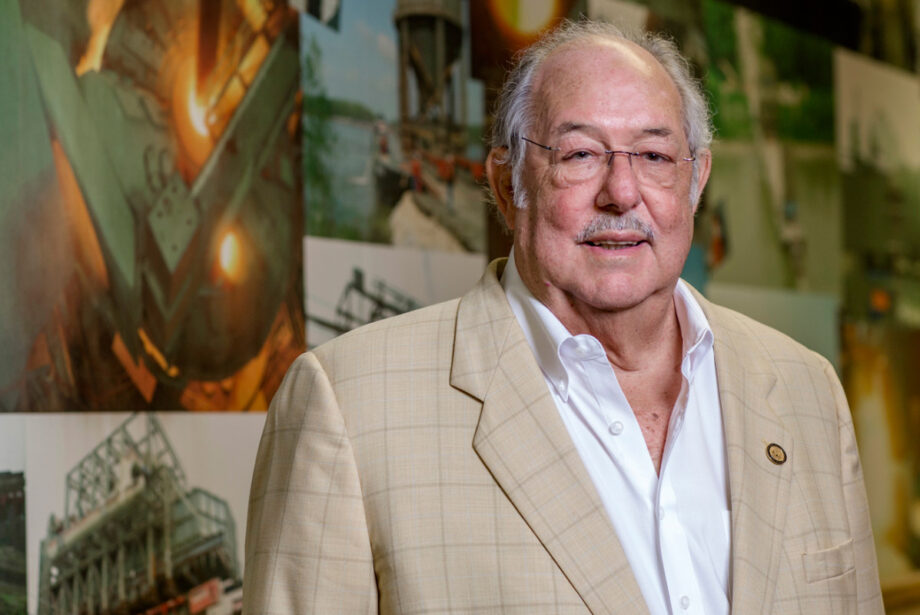
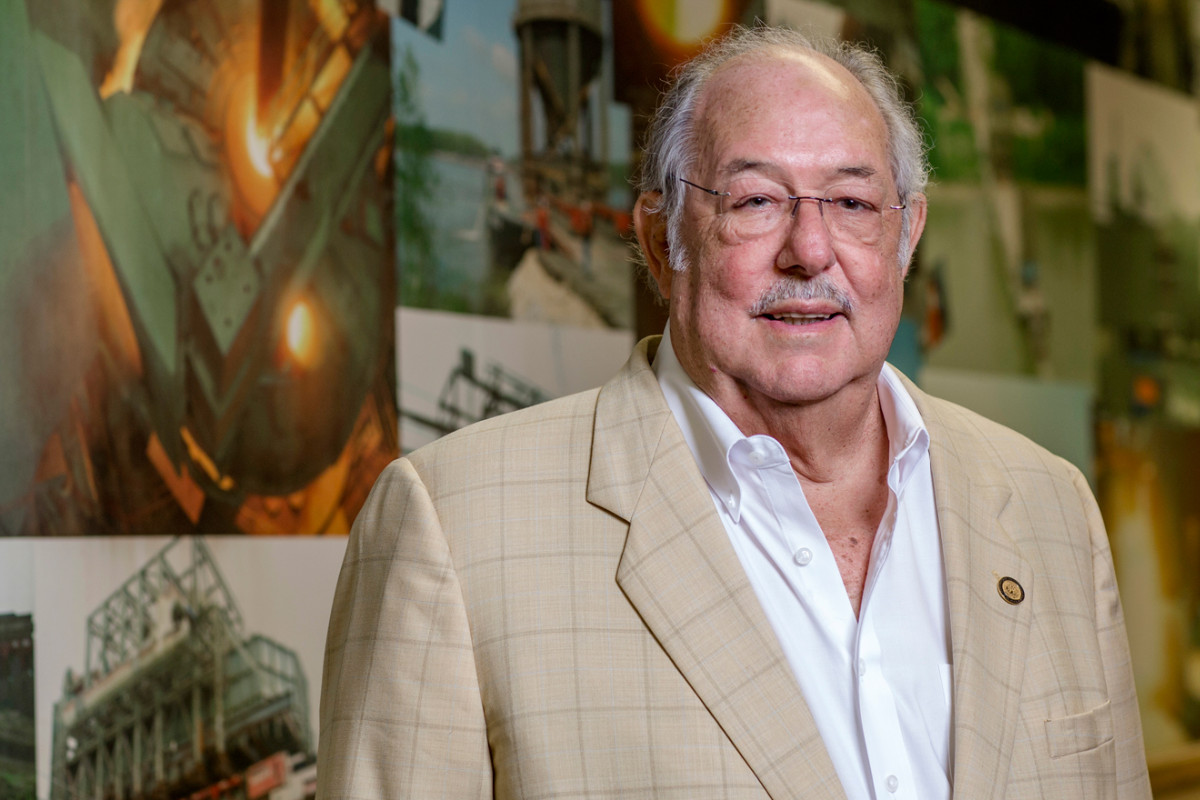
Tom Schueck
Legends in Arkansas died this year, ranging from the state’s best-known writer to the father of the modern bass boat to the founder of what became the state’s largest real estate company to a “titan of the steel industry.” Here are a few of the notable deaths in 2020.
January
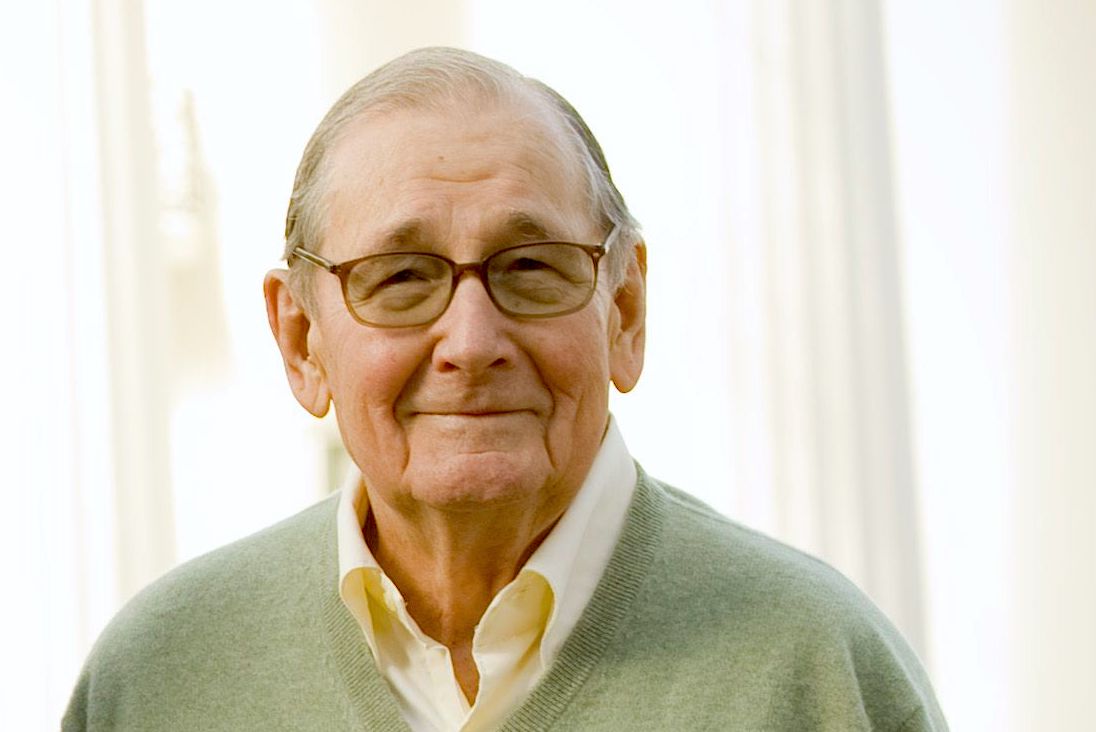
Gordon Wittenberg, a prominent Arkansas architect who once served as president of Wittenberg Delony & Davidson of Little Rock, died on Jan 8. He was 98. Wittenberg, the son of the co-founder of WD&D, or his firm designed many important buildings in Arkansas, including the Arkansas State Hospital, the Little Rock Statehouse Convention Center and the Stephens Building. Under his leadership, the firm won more than 30 awards. Wittenberg himself received a number of awards, including the Gold Medal of the Arkansas Chapter of the American Institute of Architects, and was named a Fellow of the American Institute of Architects.
Scott Landers, managing partner of the Steve Landers automotive dealerships, died Jan. 8. He was 35. He worked with his father, Steve Landers, and brother, Steve Landers Jr., in the family auto business for many years before partnering with the Luther Automotive Group of Minneapolis in 2014. The Luther/Landers business has seven dealerships in Arkansas, Missouri and Oklahoma.
David Glass, who was president and CEO of Walmart Inc. from 1988 to 2000, guiding it through a period of extraordinary growth, died Jan. 9 at 84. Most recently, he was owner and CEO of the Kansas City Royals, a team he helped lead to two consecutive World Series appearances. In 2015, the team brought the World Championship trophy home. Glass and his family sold the Royals late last year. “More than anyone beyond Sam Walton, David Glass is responsible for making Walmart the company it is today,” Rob Walton, former Walmart chairman and eldest son of Sam Walton, said. Glass was inducted into the Retail Hall of Fame in 2000 and into the University of Arkansas Business Hall of Fame.
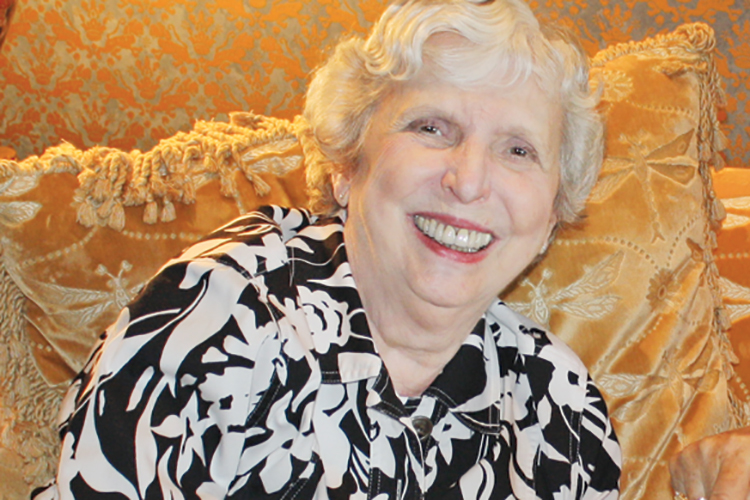
Phyllis Brandon, a pioneering Arkansas Democrat newswoman who made the High Profile section an enduring Sunday read and a potent weapon in the 1980s newspaper war against the Arkansas Gazette, died Jan. 11. She was 84. As its founding editor, Brandon spent 23 years leading High Profile, first for the Democrat and then for the rechristened Arkansas Democrat-Gazette. High Profile’s popular centerpieces featured Arkansas leaders in business, politics and society, ranging from Gen. Wesley Clark to Helen Gurley Brown.
Neely Cassady, 91, a leader in the Arkansas poultry industry, died Jan. 18. After his family business merged with two others to form Mountaire Poultry Co., Cassady formed Cassady Broiler Co. A partnership with Don Tyson led to another merger, and Cassady served on the Tyson board for 27 years. Cassady, a former state senator from Nashville, was inducted into the Arkansas Agriculture Hall of Fame in 2017.
Marilyn Bogle, a philanthropist described as one of the “pillars” of Razorback athletics who with her husband, Bob, gave millions of dollars to the University of Arkansas, died Jan. 23. She was 88. Scott Varady, the executive director of the Razorback Foundation, told the Arkansas Democrat-Gazette the couple’s donations toward athletics were in the millions of dollars and “helped Arkansas’ women’s teams immensely.” Bogle was a member of the UA Sports Hall of Honor.
Forrest L. Wood, the founder with his wife, Nina, of Ranger Boats, a leader in the boating and fishing sectors and a passionate advocate for conservation, died Jan. 25 at 87. Wood, who built the Ranger Boats brand into the “Rolls-Royce” of fishing boats, is considered the father of the modern bass boat. Wood was a competitive fisherman himself, qualifying for the world championship Bassmaster Classic in 1972 and 1979. He was inducted into the University of Arkansas Business Hall of Fame in 2006 and into the Arkansas Sports Hall of Fame in 2011.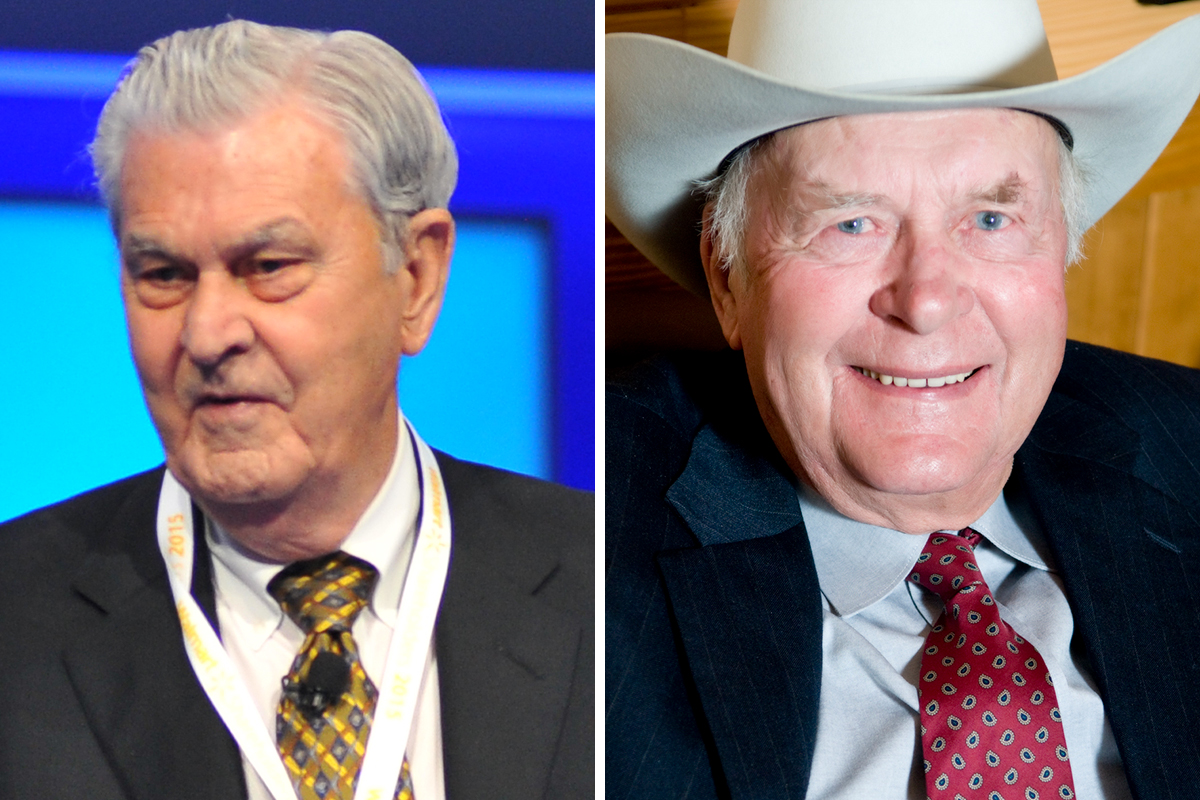
Sam Fiser, founder of the accounting firm S.F. Fiser & Co., with offices in Springdale and Batesville, died Jan. 31 at 72. Fiser also was a civic leader, serving on many boards, including the Arkansas Savings & Loan Association, the Springdale Rotary and the Arkansas Sheriffs’ Youth Ranch. He was honored with the University of Arkansas Alumni Award in 2004 and the Lifetime Achievement Award in Accounting from Arkansas Business in 2011.
Jay Friedlander, former chairman of the Department of Journalism at the University of Arkansas at Little Rock, died Jan. 31 at 74. Friedlander, who moved from Little Rock to the University of South Florida in 1995, retired as director of the university’s School of Mass Communications in 2010. Friedlander was a scholar on the internment of Japanese Americans during World War II, and his work led to a public TV documentary on the subject.
February
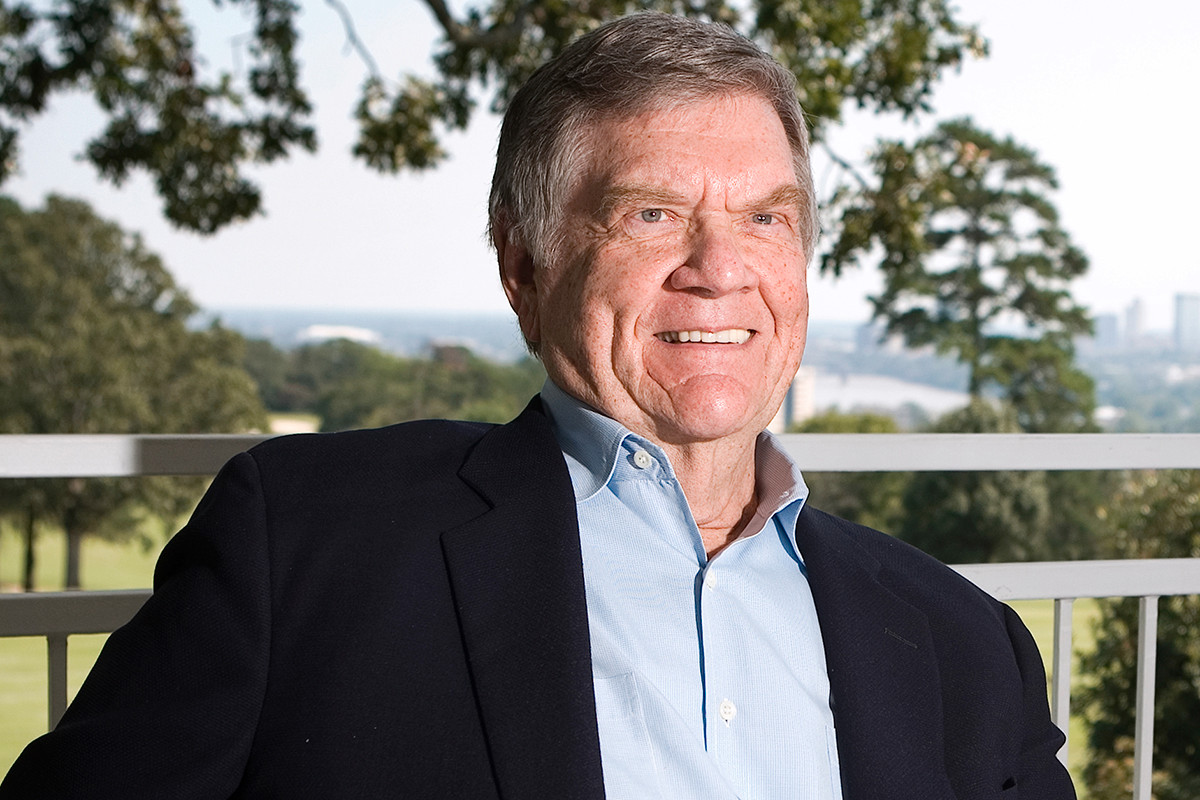
Wayne Cranford, an advertising pioneer who brought Madison Avenue creative approaches to Arkansas and provided the “C” in the name of prominent Little Rock agency CJRW, died Feb. 15 at 87. Cranford founded Cranford Johnson with Jim Johnson in 1961. Nearly 60 years later, both men are in the American Advertising Federation’s Southwest Advertising Hall of Fame, and Cranford was inducted in 2012 to the University of Arkansas Business Hall of Fame.
William Robert “Bill” Fields, a former Walmart executive who was an early mentor to CEO Doug McMillon, died Feb. 16 at 70. Fields began his 25-year career at Walmart as an assistant to founder Sam Walton; he later held positions ranging from executive vice president and senior vice president of distribution and transportation. He was CEO of the Stores Division when he left to become chairman and CEO of Blockbuster in 1996. He later served as CEO of Hudson’s Bay Co. and was chairman of the investment firm Fields Texas Ltd. at the time of his death.
Charles Portis, Arkansas’ most famous and arguably greatest writer, died Feb. 17. He was 86. His best-known work was the novel “True Grit,” made into two movies, one of which won John Wayne his only Academy Award. A master of quirky characters and deadpan humor, Portis, a former newspaper reporter and columnist, wrote five novels over 35 years, becoming the state’s great literary figure of the 20th century, admired by critics and fiercely beloved by a corps of cult-like fans.
March

Tom Schueck, who founded steel company Lexicon and grew it into one of the state’s largest private companies, died March 3. He was 78. Described as a “titan of the steel industry,” Schueck was a 2017 inductee into the University of Arkansas Business Hall of Fame. But he was also a public servant who devoted time to state and city commissions and boards. Schueck was chairman of the Arkansas Highway Commission at the time of his death.
Mike Roy, who took a technical job at KATV-TV straight out of college and never worked anywhere else, becoming one of the longest-serving directors of news production in Little Rock television history, died March 13 at 63.
B.G. Hendrix, a former speaker of the Arkansas House of Representatives who served in the House for 34 years, died March 21 at 97. Born in Jenny Lind (Sebastian County), Hendrix also served on many state and national commissions, including the U.S. Department of Transportation Rural & Mass Transit Committee. He was credited with starting the first ambulance service in Fort Smith.
April
Paul Charles Parks, 74, founder and chairman of Benchmark Group Inc. in Rogers, died April 18. He founded Paul C. Parks Engineering Inc., which was later renamed Benchmark Group, on April 3, 1978, as a sole proprietorship offering electrical engineering services. He eventually incorporated the business with the purpose of sharing ownership with his staff. Under Parks’ leadership, Benchmark Group grew to employ more than 170 people. It was the 12th-largest engineering firm on Arkansas Business’ most recent list.
Philip Jonsson, who founded Signal Media of Arkansas, which operates three radio stations in Little Rock, died April 22. He was 95. Before his venture into radio, Jonsson was an oilman, founding Great Plains Land Co.
Ed Moore, who partnered with Paul Bash, Louis Petit and Denis Seyer to form Continental Cuisine, the Little Rock restaurant group behind such legendary restaurants as Jacques & Suzanne and Alouette’s, died April 28. He was 88. Continental Cuisine was an inaugural inductee into the Arkansas Food Hall of Fame.
Don Edmondson, a Forrest City restaurateur, philanthropist and lover of architecture, died April 28 at 84. Edmondson owned and invested in motels, hotels and restaurants throughout the Southeast. A $10 million gift from him and his wife, Ellen, led to the University of Arkansas renaming its architecture school in honor of renowned Arkansas architect Fay Jones, a friend of the couple.
May
Rita Jo Ward, an artist who with her husband, Leo, founded Terra Studios near Durham in Washington County, died May 10. She was 89. Terra Studios is known nationwide for its glass figurines, the Bluebirds of Happiness. A 2017 obituary for Leo Ward noted that more than 9 million of the glass birds had been sold.
Quin S. Godsey III, the owner and operator of Godsey Cleaners in North Little Rock for almost 50 years, died May 17 at 70. The business, a North Little Rock institution, was founded by Godsey’s father in 1943. Godsey’s obituary noted that he and his grandson, John Isaac, shared a passion for washing machines.
Eddie Sutton, who pushed the University of Arkansas basketball program to national prominence, died May 23 at 84. “Sutton led Arkansas to a 260-75 record and nine NCAA Tournament appearances, highlighted by trips to the Final Four in 1978, Elite Eight in 1979, and Sweet 16 in 1981 and 1983,” the Arkansas Democrat-Gazette noted. “Coach Sutton won everywhere he went because he was a great teacher of the game,” Darrell Walker, coach of the University of Arkansas at Little Rock and an All-American guard for the Razorbacks in 1983, told the newspaper. Sutton is in the College Basketball Hall of Fame and the Arkansas Sports Hall of Fame.
June
Richard C. Butler III, scion of a prominent Arkansas family and a longtime historic preservationist, died June 4 at 82. He was known for restoring a number of historic buildings in Little Rock, including the First Hotze House, and the 1840s Noel Owen Neal Log House in Washington (Hempstead County), after he moved it from a site near Nashville (Howard County). In 2019, he received the National Historic Preservation Medal from the Daughters of the American Revolution.
Ivy Owen, the former executive director of the Fort Chaffee Redevelopment Authority and a Fort Smith civic leader, died June 5 at 73. Owen helped transform the former military base into the Chaffee Crossing development. “Under Owen’s leadership, FCRA sold about 5,000 acres to developers, which turned into $1.65 billion of investments,” the Southwest Times Record said.
Ted Wagnon, a longtime Little Rock communications professional who made Arkansas Business’ reputation as its first editor with an expose that embarrassed Bill Clinton and Arkansas’ business establishment, died June 13. He was 68. Wagnon went on to a career in communications and crisis management, including years as a partner in VOX Global, a stint as senior vice president at Fleishman-Hilliard and as principal of Wagnon Associates.
Jerry McConnell, a newspaper editor and a mentor to scores of Arkansas journalists, died June 25. He was 92 and one of the last of a generation of Arkansas Gazette staffers who endured threats and boycotts for the newspaper’s unpopular stand supporting the rule of law in the integration of Little Rock Central High School in 1957. McConnell went on to serve as managing editor of the Arkansas Democrat and eventually led the Daily & Sunday Oklahoman and the Oklahoma City Times as executive editor.
L. Dickson Flake, a towering figure in the world of commercial real estate whose major projects include the 33-story Regions Center in Little Rock and J.B. Hunt Transport Services headquarters in Lowell, died June 30, the one-year anniversary of the death of his wife of 59 years, Linda Blaine Flake. Flake, 81 when he died, was a co-founder of Barnes Quinn Flake & Anderson Inc., which became the state’s largest commercial real estate firm. Over a 55-year career, Flake played a role in several major commercial projects in Arkansas, including Arkansas Blue Cross & Blue Shield’s downtown Little Rock headquarters, the Breckenridge Village shopping center, the Jones Eye Institute at the University of Arkansas for Medical Sciences and Simmons Bank Arena in North Little Rock. Flake was inducted into the University of Arkansas Business Hall of Fame in 2011.
July
Ross Pritchard, 95, a high-level Peace Corps official with a long career in college administration, died July 8. He became president of Arkansas State University in 1975, leaving in 1978 to become chancellor of the University of Denver.
Manuel “Matty” Moroun, the Detroit transportation titan whose family owns 68% of PAM Transport Inc. of Tontitown, died July 12 at 93. Moroun also owned the Ambassador Bridge. The Detroit Free Press described him: “One of Detroit’s most controversial businessmen for a couple of generations, Matty Moroun’s relentless efforts to defend his monopoly as owner of the only bridge crossing between Detroit and Windsor led to endless litigation in the U.S. and Canada.”
Tommy Hodges, the developer of Otter Creek and the Gateway Town Center in Little Rock, died July 14. He was 77. His business partner Jim Keet, speaking of the long-gestating Gateway development, told the Arkansas Democrat-Gazette: “If you look at the entire history, he demonstrated such skill, tenacity, endurance and commitment throughout that time to do some really exceptional things in Arkansas and other states.”
John Tucker “Tuck” Morse, 75, one of 10 original employees of Federal Express Corp. in Little Rock and the company’s first general counsel, died July 30. Morse, the son of Byron Morse, a former Little Rock mayor and founder of real estate company Rector Phillips Morse, retired from FedEx as a senior vice president in 1981 but continued to invest in real estate and other ventures in Little Rock and Charleston, South Carolina.
October
Dr. F. Hampton Roy, an ophthalmologist and former member of the Little Rock Board of Directors, died Oct. 8 at 83. Roy wrote more than 40 books, according to the Encyclopedia of Arkansas, on subjects ranging from ophthalmology to history, architecture and religion. He was an award-winning historic preservationist and established the World Eye Foundation in 1974 to improve the quality of eye care in developing nations.
Gerald L. Harp, the son of Harvard and Floy Harp, the founders of Harp Food Stores, who served as president and CEO of the company until its sale in 2001 to the company’s employees, died Oct. 16 at 80. A Springdale civic leader, Harp “cared about the future of his associates and employees,” Huey Couch, who retired from the stores after 55 years, told the Arkansas Democrat-Gazette.
November
Joe Flaherty, 84, the first executive director of Our House, a Little Rock nonprofit helping the homeless and near-homeless, died Nov. 4. Flaherty brought the organization to national prominence, and Our House became a model for many other states.
Jack Kinnaman, founder of Kinco Constructors of Little Rock, died Nov. 19. He was 86. Kinnaman’s company left its mark on projects throughout the state, including Reynolds Razorback Stadium in Fayetteville and the Clinton National Airport in Little Rock. Kinnaman, considered one of the founding fathers of the University of Arkansas’ construction management program, was a fellow and former president of the American Institute of Constructors. He was honored as Arkansas Business Executive of the Year in 1996. In 2002, he was inducted into the Arkansas Construction Hall of Fame.
Joe Morgan, a prominent automotive dealer and member of the Arkansas Game & Fish Commission, died Nov. 22 at 76. Morgan was a fervent advocate for duck hunting in the state. “It’s abundantly clear to anybody that spent a day or six years with Joe that he was unabashedly committed to returning to the Arkansas hunter the experience that he enjoyed decades ago,” commission Chairman Andrew Parker told the Arkansas Democrat-Gazette.
Terry Siebenmorgen, known worldwide for his work in rice processing, died Nov. 22. He was 63. He began his faculty career with the University of Arkansas System in 1984 as a food engineer and founded the Rice Process Program in 1994. He was inducted into the Arkansas Agriculture Hall of Fame in 2019.
John F. Gibson, 80, a Monticello lawyer who served as prosecuting attorney for the 10th Judicial District, died Nov. 22. As a member of the Red River Compact Commission, he was instrumental in persuading the Legislature to authorize the creation of the Arkansas State Water Plan to ensure future water needs.
December
Dickie Kennemore, the longtime Osceola mayor who helped land Big River Steel, the state’s largest economic development enterprise, died Dec. 5 of complications from COVID-19. He was 78. “He was a strong mayor in economic development, and he’ll be remembered as instrumental in bringing in Big River Steel,” state Sen. Dave Wallace of Leachville told Arkansas Business.
Dennis Schick, the former executive director of the Arkansas Press Association, died Dec. 7. He was 83. Schick was the APA’s executive director for 25 years and with his wife, Jan, shored up the association’s finances and led its move to a prominent headquarters building near the state Capitol. Schick received lifetime achievement awards from the Arkansas Society of Professional Executives, the Arkansas Advertising Federation and the Society of Professional Journalists and was a member of the Arkansas Tourism Hall of Fame.
Collins Haynes, a Rogers architect and developer, died Dec. 8 at 70. He was instrumental in the design and development of the Pinnacle Point and Metro Park office parks.
Charlotte Schexnayder, a leading Arkansas newspaper editor and publisher, the first woman president of both the National Newspaper Association and the Arkansas Press Association, and a former state representative, died Dec. 11 at 96. She and her husband, Melvin, bought the Dumas Clarion in 1954, owning it for 44 years. Schexnayder, a native of Tillar, took strong stands on the issues of the day, including voicing support for the desegregation of Central High School in Little Rock. She was inducted into the Arkansas Women’s Hall of Fame last year.
 Sign up for Daily E-news