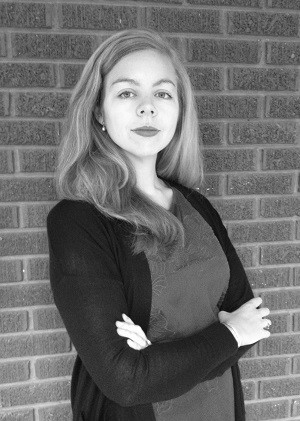
Eliza Borne
The Oxford American has made its hay telling stories of the South, and it’ll continue to do so under the watch of new editor Eliza Borné.
Perhaps best known for its music issues that feature Southern music, the nonprofit quarterly based in Little Rock bills itself as the “magazine of the South.” Borné, two months into her tenure as editor, aims to keep the magazine focused on telling those stories and “changing the lives” of its readers.
The 29-year-old Little Rock native took the reins of the quarterly publication in October. She joined the staff in 2013 as associate editor and was promoted to managing editor in 2014. Since June, she had served as interim editor following the departure of editor Roger Hodge for The Intercept, and the magazine removed the interim tag this fall.
Borné set aside time to answer some questions from Arkansas Business about the magazine, whose relocation to downtown Little Rock’s South Main neighborhood has helped tranform the area; the shape it’s in, financial and otherwise; the typical OA reader; the look of the magazine’s future; and much more.
AB: First off, let’s get these out of the way. How many readers, and what’s the financial shape of the OA these days? What are its key sources of support?
EB: Our Georgia music issue came out on Dec. 1, and we printed about 55,000 copies of the magazine, which comes with a CD. Our music issues almost always sell out, and I’m hopeful we’ll have great success with this one. With James Brown on the cover and a mix including 25 songs ranging from OutKast to a stunning demo recording of “Moon River” — how could we not?
Especially when you consider the 30-plus pieces in the magazine, on topics like the Allman Brothers’ time in Macon and rock critic Peter Guralnick’s discovery of the blues.
The Oxford American is a nonprofit organization, and we can’t support the magazine on advertising and circulation revenue alone. So, like all nonprofits, we operate on a lean budget and we turn to a variety of sources for funding. The University of Central Arkansas is one of our partners, providing us with financial and in-kind support in exchange for opportunities we create for their students. We also receive various sponsorships; for instance, Ben E. Keith Foods Mid-South Division sponsored our 2015 Americana music series at South on Main, and the Georgia Department of Economic Development underwrote our Georgia Music issue. We have a robust retail site, OxfordAmericanGoods.org, where we sell back issues, books, vinyl, and other products selected by OA staff. We’ve seen a lot of positive sales growth there over the past three years.
And of course, we fundraise; we depend on contributed support for nearly half of our annual operating expenses. We host benefits, apply for grants, solicit donations from individuals, businesses, and foundations. Thanks to the hard work of our staff and our community of dedicated supporters, 2015 was a good one in all of those categories.
In May, our board member Mary Steenburgen hosted an amazing fundraiser here in Little Rock with a group of singer-songwriters performing in the round. The event raised $70,000. The Arkansas Arts Council has been a generous supporter of the Oxford American (we are one of the council’s Major Arts Partners), and two weeks ago we announced that the OA received a $20,000 Art Works grant from the National Endowment for the Arts. Our annual campaign is in full swing right now; so far we’ve raised nearly $20,000, and we’d like to move the needle even more.
So here’s a public appeal: Do you love the stories you read in the Oxford American, the songs you discover on our CDs, and the shows you see in our concert series? You can directly support our creative projects by donating at OxfordAmerican.org/Donate. Every dollar makes a difference.
AB: Describe the typical OA reader. Who’s the intended audience?
EB: As far as quantitative information: Our top two subscriber states are Tennessee and Arkansas, though California and New York aren’t far behind, and we have plenty of international readers, too. I wouldn’t attempt to define our audience except to say they appreciate excellent writing, good stories, beautiful artwork, and the kind of music that gets in your head and sticks with you for a lifetime. Also: They’re interested in a smart exploration of Southern culture. They’re not interested in Southern stereotypes.
AB: What do you hope to bring to the magazine?
EB: I have been closely involved in the creation of every Oxford American for nearly three years, and I’m very proud of the issues our staff has published in that time; I have no plans to significantly change our fundamental aesthetic identity. Since 1992, readers have come to the OA to find the best writing from and about the South. That is not going to change on my watch, though certainly I’ll bring my own sensibilities and tastes to the magazine — I have a special fondness for stories that combine elements of different forms (pieces that combine memoir and reportage, for example), and I love to nurture young or emerging talent.
Nothing makes me happier than launching a career in the pages of the Oxford American. I’m also well aware that most national magazines have a poor record on publishing a diversity of voices and viewpoints. I believe the magazine is better when we include more women, more non-white writers, more gay writers, more stories from rural and/or low-income areas that are often forgotten in major media.
AB: What’s been the magazine’s online strategy? How important is the web to the magazine’s identity?
EB: Online efforts are hugely important to the OA. We debuted a redesign of OxfordAmerican.org nearly a year ago, in January of 2015, and our stories have never had a better online presentation. Our web traffic in the past month is about two-and-a-half times what it was in the same period a year ago. Most importantly, we use the website to promote and enhance our print publication. For example, after our Georgia Music issue came out we published several highlights from the magazine on the web — like Kiese Laymon’s brilliant “Da Art of Storytellin’ (A Prequel),” which was recently named to Longform’s list of the Top 5 Essays of 2015. Or David Ramsey’s “Prayers for Richard,” a feat of profile writing that already has the honor of holding an OA record for pageviews in a single day.
We also publish web supplements that provide interesting background on pieces from the issue, like our behind-the-scenes post on how Athens rockers Futurebirds came to record an exclusive track for our CD.
In addition to our website, we publish a weekly e-newsletter, and we’re active on social media. In 2016, one of my most ambitious goals is to expand our web presence even more by fully digitizing the Oxford American’s extensive archive — to date that’s 91 issues, all packed with riches, including works by Donna Tartt, Barry Hannah, James Agee, and many, many others.
AB: How would you describe the magazine’s place in the literary world? Why is it important?
EB: I feel the same way now that I did when I discovered the magazine when I was 16 years old. The Oxford American is the liveliest magazine in America. You won’t find a more nuanced and interesting portrayal of the South anywhere else, and our writers are outstanding storytellers. In 2015 alone, we published an extraordinary long poem by National Book Award-winning poet Nikky Finney; we published an unforgettable story about a transgender woman from El Paso; we published an incredible travelogue by a writer who walked the 150-mile path of the 2011 supercell tornado in Alabama; we published Chris Offutt’s irreverent cooking column; we published a fiction issue and a special section on Southern food. And I’m just getting started.
The OA is important because if we weren’t around, who would publish these stories? These stories change our readers’ lives. They change my life.
AB: Where’s the OA headed? What does the magazine look like 10, 20 years from now?
EB: Our core work is the publication of thoughtfully reported, beautifully written and carefully edited stories. In 20 years, will we be telling stories in virtual reality, like the New York Times is doing today? It’s hard for me to imagine that scenario, though I suppose I wouldn’t rule it out. I will say that I know the Oxford American will continue to invest in print for a long time to come.
My observation is that quarterly magazines — especially ones as well-designed as the Oxford American — are uniquely positioned to live with readers for a very long time. (I can’t count how many subscribers have told me they keep their issues forever.) I don’t ever see us transitioning to being a web-only publication. Since cars and computers don’t even come with CD drives anymore, it’s likely that our music issue model will evolve. Outside of the music issue, we’re already experimenting with different formats. For instance, we recently released a 7-inch vinyl EP with New West Records; we include audio recordings of the poetry published in the magazine on our website.
As people’s lives continue to shift online, readers will yearn for more tactile engagement with art. You can read our stories on screens with ease, but I trust that the experience will always be best when you’re holding the magazine in your hands. I’m not the only one who feels this way. E-book sales are slipping, and independent bookstore sales are healthier now than they were five years ago. That’s not to say that we won’t continue to innovate online, and incorporate more multimedia efforts in our stories. But we’ll remain committed to publishing a physical magazine.
Our 25th anniversary is in 2017, and we’re already gearing up to launch a fundraising campaign and a series of events around this momentous occasion — because yes, we want to celebrate all we’ve accomplished in the past quarter-century, but we also need to raise operating funds, like we do every year, so we can continue to do this good work. A decade from now, I expect we’ll be in a similar boat: we’ll be creating a great magazine, but we’ll also be working hard to grow our readership and fundraise so we can ensure our sustainability.
AB: Finally, talk about the OA’s continued role in the development and rejuventation of South Main.
EB: We believe that our investment in programming has been a catalyst for the neighborhood’s growth. From the readings we host in the annex space located below our offices to our 12-show concert series at South on Main — the Oxford American’s events are unique in Little Rock, and they bring people to South Main Street.
Here’s just one example: Two weeks ago, we hosted Patterson Hood and the Indigo Girls for an intimate concert that launched our Georgia Music issue. Patterson and Amy Ray of the Indigo Girls are avid OA readers, and both artists have songs on this year’s OA CD. The show was a moving expression of our vision to take the Oxford American “from the page to the stage” with live programming. The music was wonderful, and we were thrilled to have a packed house. It was a memorable evening for everyone in attendance.
Best of all? This year’s concert series is only halfway finished, and we’ll be announcing next year’s lineup before long. Stay tuned.
 Sign up for Daily E-news