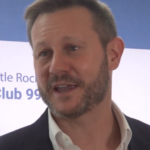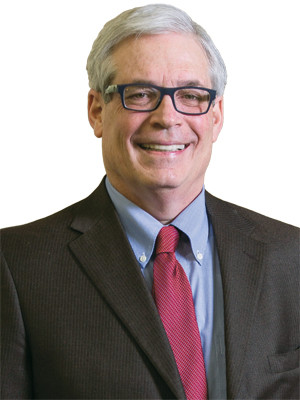
Ramsay Ball, 58, worked in Little Rock real estate for 20 years before relocating to northwest Arkansas in 2004. He and Steve Lane formed a real estate company that was acquired by Colliers International, for which Ball is now an executive broker in Bentonville.
Ball, who is from Monticello, earned a bachelor’s degree in marketing from the University of Arkansas at Fayetteville and an MBA from Louisiana Tech University.
Colliers International manages more than 14 million SF of commercial real estate in Arkansas.
What is the state of the northwest Arkansas commercial real estate market? What is the driving force in its apparent strength?
The northwest Arkansas commercial real estate market is very healthy and robust. The driving forces are the economic strength of the region, pent-up demand, low interest rates and lack of good alternative investments. Most of these forces cannot be controlled, except for the economic strength, which is specific to the area. Northwest Arkansas is the beneficiary of the best strategic planning in the nation, cultivated by successful people who love the region and the people here. There is nothing like it anywhere else. Our good fortune is the direct result of great leadership.
What did you learn during the recession?
Timing, timing, timing — not location, location, location. Timing trumps location every time. In a bad market, even a great piece of real estate will suffer. In a good market, all properties benefit.
Many developers have said that deals seem to be better planned now, but one has to wonder if that is a trend that is going to hold. How long will it be before real estate developers start throwing caution to the wind again?
When I moved to northwest Arkansas from Little Rock in 2004, the local real estate market was hyperactive. Many developers were doing projects that made no sense. Some banks were loaning 120 percent of costs with little underwriting. It was like being in an episode of “The Twilight Zone.” Then the music stopped, and the recession cleansed both the development and banking communities.
Right now, a new crop of buildings is coming up in northwest Arkansas. Most of the development that I see appears to be rational — very different from the mid-2000s. But there is a fundamental problem with making a living as a developer: What do you do when the market slows down? It is very hard for someone to walk away from the table when they have consistently been winning. Sometimes you have to cash in your chips and look for another game.
How did you get interested in real estate as a career?
By accident. I was a freshly minted MBA headed down a career path in investment banking when I interviewed with Dickson Flake in Little Rock, a lucky day for me that has led to a very satisfying life. I’ve grown to love the opportunity that real estate has given me to meet a wide spectrum of people.
What do you think the future of the market is?
The current pace of consumption of resources is not sustainable. Real estate, like everything else, will by necessity become more sustainable or we are doomed to extinction. Buildings will be constructed of renewable materials and will use less energy.
The type of lifestyle that I grew up with in the ‘70s — cars, fried food, cigarettes and couch potato television — seems to be going away, thank God. The future is healthy workplaces and living spaces with walkable amenities. More and more people want to get back to downtowns. It is remarkable. You don’t have to be a weatherman to see which way the wind blows.
 Sign up for Daily E-news