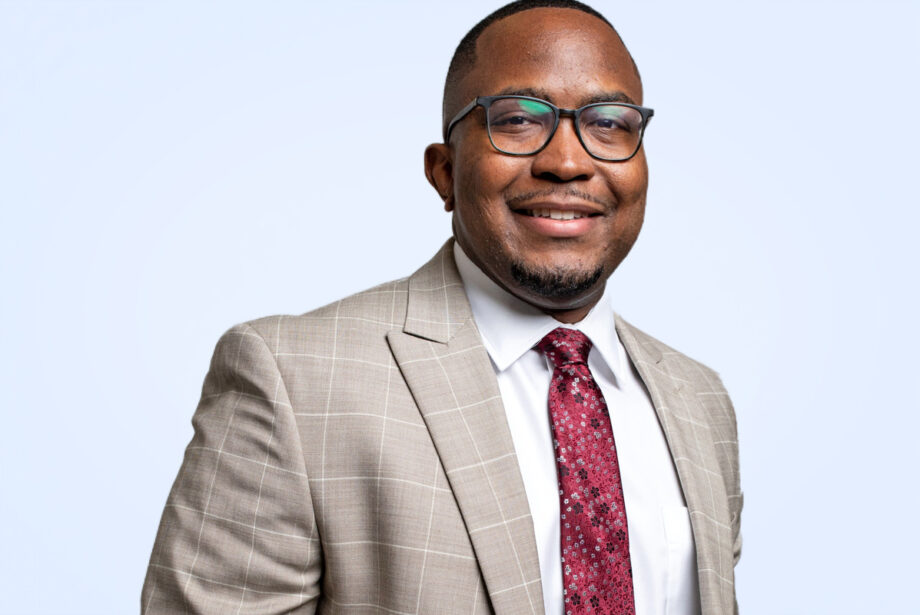
Big Brothers Big Sisters of Central Arkansas announced Raymond Omar Long as its CEO in August.
The Little Rock native previously worked for the Little Rock Regional Chamber, where he was director of business retention and expansion. Before that, Long was director of programs and operations at the Urban League of Arkansas. From 2016-2019, he was the founding executive director of the Better Start Foundation, a youth development nonprofit. In 2018, he was appointed to Little Rock Mayor Frank Scott’s Transition Education Subcommittee.
He received an associate degree from the University of Arkansas-Pulaski Technical College and a bachelor’s degree in business administration from Philander Smith College of Little Rock.
Long’s three-year plan aims to recruit 300 mentors and extend BBBSCA’s reach into Conway, Benton, Bryant and Pine Bluff.
What benefits do businesspeople derive from BBBSCA, and what can they give back?
There is a strong case for businesspeople to get involved with youth mentoring. It makes sense for several reasons, such as engaging employees, providing opportunities for skill-building and improving retention, developing the future talent pipeline by preparing young people for college and careers, and strengthening viable communities (which include viable customers).
Businesspeople can give back dollars to help build more world-ready young people, skills to increase our capacity, especially when it comes to marketing and public relations, and time by allowing employees to serve as mentors.
What are the biggest challenges your organization faces?
Our organization needs to expose ourselves to a wide variety of audiences to recruit mentors and raise the money we need to give the people of central Arkansas the first-class Big Brothers Big Sisters it deserves. We do not have the luxury of a robust earned revenue model, so we rely on donations from individuals and businesses to sustain our mission. We do not currently have the widespread support required to generate the human and monetary resources to advance the state of youth mentoring, but I believe with our upcoming Mentoring Is More marketing, that will change.
How would you like to grow BBBSCA?
I took this job in the summer of 2021 after selling the board of directors on my three-year vision for a bolder, better, bigger Big Brothers Big Sisters of Central Arkansas. Our agency, an affiliate of Big Brothers Big Sisters of America, a network of 235 agencies that served 200,000 young people in 2020 alone, has the potential to do more than mentoring. Mentoring will always be foundational to our work. Still, I want to expand our programs and services to include financial literacy, academic success, health and wellness, career readiness training, youth leadership development, and music and the arts.
What challenges do your mentees face, and how do you work to overcome them?
The challenges of our mentees vary from young person to young person. Some of our mentees join our big-little family to challenge themselves, and they realize the importance of having a mentor on that journey. Then some of the mentees are facing more adversity than usual because of a lack of resources and a network to deal with the adversity. The adversity can range from the sudden death or incarceration of a parent to difficulty navigating their current school environment. No matter the adversity, our job is to provide a mentor to support and encourage the young person while coordinating wrap-around services to develop the whole child. The mentor is the most essential piece of the puzzle, but they are only one piece. We cultivate resources, tools and relationships to give every child the chance to reach their full potential.
You recently took part in a discussion through the Arkansas Black Philanthropy Collaborative about barriers that keep Black-led nonprofits from accessing funding to run their organizations. What are those barriers and how can we remove them?
The business community should bring an equity lens to who they support financially. Send the money to the organization that needs the funding the most. Businesses tend to support organizations whose leaders are in their inner circles. They fund who and what they are familiar with, which sometimes leaves Black-led nonprofits on the outside looking in. The business community should take a closer look at those organizations and take pride in supporting organizations whose work is impossible without consistent contributions from the business community.
You recently announced a mentorship program with the Jacksonville North Pulaski School District. How does it work and what are its goals?
We are establishing a site-based youth mentoring program at Jacksonville Middle School. We recruit, screen, train and match volunteers to serve as mentors during the school day. We create a personalized youth development plan and curriculum to support the match in partnership with the school administration. We visit with the big and the little monthly to check in, provide support and measure outcomes.
Little Rock is working on strategies to reduce violence. What do the city and its stakeholders need to do? How are you and your organization helping?
We need to look at the root cause of violence with nonjudgmental views. Once we have a well-rounded group of stakeholders taking a nonjudgmental approach to solving the problem, then we can develop the right solutions. My organization is charged with providing evidence-based mentoring to as many young people as possible. Our mentoring model is backed by more than 100 years of evidence. Mentoring can be particularly effective because it tackles several different factors that lead young people to violence by enhancing protective factors that promote positive development and providing access to tools, resources and relationships that help young people navigate the complexities of life as they prepare to enter adulthood.
 Sign up for Daily E-news