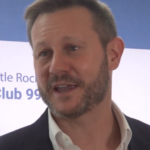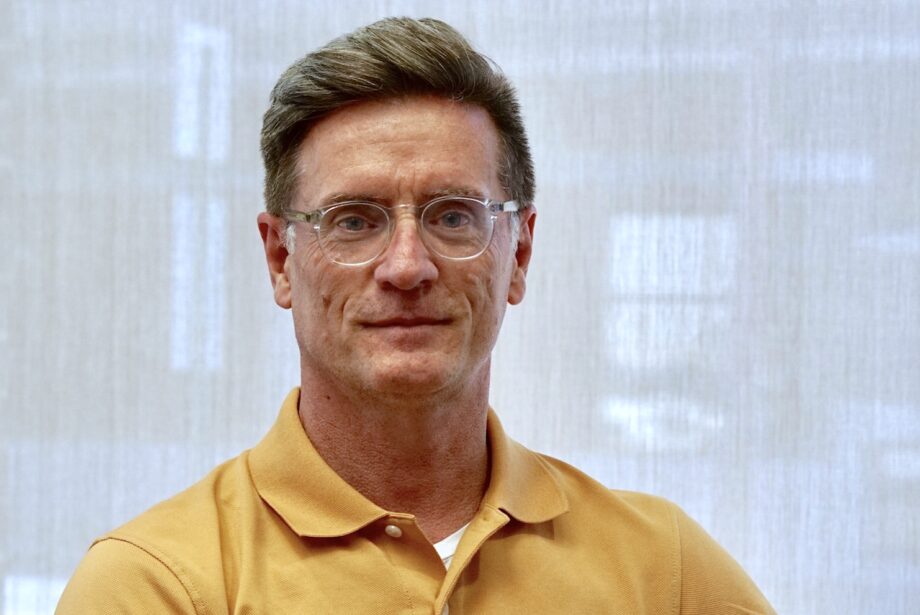
Robert Mintak, the crisp and precise CEO of Standard Lithium LLC, has been on a public relations tour that’s anything but standard, promoting south Arkansas’ lithium resources from 3,500 miles away.
Confined to Canada by COVID-19 travel restrictions, Mintak has been making the remote video rounds, talking up the early success of his test plant in El Dorado that is busy 24/7 collecting battery-grade lithium chloride from south Arkansas’ underground salt sea.
Mintak, whose Vancouver-based company partnered with longtime bromine producer Lanxess on a $10 million commercial pilot plant, has been explaining his vision for domestic lithium production to national journalists and conference participants over the past few weeks.
He’s intent on leveraging his company’s proprietary new technique for isolating lithium, which relies on hooking up to Lanxess’ extensive bromine-extraction infrastructure for economy’s sake, into an entirely new industry in Arkansas.
Standard has been producing lithium chloride for months at the pilot plant, using brine from a series of old oil wells, a drilling byproduct that was once a nuisance but was recognized as a bromine resource in the 1950s. The company announced on Sept. 6 that it has begun design work on an industrial-scale plant near El Dorado that would be roughly the size of a water treatment plant.
In interviews with Maria Bartiromo on Fox Business and Grace I Kay of Bloomberg News, as well as a virtual panel discussion Tuesday at the Fastmarkets Lithium Supply & Markets conference, Mintak called the Arkansas project America’s surest and fastest way to an American presence in the lithium supply chain. In essence, he thinks his team has invented a better mousetrap to capture part of a lithium-ion battery market driven by growing electric vehicle production.
The $44.2 billion market for those batteries is expected to reach $94.4 billion by 2025, and the panel discussion focused on how North American companies can play a bigger role.
Before Standard began deriving it from Arkansas’ subterranean saltwater, lithium producers relied on hard-rock mining in Australia and on vast evaporation pits, often in South America and China, where the brine is allowed to dry, leaving the lithium resource behind.
Mintak told Arkansas Business in September that tapping a domestic supply of such an important industrial element is crucial to American security and a priority of President Donald Trump, especially as the world faces a global pandemic and economic chaos.
“It’s really come home to roost that you can’t outsource all your raw materials and your critical supply chains,” Mintak said. “You need to have a secure supply of something as important to economic activity as this is.”
This week, he gave Bartiromo an update on Fox Business.
“A century ago, oil was discovered in South Arkansas, and it’s been vital to the economy there… But after that initial discovery, as the resources developed deeper, the drillers encountered a massive brine aquifer highly enriched with minerals,” Mintak said.
“The smart people at Murphy Oil and the Arkansas Oil & Gas Commission eventually determined that there was some value in this brine that was a nuisance to the oil and gas industry.” That was the advent of south Arkansas’ bromine industry in the 1950s, “and that brine that was just a nuisance has been developed as the second largest bromine business in the world.”
Fast-forward to 2017, when Standard Lithium discovered El Dorado and its rich vein of lithium waters. “This opportunity is the fastest way to bring lithium production online to the United States,” Mintak said, repeating a theme from previous interviews with Arkansas Business and Bloomberg.
“The industry’s going to have some challenges as higher purity lithium compounds are required,” he told Kay, the Bloomberg writer. “We’re not going to be saddled with 20-year-old processes and refining capabilities.”
Mintak concedes that while a current lithium glut has caused prices to fall by about half, projections of electric car production over the next few years suggest the world may face a lithium shortage by 2025.
“Every carmaker is getting into it,” Mintak said. “The demand for lithium is going to go up.”
For now, Standard Lithium’s El Dorado test plant is the only operation producing lithium on U.S. soil. But another south Arkansas bromine producer, Albemarle Corp. of Charlotte, North Carolina, is a world leader in overseas lithium production. In September, it partnered with the federal Department of Energy on two lithium research projects on producing lithium in a south Arkansas “Battery Manufacturing Cell Lab.” The goal is to produce lithium commercially, and Albemarle is working with two DOE labs.
Still, Mintak’s project has a substantial head start. It has been producing lithium chloride at the El Dorado plant for months, and more recently has been shipping that product to a pilot refinement plant in Canada to be turned into battery-grade-or-better lithium carbonate.
The crystallization plant in greater Vancouver, British Columbia, was built by Saltworks Technologies Inc., a neighbor to Standard Lithium.
When Bartiromo asked Mintak about the danger of relying on China for the production of critical materials, he said the rise of electric vehicles “has been primarily baked into the new Chinese economy,” but he sees a changing market and supply chain for lithium products.
“We are moving away from portable devices, smartphones and power tool batteries into larger installations [for electric vehicles, etc.] where billions of dollars of investment are already committed and tens and hundreds of billions are planned, you need to adjust where the supply chain is coming from,” he said.
“The United States currently doesn’t participate in the upstream side, but the Trump administration, rightfully so, has turned this lens on rare earth elements and critical minerals, and has directed federal agencies to find ways that they can overcome some of the challenges that have existed previously on getting these built. There hasn’t been a new lithium mine built in the United States in the last 60 years.”
That’s changing, since Mintak struck saltwater in south Arkansas.
 Sign up for Daily E-news