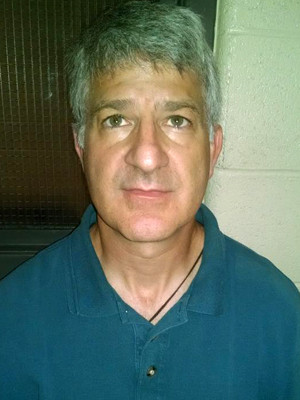
If he didn’t send Richard Johns to federal prison, Chief U.S. District Judge Brian S. Miller said he would never be able to send any other drug peddler to prison either.
On Wednesday morning, Miller sentenced the former Little Rock physician to serve 108 months – exactly nine years – for his admitted crime of selling fraudulent painkiller prescriptions. It was the low end of the guideline sentence range for the single count of conspiracy to distribute oxycodone that Johns had pleaded guilty to in March.
Johns, who has been in U.S. Marshal Service custody since the plea hearing, was also ordered to forfeit $190,000, $155,620 of which had been seized more than two years ago, and a 2006 Ford F250.
In a wavering voice, Johns expressed “deep and true contrition” and accepted his “need to atone for my crime.”
“I’m not the same man I was two years ago,” he said, describing a period of psychological treatment and religious meditation.
Miller began the atypical sentencing hearing by bringing Johns, defense attorneys Bud Cummins and Paul James and federal prosecutor Anne Gardner to the bench to discuss the possibility of deviating from the guideline sentence in the case. As he later told the audience that included about two dozen of Johns’ family and friends, he wasn’t sure how culpable Johns was for what happened to the drugs obtained with the prescriptions he wrote. An evidentiary hearing might be in order, the judge said.
Miller cleared the courtroom so that Johns could meet privately with his attorneys and his wife. When the hearing resumed an hour later, the defense and prosecution stuck to a sentencing agreement that had been filed on Monday. Neither side asked for a sentence above or below the guideline range of 108-135 months, and neither side mentioned the event that led to the federal prosecution of Johns and 17 co-defendants: The death in November 2014 of a 25-year-old Cabot man who had been involved in the drug ring that depended on prescriptions Johns wrote.
Cummins assured Judge Miller that his client understood the part he played in a national epidemic of opioid abuse. “Everyone here is aware of the seriousness of this crime and the landscape in which this crime occurred,” he said.
He also said that Johns had sought “badly needed” psychological therapy since his arrest in May 2015 and will probably need it for the rest of his life. There is “no reasonable concern” that Johns would be a continuing danger to society, particularly since he surrendered his medical license, so the primary value of prison sentence was to send a message deterring other medical professionals from similar crimes.
“I can tell you the local medical community is well aware of Dr. Johns’ case,” Cummins said.
The prosecution made no statement other than to recommend something within the guideline, and Miller concluded that “this is a guideline case” because there was no reason to believe that Johns didn’t know exactly what would happen to the prescription he was writing.
And if he wouldn’t order a prison term for a doctor with all the advantages that come with a medical license, Miller said he could never give a prison sentence to some less advantaged person who turned to selling drugs.
Miller recommended that Johns serve his sentence at the Texarkana Federal Correction Institution.
 Sign up for Daily E-news