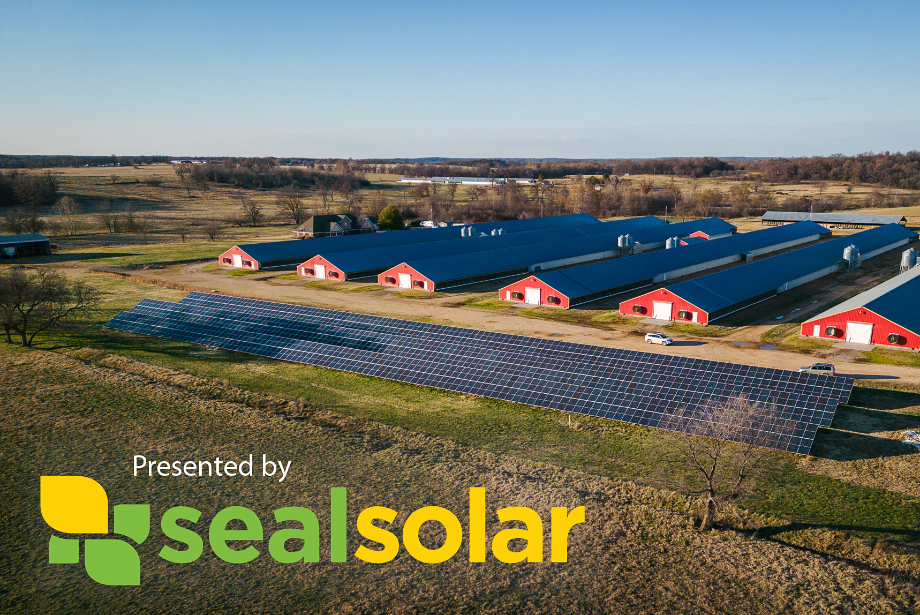
Due to recent changes in net metering laws, the urgency for Arkansas businesses to embrace solar power has never been more pronounced.
With net metering, the kilowatt-hour (kWh) produced by a solar customer and supplied to the grid offsets the kWh supplied to the customer in that month (net kilowatt-hours). If the customer sends more kWh to the grid than used, the kWh charge is zero that month (the account and demand charge if applicable remains). The kWh generated by the customer in excess of the kWh used is accumulated and credited to the account associated with the meter physically attached to the net metering facility and aggregated meters in the next applicable billing period.
The new net-metering rules allow existing agreements between net-metering customers and utilities to remain in place, or “grandfathered,” until 2040.
To take advantage of the current net metering with the grandfathering term, Arkansans have until Sept. 30 to install solar panels (or take a few other steps) to take advantage of net metering at the current 1:1 rate structure.
The Arkansas Advanced Energy Association (AAEA) reports a burgeoning ecosystem of 770 advanced energy companies in the state, generating a robust $1.7 billion in annual sales. Among these, solar power offers businesses a trifecta of benefits: cost savings, job creation, and environmental stewardship.
As energy costs soar, businesses across Arkansas are turning to solar solutions to alleviate financial strains and reduce their carbon footprint. The impending changes in net metering laws have catalyzed this shift, prompting companies to accelerate their adoption of renewable energy.
Take Baptist Health, for example. Inspired by the success of solar installations in his personal life, CFO Brent Beaulieu recognized the immense potential for Baptist’s health care system. His foresight extends beyond mere savings; he envisions a future where solar power fuels everything from emergency backup systems to electric vehicle fleets. For Beaulieu and Baptist’s board of trustees, it’s a strategic investment that bolsters financial sustainability.
“If you could do something that’s good from that perspective,” Beaulieu said, “why wouldn’t you do it?”
Similarly, farmers like Shawn Efurd and entrepreneurs like Robin Connell have seized the opportunity to harness solar energy. Efurd underscored the importance of forward-thinking, emphasizing that proactive measures today can shield businesses from escalating energy costs tomorrow.
“Energy prices are going to keep rising, and if you don’t do something now to offset that, you’re going to be paying a lot of extra money you don’t want to,” Efurd said.
Connell’s botanical design business, Leafscape, embodies the synergy between nature and innovation, with solar power seamlessly integrating into their eco-conscious ethos. “Using an alternative energy source fits with our brand because we work with plants,” she said. “Solar covers all of Leafscape’s utility needs, so it made a lot of dollar sense, as well.”
Even in the retail sector, the benefits of solar are palpable. Jason Hum, owner of Hum’s Hardware and Rental, relishes the freedom from exorbitant summer cooling bills. For him, solar power isn’t just a financial boon — it’s a means to provide a comfortable working environment for his employees without fretting over utility expenses. “I’m able to run my air conditioner in the summer without getting worried about the electric bill,” he said. “It’s nice to offer my employees a nice, cool work environment and I don’t have to stress about the monthly electric bill.”
This statewide momentum is not isolated; it mirrors a national trend toward solar adoption. The U.S. Energy Information Administration (EIA) projects solar electric generation to surge to 7% of total U.S. electricity generation by 2025, an impressive leap from 4% in 2023.
With net metering law changes on the horizon, Arkansas businesses have an opportunity to safeguard against rising energy costs and champion sustainability in its purest form.
 Sign up for Daily E-news