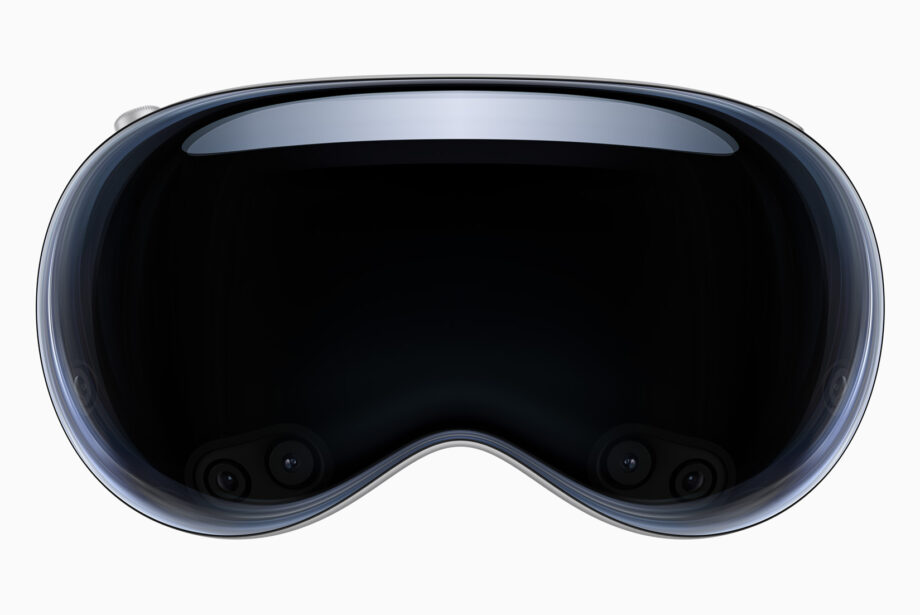
Apple Inc. of Cupertino, California, unveiled last week its long-awaited take on a virtual/augmented reality device dubbed Vision Pro, a $3,500 face computer that could either be the future of how we work, communicate and consume media — or not.
That’s because technology companies and software developers have been working for decades on these systems, many believing that VR will be the next great computing platform. But so far, few of these devices have caught even a sliver of the public imagination.
I attribute that to two things: 1) The hardware for this technology has been clunky, uncomfortable and awkward to use, and 2) the use cases for VR remain too niche to encourage mass adoption.
Apple tries to solve those problems and others with Vision Pro. The hardware — a glass, aluminum and fabric headset that looks like ski goggles — promises comfort and a precise fit, and allows you to adjust the level of VR immersion so you can also interact with live people in the room.
As for the use case, Apple has brought its arsenal of apps to the table for what it calls “spatial computing.” You can watch movies and TV shows, meet virtually with friends and coworkers, play 3-D games and do everyday work: There are your web browser, your spreadsheets, your documents, all floating around you in translucent panels controlled by your eye movements and the flick of a finger.
Finally, there’s the important distinction between augmented reality — in which virtual elements and information augment your view of the “real world” — and virtual reality, which is deeper immersion into an artificial space. Vision Pro appears to lean more toward the AR side, which for most people might be more useful.
The whole idea of an AR/VR future may be off-putting to you. I found Apple’s Vision Pro presentation to be compelling but also borderline dystopian. But the truth is, elements of this future are taking shape all around us.
You can certainly find VR setups in your home or at strip mall entertainment centers, but you can also find them at college campuses and K-12 schools for research and education. The Be Pro Be Proud initiative, which aims to encourage Arkansas schoolchildren to consider skilled trades jobs, features VR modules that give kids a first-person look at what it’s like to be a construction worker, for example.
Meanwhile, some of the world’s biggest companies — including Tyson Foods Inc. of Springdale and Walmart Inc. of Bentonville — have used VR to train workers on workplace safety, how to operate equipment and how to deal with customers. Proponents of these VR training systems say they can be effective for all kinds of learning styles and, of course, save time and money in the long run.
At the AR end of the spectrum, companies like Ox of Bentonville, a finalist for this year’s Arkansas Business of the Year Innovation Pacesetter award, are using wearable technology — heads-up displays, watches — to blend the digital and real worlds in ways that could make warehouse and distribution center employees work more efficiently.
While Apple’s vision for our AR/VR future may seem fantastic, if you look closely enough, you’ll find that in many everyday places, this far-off world is looking more like reality.
***
Remember Google Glass? I do. Here’s a blast from the past.

 Sign up for Daily E-news