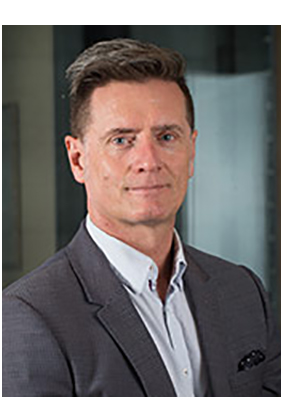
Robert Mintak
A Canadian company’s plan to extract battery-grade lithium from the salty underground waters of south Arkansas took another step forward Monday with the announcement terms toward a joint venture with Lanxess Corp., a global specialty chemical company with extensive operations in the state.
Standard Lithium Ltd. of Vancouver hopes to collect lithium, used in batteries for electric cars, from the same Smackover Formation brine that Lanxess draws from south Arkansas wells for extracting bromine, a substance used in flame retardants. Bromine has been mined from brine in the El Dorado-Magnolia region for 50 years.
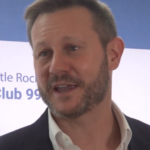
The deal is “extremely significant for us, and it allows us to communicate to the world that this isn’t just a science experiment,” Standard Lithium CEO Robert Mintak told Arkansas Business in a telephone interview Monday morning. “It is an actual path we’ve mapped out to reaching our goal of lithium production. We’re putting the pieces in place.”
Standard Lithium and Lanxess have signed what is known as a “term sheet” for the joint venture in what Mintak called a “phased approach” to reaching a binding memorandum of understanding. The key is whether Standard can prove itself with a pilot plant designed to retrieve lithium on a commercial scale from waters Lanxess has already processed for bromine.
The deal as envisioned would have Lanxess grant lithium extraction rights to the brine and grant access to its existing operations and infrastructure. Standard Lithium would contribute rights and leases held in the Smackover Formation and make Lanxess a joint venture partner in the pilot plant Standard Lithium is building in Canada and then planning to move to south Arkansas, Mintak said. Lanxess would also receive significant intellectual property rights.
If Standard Lithium proves its process, Lanxess would fund plans for commercially developing the lithium stream. “The cooperation with Standard Lithium is still at a very early state, but could open up exciting prospects for us in a forward-looking industry,” Lanxess Chairman Matthias Zachert said in a statement.
A company news release said final terms of the venture and funding arrangements would be subject to due diligence, technical proof of concept and economic viability studies.
“We’re been working with Lanxess for some time, and we’ve moved through some significant de-risking of the project,” Mintak told Arkansas Business. “The next step involves us showing that our process will unlock the resource and we’ll be able to show project economic numbers to our partner. If those are within the realms of a feasibility that’s acceptable to both companies, we’ll move on the definitive agreement and announce the joint venture.”
Mintak said the company would have had to prove its process in any case, but “this will let us move with confidence that we’re not doing this at the risk that it will all work but we won’t have a transaction to bring it all online.” Mintak said global lithium projects are often attempted by small development companies like his, “but they have to throw tens of millions of dollars into the ground to develop a resource, prove it and then go through raising money to build it.”
From Standard Lithium’s perspective, Lanxess offers not only financial resources but also people and processes. “They bring a project that’s already by and large in production,” he said. “They’re producing the volumes of brine that make the project viable, so we didn’t have to do all that work in the first place. Lanxess already has hundreds of employees in south Arkansas. They have an immense infrastructure and they have a global reach as a company as well.”
Mintak said working with other companies to leverage existing infrastructure was always part of Standard Lithium’s business plan, “to share and cooperate for win-win situations so that the project can be built as quickly as possible.”
The project involves 150,000 acres of permitted brine operations, and the press release cautioned that before feasibility studies “there can be no assurance that the term sheet will result in an actual producing lithium mine.
But Mintak said his confidence is high, and the timing was perfect. “We’ll be finalizing the mobilization of our pilot plant, looking to have it in place in south Arkansas in the first half of 2019. “Having this in place, we can go and speak to the world to say there is a plan for this commercial build. I wouldn’t say this hits the gas any faster, but we don’t use gas; we use electricity.”
 Sign up for Daily E-news