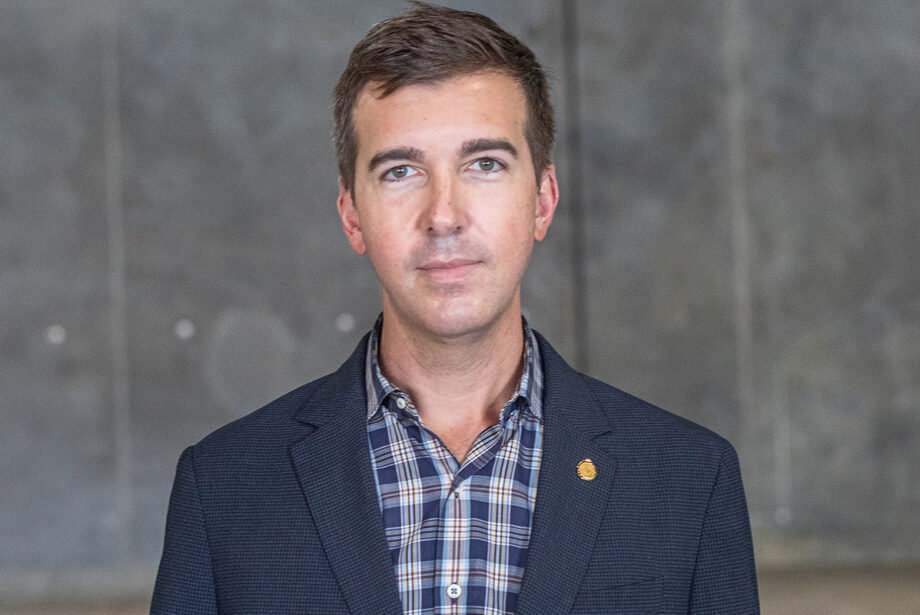
When Pulaski County Circuit Judge Herbert T. Wright ordered the state to strip Storm Nolan’s medical marijuana cultivation license in 2022, Nolan wasn’t even party to the lawsuit.
The judge found in favor of a rival for the cultivation license, 2600 Holdings LLC, doing business as Southern Roots Cultivation, and against the state of Arkansas and Nolan’s River Valley Relief Cultivation. River Valley has grown cannabis for the state’s medicinal program since 2021, having obtained its license from the Medical Marijuana Commission in 2020.
But since 2600 Holdings filed suit five years ago, keeping up with the case has been like watching a yo-yo.
The case is one of many lawsuits filed by disgruntled, unsuccessful applicants challenging the license process that began after Arkansans voted to legalize marijuana for medicinal use in 2016. The ongoing saga is a reminder of the many problems that plagued the state’s initial rollout of the cannabis program.
Last year, the Arkansas Supreme Court reversed Wright’s 2022 decision, finding he had erred when he denied Nolan’s motion to intervene in the case. After all, the very existence of Nolan’s multimillion-dollar cultivation center was on the line.
The case, originally 2600 Holdings v. Arkansas Department of Finance & Administration, et al, went back to Wright’s court, and he issued a less sweeping but similar order in late December, finding again that Nolan’s license was unlawful.
He found again that the cultivation site was within 3,000 feet of a school, namely the Sebastian County Juvenile Detention Center. Amendment 98 requires a buffer zone of 3,000 feet around any school.
The judge also found, as he had in 2022, that the state granted the license to a holding company that Nolan had dissolved after he failed to get one of the state’s first five cultivation licenses.
Nolan was still in the pool of applicants for one of the three other cultivation licenses authorized by Amendment 98, and in 2020, the license went to him through the name of the dissolved business, River Valley Relief Production. Wright’s recent ruling found that the license couldn’t go to a defunct entity, which the judge called a “nullity.” He wrote that he didn’t have the authority to grant or revoke licenses. “But the Court does have the duty … to point out when the State has exceeded the authority granted to it by the voters of the State of Arkansas. …” He also suggested that the state had bent over backward to direct the license to Nolan.
Nevertheless, River Valley Relief is still growing marijuana, and will continue to do so until the Supreme Court rules again, perhaps later this year or in early 2026.
Nolan filed an amended notice of appeal March 11, and the state attorney general’s office will argue on behalf of DF&A, the MMC and other state defendants.
“The state is convinced that they awarded this license legally, and that we have this license legally,” Nolan told Arkansas Business this month. He faulted Judge Wright for disallowing attempts to collect evidence from the state’s “original decision-makers” in the licensing process, Mary Robin Casteel and Joel DiPippa.
“Mary Robin Casteel was the director of [ABC] at the time and Joel was the main attorney,” Nolan said. “Those two individuals know exactly why these decisions were made. … Judge Herbert Wright did not let us introduce that information, which we found interesting.”
Quattlebaum Grooms & Tull PLLC of Little Rock is representing River Valley, Nolan said.
Abtin Mehdizadegan and Joseph C. Stepina of Hall Booth Smith PC of Little Rock are representing 2600 Holdings.
 Sign up for Daily E-news