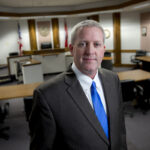
Summit Utilities CEO Kurt Adams says he understands the pain gas customers feel when their bills go up.
“I understand it, and I hear it,” he said, adding that his mother and her veteran husband live on a fixed income of about $20,000 a year. “An extra $15 a month is a hardship.”
But rates must climb at times to keep a utility reliable and safe and to ensure its financial health, he said.
Summit is before the Arkansas Public Service Commission, seeking a rate increase of $87.7 million per year that averages out to $15.43 a month for residential customers. The rate was reached in a settlement with major gas customers, the University of Arkansas System, PSC staff and the state attorney general’s office.
Attorney General Tim Griffin disowned the deal after state lawmakers lambasted it, but the three-member PSC found that he had no legal basis to bail out of the agreement.
The proposed increase, 23.4%, is down from an earlier proposal of 30%.
“No one should be surprised when the attorney general fights as hard as he possibly can for the consumers,” Adams said. “That’s his job, and he takes it seriously.”
The CEO, a former utility regulator in Maine and also a lawyer, said that 82% of the increase’s proceeds would go to enhance gas system safety and reliability. The other 18% will offset “expenses and the things that every business has seen rise over the past years,” Adams said in an interview.
“Nobody wants to trade money for safety,” he said, citing an obligation to operate a safe and reliable system at the lowest possible cost to ratepayers. “The purpose of the PSC proceeding that we’ve been in for almost a year now is to take a look at our costs.”
PSC consumer advocates, the attorney general’s staff, Arkansas hospitals, universities and “large industrial customers” all looked at Summit’s evidence and signed the settlement, Adams said. The idea, he said, was to “make sure that Arkansas consumers are not paying a penny more for gas delivery service than is absolutely required.”
However, the PSC decided last week to reopen its analysis of the rate case. That decision came after testimony from lawmakers worried that Summit paid too much in its $2.15 billion cash deal to acquire CenterPoint Energy’s Arkansas and Oklahoma assets in 2022.
Under Arkansas law, regulated investor-owned utilities are guaranteed a rate of return on equity high enough to ensure their financial health.
Adams said the settlement’s rate, 9.83%, fits that category, and added that the PSC expected Summit “to come in with a rate case” within 12 to 24 months of the close of the CenterPoint deal. Summit’s current ROE, a holdover from the CenterPoint acquisition, is a 9.5% rate set in 2015 under different market conditions. For nationwide rate cases decided last year, the average ROE approved for gas utilities was 9.64%, up from 9.53% in 2022, according to S&P Global.
Summit hired all of CenterPoint’s Arkansas-based employees, avoiding layoffs often associated with big acquisitions, Adams said. It also hired 300 other Arkansans to help operations, and “effectively moved our entire call center to Arkansas,” Adams said. “Our employee base has really changed and become heavily Arkansas-focused.”
Adams said Summit “is working hard to earn customers’ trust every day,” and has sorted out most of the billing issues that plagued the Arkansas transition. “When folks call now, we have over 98.5% billing accuracy rate,” he said.
Although the possibility of further increases is real, Adams downplayed speculation that another case will come before 2026. “We don’t foresee coming in in two years,” he said. “But the future is very uncertain.”
 Sign up for Daily E-news