Joel Gordon
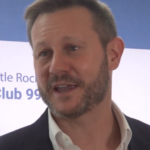
On Wednesday, the Arkansas Regional Innovation Hub named Joel Gordon its new executive director, effective June 1.
Gordon had been director of making at the Hub in North Little Rock since its launch in 2013. Gordon also co-founded the state’s first makerspace and founded the North Little Rock Mini Maker Faire.
He has been a fabricator, an artist and designer for theater, film and television; created world-class art exhibits; and worked in industrial design and product development. Gordon told Arkansas Business, “I’m an artist with an engineer’s soul.”
He is also the state’s ambassador for the maker movement and has served as a national spokesman for it.
Last week, Arkansas Business talked to Gordon about the Hub’s mission, its place in Arkansas’ budding entrepreneurial ecosystem and its future.
Gordon’s responses have been edited for length and clarity.
Arkansas Business: What is the Hub’s mission, and how does it affect economic development?
Joel Gordon: We are a quickly and drastically changing economy. If you look at what’s big in the news in economics right now, you start to see a lot of concern with the idea of robot-proof jobs. What I’m interested in directly, and specifically, is how can we create an economy in Arkansas where the robots are serving us and not the other way around.
What we do here at the Hub is we have a three-legged stool. The legs of our stool are education, membership and industry. The problem most people have is resource. You have inspiration with museums. You have information through libraries and the internet. There is a piece that’s missing. That third piece that’s missing is application. What we do on that side is our makerspace. So we have making, we have art; and we have entrepreneurship and co-working.
We give people a public resource they can go to to access the tools and the knowledge they need to actually do something. An idea and $2 will get you a cup of coffee at a gas station. What we’re really trying to do is give people the access they need to take it further.
What we’re looking at is the jobs that aren’t here now. One of the things we’re trying to do at the Innovation Hub is be a bridge. If someone comes to us with an idea, then we’re going to help them develop that idea and, when they’ve got the idea developed, it’s our job to help them get to that next level and find the people, the organization, they need to get where they’re ultimately trying to go.
AB: What role does the Hub play in the emerging local ecosystem that includes the Little Rock Technology Park, the Venture Center, Conway’s Conductor, Startup Junkie in northwest Arkansas and others?
Gordon: We’re definitely more of an incubator than an accelerator. But, with that in mind, now that I’m executive director, our focus is going to be more about the technologies because I think that’s a key component that has been missing in most cases for people.
We’ve had a few dozen individuals who’ve come to us that we’ve helped to develop prototypes for a product. The biggest problem I see is that first opportunity you have to get your product made. Manufacturing in the United States is really geared at the tens-of-thousands level. Think about how many incredible ideas die on the vine because they just can’t get that funding to get them launched.
We’re developing a program in micromanufacturing. If you have a great idea and you want to get a business launched and you need that first 100 so you can develop your brand, so you can begin to get that product in front of your target customers, we want to create the basis for that new economy. Three years down the road, I think a lot of small companies are going to spring up everywhere that are making products that are more custom, more focused on the community around them.
An accelerator is really teaching people who know nothing about business; we’re going to help move you in the direction you need to go and we’ll use the lean canvas model. Once you get to the point where you have at least the proof of concept and need a working prototype, and need to get with customers and have it tested, that’s what an incubator does.
AB: What is the Maker Movement?
Gordon: The big push for the Maker Movement came out of Burning Man. Folks who started Burning Man, we all got older. We all had kids. But there’s this love of creativity and the amazing joy of doing spectacular things.
And a lot of these folks who were going and celebrating at Burning Man, people don’t think about it, but they were also executives in Silicon Valley. As they got older, they wanted to keep that ideology but make it more family friendly.
Really you saw the seed of it at San Mateo, California, where they still host the flagship maker faire. I think, last year, they had 1.1 million visitors. People were building their own 3D printers. You saw a lot of robots. Then you started seeing companies that were making 3D printers. You also started to see things like a row of vendors who were actually universities. Looking for talent. It’s a de facto talent hub.
It was a subculture and became more mainstream. Creativity was based on amazing ideas and abilities, not on your degree, not on your ranking as an executive at a firm, but on your abilities, your brilliance and your passion. And I think that’s what the Maker Movement is.
AB: Why should startups move to Arkansas and how is the investment community here?
Gordon: First of all, it’s just a beautiful place to live. People are looking for that next Austin, and I kinda think we’re it. We’re really an underappreciated jewel. We have a very low cost of living. We have a lot of talented people. We have abundant opportunity, particularly if you’re wanting to start a business.
As far as [investment] opportunities, of course we have angel investors, I can’t really speak to that because that’s an individual thing. But, if you look at the capital base we have here with companies like J.B. Hunt and Wal-Mart — even in the outdoor industry, Ranger Boats — all these incredible companies that have come out of Arkansas, there’s gotta be something in the water.
I think investment is solid. Our banks here are incredibly solvent and phenomenal to work with. I can’t imagine being in Chicago and being able to walk in and speak to a bank president. Here, it really feels like no big deal. I think it’s more about our community than investment opportunity. I think it’s our people.
AB: Where do you see the Hub, and Arkansas entrepreneurship in general, going in the next five years?
Gordon: Huge success. Everybody’s going to do well and we’ll all have lots of money. And everyone will have puppies and kitties, and it’ll be beautiful. That’s what everyone wants to hear!
I’ll give you my honest opinion. I think that the one thing we really have going for us is that we’re flexible. And that’s really saying something because a lot of places you go, a lot of organizations I’ve worked with, there’s a rigidity that exists that doesn’t allow for changes in the market.
And I think that’s really what we’re facing now. I think the way to approach that is to see it as an opportunity.
 Sign up for Daily E-news