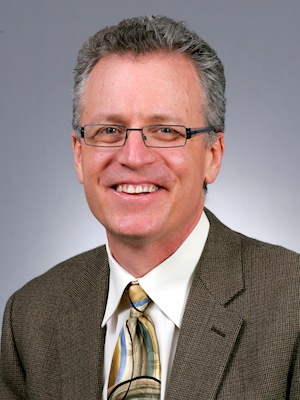
Michael Hunter Schwartz, the new dean of the William H. Bowen School of Law.
Staff from the University of Arkansas at Little Rock’s Bowen School of Law and the College of Social Sciences and Communication on Thursday presented research aimed at helping community leaders make informed decisions about a range of legal and education issues.
The colleges announced the research effort earlier that week. Its goal is to create a model for university-community partnerships.
The colleges sent surveys to 250 people in the law and policy community asking, “What type of research can we do that would better support the type of work you do every day?” It received 76 responses identifying important issues.
At the event on Thursday, Michael Hunter Schwartz, dean of the law school, called the project a “collaboration between town and gown.”
“Service is a part of what we have done as a law school always,” Schwartz said. “And producing useful answers to projects of mutual concern is part of our institutional improvement effort.”
Attorney General Leslie Rutledge commended the school for its involvement with the community and encouraged students and faculty alike to continue.
“It is imperative we engage more young people to be involved in public service,” Rutledge said.
The five studies examined:
- Misidentification by eyewitnesses and a court education program to help that;
- How to solve the problem that two-thirds of prisoners will commit new offenses within three years of release, which was answered with a prison graduation program;
- Lack of access to justice and how courts are made less efficient when individuals cannot afford an attorney;
- An evaluation of the success of the No Child Left Behind free tutoring program, which determined that tutors are effective when the low quality tutors are quickly removed from the system;
- Racial disparities in the state’s criminal justice system, concluding that blacks receive harsher charges.
Schwartz said the research might be the first of its kind for a law school, and the university plans to continue continue the effort.
“Engaged scholarship begins with a question together, and in true collaboration, we find the answers,” Schwartz said.
 Sign up for Daily E-news