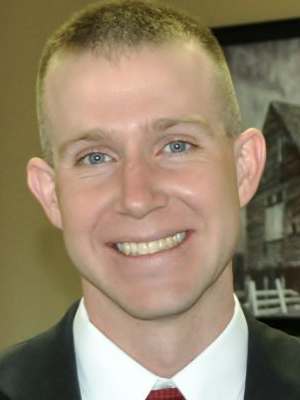
Wes Ward
Arkansas Secretary of Agriculture Wes Ward will speak at the Third Annual Mid-South Agricultural & Environmental Law Conference in Memphis, which takes place Thursday and Friday.
The conference, which will take place at the University of Memphis Cecil C. Humphreys School of Law, is led by the National Agricultural Law Center and designed to provide agricultural and environmental legal research and information to attorneys, lenders, accountants, tax consultants, students and other agricultural professionals.
Ward will give the keynote address, a look at agricultural trade with Cuba, at the event lunch on Friday. Ward accompanied Gov. Asa Hutchinson on his trip to Cuba last year.
Arkansas Business talked with Ward this week for a preview of his remarks and his insight into the hot topic of trade with Cuba. His responses have been edited for length and clarity.
Arkansas Business: How will you approach the topic of Cuba in your Friday address?
Wes Ward: We’re going to be talking about Cuba, so my approach is going to be talking a little bit about the history and how agricultural exports have changed over the history of our relationship with Cuba. Starting with 1959 — when the revolution started — and kind of looking at what U.S. and Arkansas exports were to Cuba prior to the Cuban revolution. Then, how that changed with the embargo and the different legal aspects of the embargo. Moving forward from there, in October 2000, when the trade sanctions were formed, and how that started to shift things and the history with that.
Some of [the speech] may be a legal-nuanced and sort of a legal background of some of the issues with Cuba to a degree. We’ll also talk about Cuba in general – an overview of some of the most recent efforts. I’ll talk about the governor’s trip to Cuba last year that I got to participate in with the World Trade Center of Arkansas, the work that Sen. [John] Boozman has done, and a couple of different groups: the Cuba Consortium, Engage Cuba Coalition.
I’m going to kind of give a history of our relationship with Cuba and what’s changed and some of the recent efforts.
AB: What opportunities does Arkansas have as the U.S. tries to jump-start trade with Cuba?
WW: Cuba has the highest per capita consumption of rice in the Western Hemisphere. Arkansas produces 50 percent of the nation’s rice, so when you look at the potential relationship between Arkansas and Cuba specifically, rice tends to benefit more than anybody else.
Once some of those restrictions have been lifted, we would see potentially about a $36 million economic impact on the agriculture side in Arkansas, and about $30 million of that would be for the rice industry.
The rice industry in Arkansas would be the greatest benefactor of the restrictions being lifted.
When you look at agricultural exports in general, Arkansas exports about 30 percent of our production every year. That ranges from soybeans, which would be our top agricultural exporter in 2014, and rice was second — a whole list of commodities we export every year that are included in that 30 percent. We have the stock, we have the rice available, we have the commodities available to meet that demand. But everything is very much tied to the global market.
Cuba is a very close market for us. It’s a lot easier for us to ship to Cuba than it would be to, say, somewhere on the other side of the world.
AB: Where do we go from here?
WW: That’s going to be a little bit of what I talk about on Friday. I’m going to touch on the executive actions that the president has taken to lessen those restrictions, whether it’s travel or commercial restrictions. Overall, that next step is going to take some congressional action. That’s where Sen. Boozman and Congressman [Rick] Crawford’s efforts come in.
So I’m going to talk about what they’ve been doing and what they’re trying to do. Congressman Crawford has his bill that he is working on, and trying to get through that would reduce some of these restrictions even more and make it easier for us to ship those agricultural products.
Really the next step is going to require some congressional action. I think the support is certainly continuing to grow. There have been surveys that show up to 70 percent of the population is in favor of reducing those restrictions.
It’s still got to go through congressional action. It takes those congressional members to vote and move those actions forward and certainly there are members who have concerns that need to be addressed. That’s part of what makes it take a little longer.
 Sign up for Daily E-news