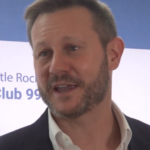
Doyle R. Simons became president and chief executive officer of Weyerhaeuser on Aug. 1, 2013.
Simons has been a director of Weyerhaeuser since June 2012. He was chairman and CEO of Temple-Inland Inc. from 2008 to February 2012, when it was acquired by International Paper. He held various management positions with Temple-Inland, including executive vice president from 2005 to 2007 and chief administrative officer from 2003 to 2005. Before joining Temple-Inland in 1992, he practiced real estate and banking law with Hutcheson & Grundy LLP of Houston.
He holds a Bachelor of Business Administration from Baylor University and a Doctor of Jurisprudence from the University of Texas at Austin.
Everyone has heard of Weyerhaeuser, but what are some products that most people might not realize Weyerhaeuser produces?
Weyerhaeuser is a focused forest products company with three businesses. Many people think about trees when they hear our name, which is no surprise. Our timberlands business manages about 7 million acres of some of the finest forests in the U.S. We have a strong reputation for knowing how to grow and harvest trees to create value and also for managing our resources sustainably. We manufacture a wide range of wood products as well. We operate 18 lumber mills and six OSB mills across North America.
We also make a number of innovative engineered lumber products, such as Parallam and Microllam, which are used to make beams and headers and I-joists, which are used in high-performance flooring.
Finally, our cellulose fibers business is largely focused on making fluff pulp, which is used in absorbent products. But people might be surprised to know that our cellulose fibers are also used in products like fabric, plastics and liquid containers. Plus, we produce carbon-neutral energy at many of our pulp mills and sell excess to the grid. Our vision is to grow a truly great company. A critical part of that is making a great contribution to society — and we do that by making products that make life better. Our wood products are used to build homes where people raise their families. Our cellulose fibers are used to make diapers that keep babies healthy and clean. Every day our products help people meet fundamental needs.
How has Weyerhaeuser’s conversion into a real estate investment trust, or REIT, several years ago changed the company’s business model?
For timber companies, being structured as a real estate investment is an efficient way to deliver value to shareholders. Out in our operations, not much has changed. We continue to focus every day on driving operational excellence and delivering quality products to our customers.
At what level will you consider housing starts to have fully rebounded?
Key drivers for a continuing housing recovery are employment and consumer confidence, both of which are experiencing steadily positive trajectories. The historic average for housing starts has been about 1.5 million units. The Harvard Joint Center for Housing Studies is currently forecasting housing starts to range between 1.6 million and 1.9 million units.
What is behind the company’s recent announcement that it’s relocating its headquarters from Federal Way, Washington, to Seattle?
We’ve attracted great people to work at our headquarters building in Federal Way, which has served us well for many decades. But it’s clear that our 430-acre campus is just too large and too costly for our current needs. We evaluated a number of options and ultimately determined that the best place for our headquarters is Seattle. Our new location will expand our access to an even larger talent pool, both regionally and nationally, and I’m excited about the opportunities this move will bring to our employees and company.
 Sign up for Daily E-news