The Wolfe Street Foundation of Little Rock recently opened a center to help teens who are struggling with substance use or who are on a path to substance abuse.
The Youth Empowerment Project Teen Center in west Little Rock is the first recovery program of its kind in Arkansas.
The idea for the center stemmed from a lack of resources aimed at substance abuse prevention among teens, said Rebecca Webber, program coordinator of the project. “There are kids as young as seventh grade and younger … who are partaking in drug use,” she said. “And the only resources that we have right now are inpatient programs.”
The Wolfe Street Foundation wanted to change that.
“We found that when you can intervene earlier on, it has better outcomes,” she said. Students are “able to revert and change some habits versus having to wait until it’s like a life-or-death emergency.”
Wolfe Street, whose services include addiction recovery support groups and peer recovery support, applied for and received a $850,927, three-year grant from the Blue & You Foundation for a Healthier Arkansas, a foundation created and funded by Arkansas Blue Cross & Blue Shield, for the Youth Empowerment Project.
Wolfe Street collaborated with Tov Mental Health Counseling of North Little Rock to create the curriculum for the program to assist students in grades seven through 12 in Pulaski County.
The project’s curriculum includes teaching students how to interact with other people as well as deal with their own emotions, Webber said.
The center’s first semester starts Aug. 19, and the program can accommodate 48 students who come after school twice a week. The grant covers the cost of the program for the students.
As part of the curriculum, the students will meet with a peer support specialist one day a week. “As a peer support, we’re not counselors or mental health professionals,” said Leo Moya, a YEP peer recovery support specialist. “I am here to help them in their journey to adulthood in a safe environment.”
The center also works with students coming out of substance abuse recovery programs and can refer students to another program if they are in need of higher levels of care.
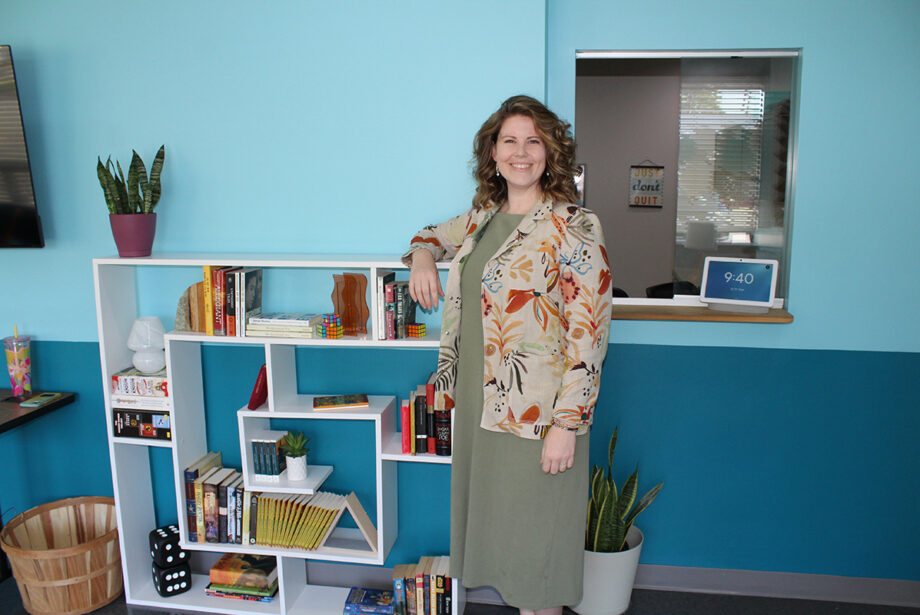
The center features a meeting area, a game room and rooms for therapy sessions. It will have interns in licensed master of social worker programs who will be supervised by a licensed social worker to carry out one-on-one therapy sessions with the students.
YEP also will have volunteer teachers and others helping out, Webber said.
The goal of the program is “to equip [students] with the skills that they need to live a happy, healthy life without substances,” Webber said.
 Sign up for Daily E-news